






Victorian Boot Scraper
A victorian boot scraper clears thick mud from muddy soles before entering the hallway.
Victorian Boot Scraper
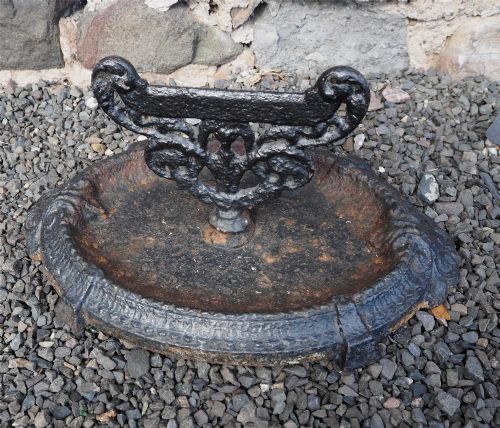
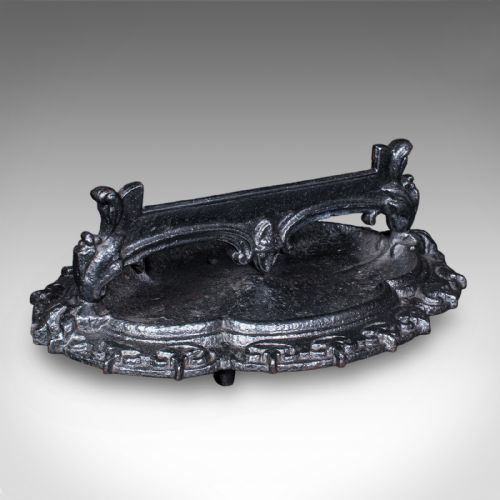
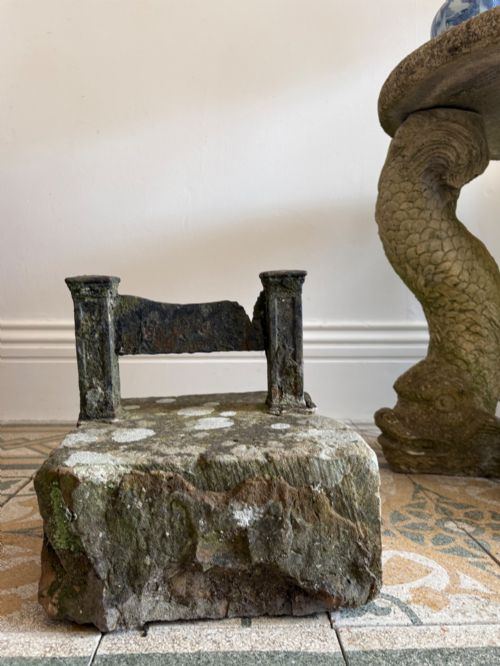
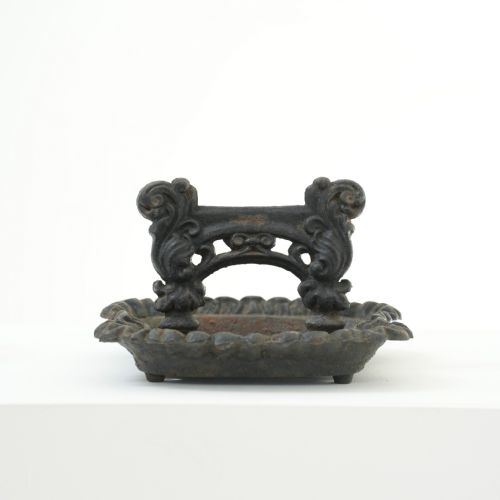
A victorian boot scraper is a heavy utilitarian implement designed to clean mud and dirt from footwear at the entrance of a home. You are most likely to meet cast iron examples from the nineteenth century, often built with integrated shoe pulls or set into stone blocks.
The selection ranges from robust country house and townhouse doorway fixtures to smaller novelty items intended for the desk. Heavy iron versions stand outside by the threshold, while miniature silver pieces serve indoor functions such as pen wipes.
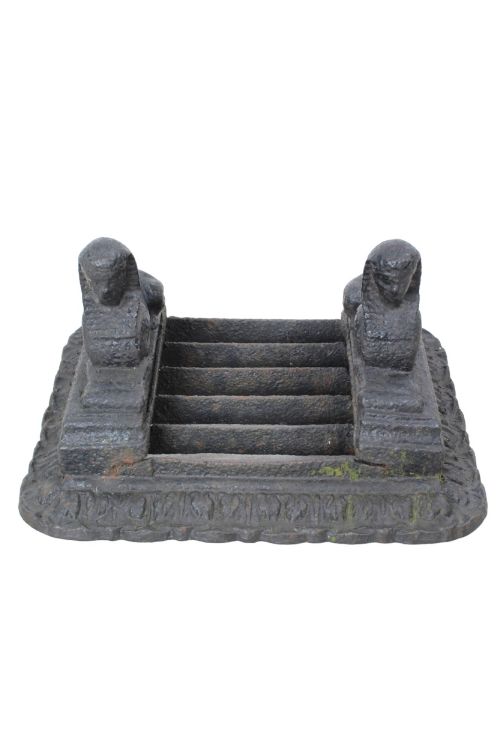
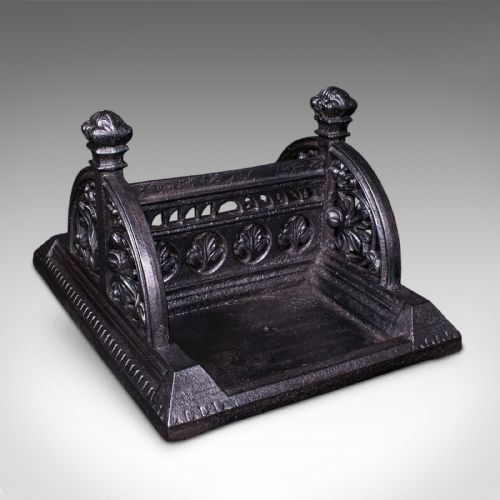
Makers and foundries produced these items in various styles including Gothic Revival, Egyptian Revival and Georgian designs. They reflect the practical domestic requirements of nineteenth-century life combined with period decorative tastes.
What varies in quality
The distinction between ordinary and superior pieces rests on the weight and crispness of the casting. Foundry work with sharp relief, well-defined stylistic details and substantial iron mass marks the better examples.
Design complexity also elevates a piece, such as integrated shoe pulls, lion motifs or stone plinths. Maker marks from established foundries add provenance and confirm higher manufacturing standards.
Victorian Boot Scraper Retail Price Guide 2026
Typical asking prices for victorian boot scraper among the pieces listed under this phrase on Sellingantiques today, from the lower quarter to the upper quarter. They describe what is for sale here now, not the wider market.
Some Victorian gentlemen wiped their steel pen nibs on tiny silver boot scrapers sitting upon respectable study desks.
Sampson Mordan and Co·Carron·T Holcroft and Sons Ltd Wolverhampton·Coalbrookdale
The Victorian Boot Scraper Glossary
- Boot scraper
- An iron blade or metal plate mounted near a doorway to scrape mud off the soles of boots. These fixtures were essential outside nineteenth-century townhouses and country houses.
- Shoe pull
- A handle or hook incorporated into the metal frame to help leverage off muddy boots. This addition allowed people to steady their footwear while cleaning.
- Gothic Revival
- An architectural and decorative style drawing inspiration from medieval forms. Pieces in this style utilise pointed arches and ecclesiastical motifs.
- Pen wipe
- A small desk accessory used for cleaning ink from nibs. Novelty versions were shaped to mimic miniature boot scrapers in silver.
- Stone plinth
- A heavy block of stone or hewn rock in which the iron scraper is inset. This heavy base kept the implement stable during use.
Victorian Boot Scraper: Frequently Asked Questions
Where were boot scrapers placed?
These implements stood immediately outside the front door or within the entrance porch of townhouses and country residences. They caught heavy dirt before visitors stepped onto interior carpets and floors.
Heavier examples were bolted to stone steps or embedded directly into heavy stone slabs outside the threshold.
How do I clean an iron scraper?
Remove loose dirt with a dry brush and wipe down the metal surface gently. Avoid harsh chemical treatments that strip the historical patina.
Applying a light coat of protective wax helps preserve cast iron against outdoor moisture and rust.
What is a boot pull?
A boot pull is a looped handle or secondary bar attached to the scraper frame. It gave the user something to hold while tugging off tight footwear.
This feature appears frequently on nineteenth-century townhouse models designed for daily domestic convenience.
Are all scrapers made of iron?
While cast iron and wrought iron dominate the larger doorway versions, other materials exist. Silver and brass appear in smaller desk accessories and novelty items.
Stone bases frequently accompany iron blades to provide the necessary weight for outdoor stability.