


Doorstep Boot Scraper
A doorstep boot scraper clears heavy mud from footwear before anyone steps inside.
Doorstep Boot Scraper
A doorstep boot scraper is an iron fixture placed beside an entrance to clear mud and dirt from footwear. The pieces gathered here belong to domestic and country house contexts, spanning the Georgian, Victorian and Regency periods.
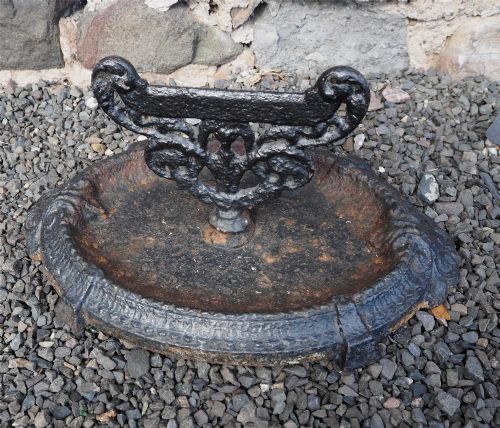
Most examples found on this page are made of cast iron or wrought iron, often combined with Yorkstone bases. They range from simple utilitarian designs to ornate examples incorporating shoe pulls and decorative motifs.
Buyers will encounter various formats, from small oval footscrapers to large townhouse pieces and matched pairs. These items reflect the practical demands of historic entrances before paved streets became universal.
Materials and construction
The construction relies heavily on durable metals designed to withstand heavy foot traffic and outdoor weather conditions. Found examples utilise robust cast iron or forged wrought iron for the blade and frame.
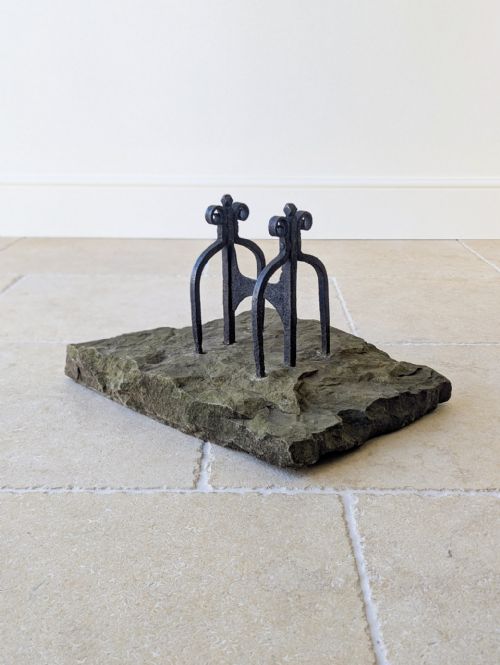
Many heavy pieces incorporate Yorkstone bases to anchor the scraper securely outside a doorway without requiring permanent floor fixings. Metal elements were cast or hammered into shape, sometimes featuring integrated shoe pulls for removing tall boots.
Doorstep Boot Scraper Retail Price Guide 2026
Typical asking prices for doorstep boot scraper among the pieces listed under this phrase on Sellingantiques today, from the lower quarter to the upper quarter. They describe what is for sale here now, not the wider market.
The listings span the Georgian, Regency and Victorian eras, predominantly constructed from cast iron, wrought iron and Yorkstone.
Assessing quality and character
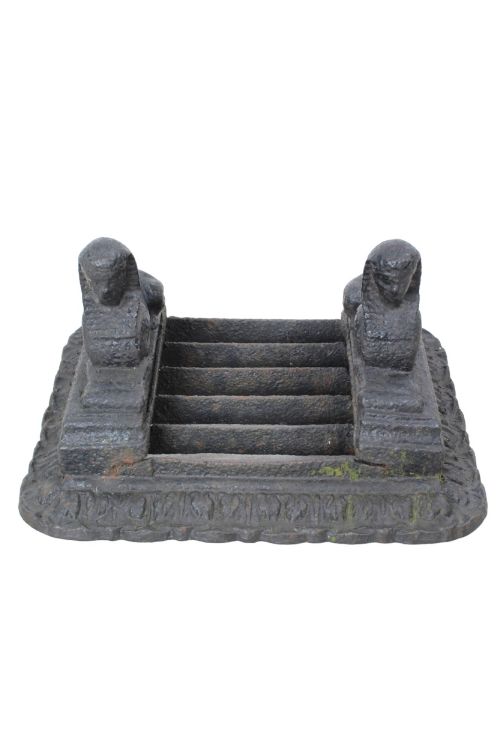
Quality in a doorstep boot scraper depends on the crispness of the casting and the architectural ambition of the design. Standard utilitarian foundry work contrasts with elaborate revival styles, such as Gothic or Egyptian motifs.
The presence of an original Yorkstone mounting block or an integrated shoe pull elevates an example from a simple blade to a complete entrance fitting. Heavier gauges of iron and well-defined decorative details distinguish the finest examples.
The Doorstep Boot Scraper Glossary
- Boot scraper
- An iron blade or transverse bar fixed outside an entrance for scraping mud from the soles of boots. They sit directly on the ground or mount onto stone steps.
- Shoe pull
- A vertical loop or handle attached to a boot scraper, used to steady oneself while pulling off muddy footwear. It is a common feature on grander townhouse examples.
- Cast iron
- Iron melted and poured into a mould to create rigid forms. It allowed makers to produce decorative patterns and robust frames efficiently during the nineteenth century.
- Wrought iron
- Iron beaten and forged by hand into shape while hot. It yields a fibrous material that resists fracturing under stress, typically found on earlier examples.
- Yorkstone
- A tough carboniferous sandstone quarried in Yorkshire. It provides a heavy, stable base for mounting iron scrapers outside historic doorways.
Doorstep Boot Scraper: Frequently Asked Questions
Where should a doorstep boot scraper be placed?
These pieces belong immediately outside an exterior doorway, porch, or bootroom entrance where muddy footwear requires cleaning before entry.
Heavier examples with stone bases sit freely on flags or steps, while others require secure anchoring depending on their original mounting design.
How do I distinguish Georgian from Victorian examples?
Georgian pieces often feature hand-forged wrought iron and simpler, utilitarian lines suited to country houses or townhouses. Victorian examples frequently utilise mass-produced cast iron and elaborate revival ornament, such as Gothic or Egyptian motifs.
Examining the metalwork technique and surface texture generally reveals the period of manufacture.
What is the purpose of the integrated loop?
The vertical loop acts as a shoe pull, helping the user maintain balance while tugging off tight riding boots or tall footwear. It is typically found on substantial townhouse models designed for busy households.
This addition spared inhabitants from bending down awkwardly on muddy doorsteps.
Can these scrapers remain outside in winter?
Cast and wrought iron withstand outdoor conditions robustly, having spent centuries exposed to the elements outside historic doorways. Regular cleaning and occasional protective treatments help prevent excessive corrosion in wet weather.
Yorkstone bases provide durable, weather-resistant foundations that remain stable throughout the year.