



Outdoor Boot Cleaner
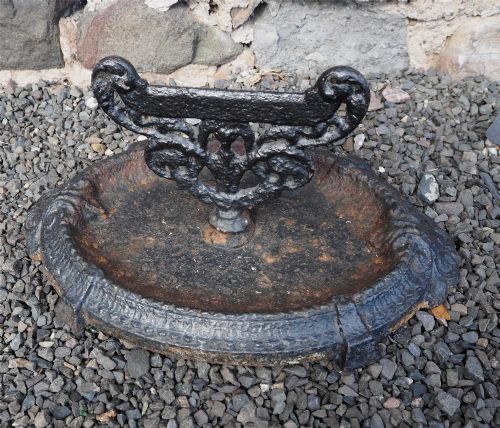
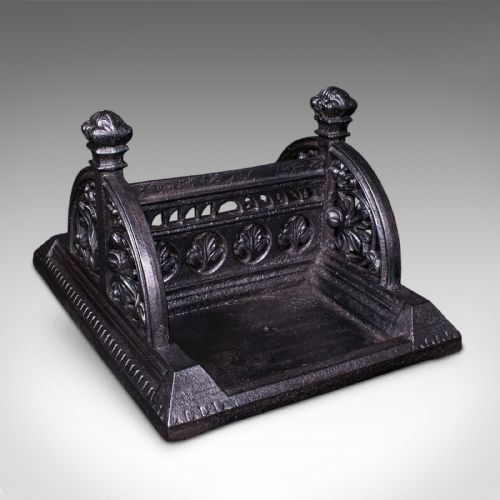
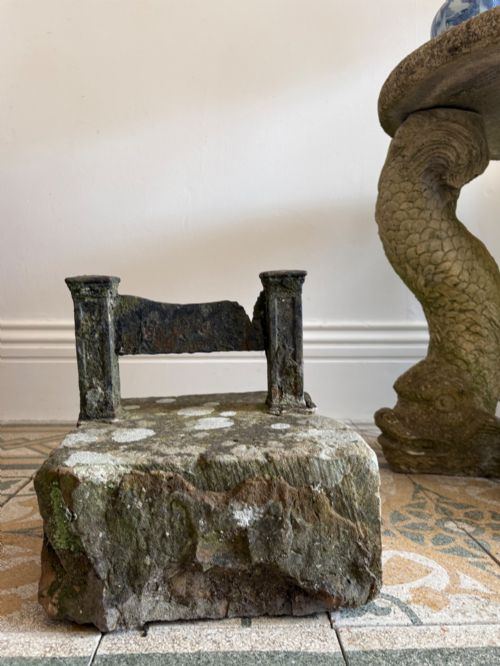
These outdoor boot cleaner pieces are solid metal and stone footscrapers designed to clear heavy mud from footwear before entering the house.

Outdoor Boot Cleaner
When you search for an outdoor boot cleaner, you encounter heavy iron scrapers designed for country houses and townhouses. These items stand by doorways to clear mud from heavy footwear before entering.
Most examples on this page date from the Georgian, Victorian, and Regency periods, constructed to withstand constant use at the entrance of a home.
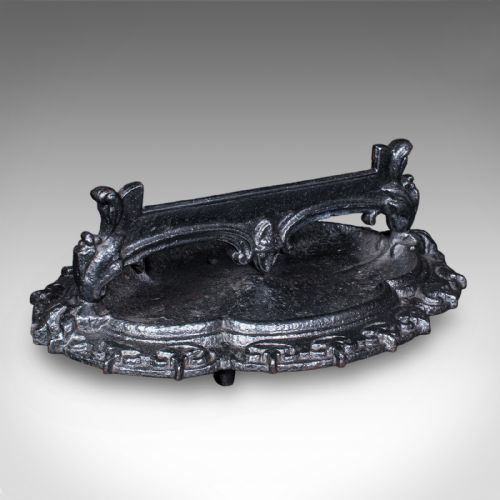
The standard form combines a rigid metal blade for scraping soles with integrated side bars or pulls to help steady the foot while removing boots.
How they were made
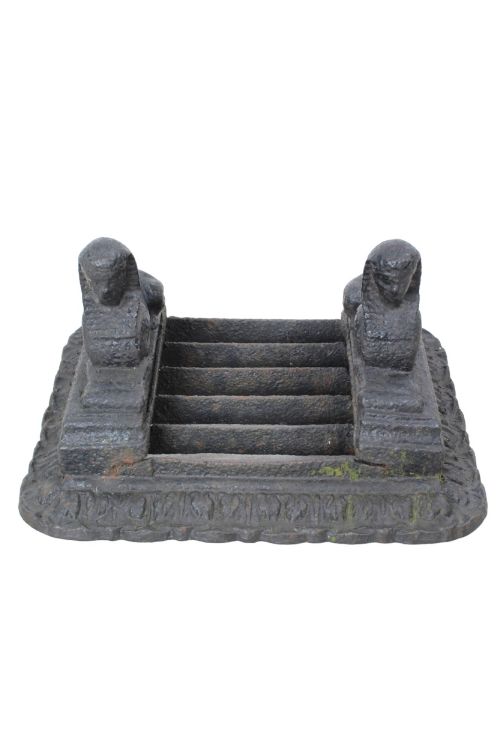
Foundries produced the main scraping elements in cast iron, shaping them into simple utility designs or decorative motifs such as Egyptian Revival patterns.
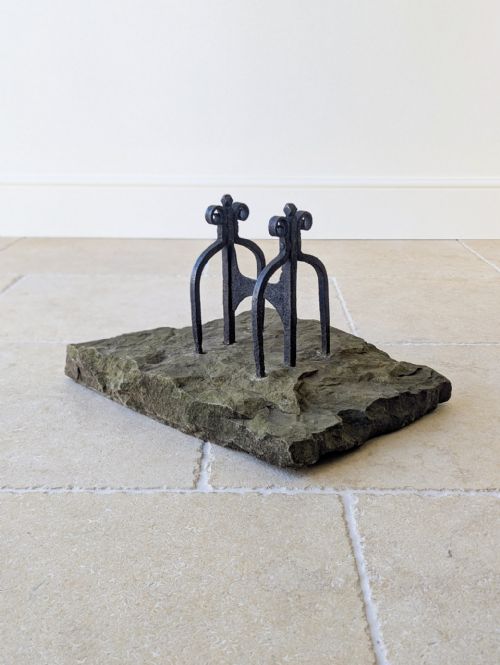
Many heavy scrapers are secured directly into robust foundation blocks made from stone or Yorkstone, providing the necessary weight to stay firm in the ground or on doorsteps.
Every muddy boot in the nineteenth century relied on these steadfast iron blades to keep hallway carpets respectable.
What varies in quality
Quality rests in the weight and substance of the metalwork, alongside the geological character of the supporting stone block. Simpler utilitarian townhouse scrapers differ distinctly from large country house pairs.
Design detail sets the better examples apart, with particular attention paid to decorative iron framing and whether the piece incorporates a shoe pull.
Coalbrookdale
The Outdoor Boot Cleaner Glossary
- Boot scraper
- An outdoor iron blade fixed near a doorway for removing mud from footwear. They are commonly found mounted in stone blocks or anchored beside historical entrances.
- Shoe pull
- An upright loop or handle attached beside the scraper to steady the foot or help draw off a tight boot. This addition appears frequently on townhouse and country house examples.
- Yorkstone
- A tough British sandstone used traditionally for paving and foundation blocks. It provides heavy, weather-resistant mounting for iron scrapers.
- Egyptian Revival
- A nineteenth-century decorative style drawing on motifs from ancient Egypt. It occasionally appears on cast iron work from this era.
Outdoor Boot Cleaner: Frequently Asked Questions
Where were outdoor boot cleaners placed?
These scrapers stand immediately outside exterior doorways, usually mounted close to the threshold where visitors and residents stop to clean their footwear.
They appear beside both grand country houses and narrow London townhouses to protect interior hallways from mud.
How do I date a cast iron boot scraper?
Dating relies on stylistic clues within the cast iron frame and the nature of the stone base. Georgian and Regency pieces show different casting characteristics compared to later Victorian or Egyptian Revival variants.
Changes in foundry techniques and decorative preferences across the nineteenth century help establish the period of manufacture.
What is the stone block used for?
The heavy stone or Yorkstone block anchors the iron scraper securely without requiring permanent masonry work into the doorstep. It adds substantial weight so the blade remains steady under pressure.
Some examples are inset directly into hewn stone blocks designed to sit level with pathways.
Can I use an antique boot scraper outside?
These robust iron and stone pieces spent their lives exposed to weather elements by doorways. Their heavy materials suit continued outdoor placement beside modern entrances.
Regular cleaning helps preserve the cast iron surface against natural weathering over time.