

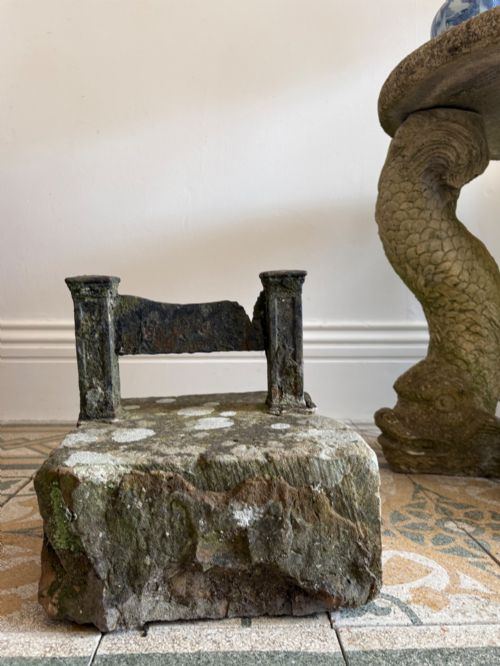


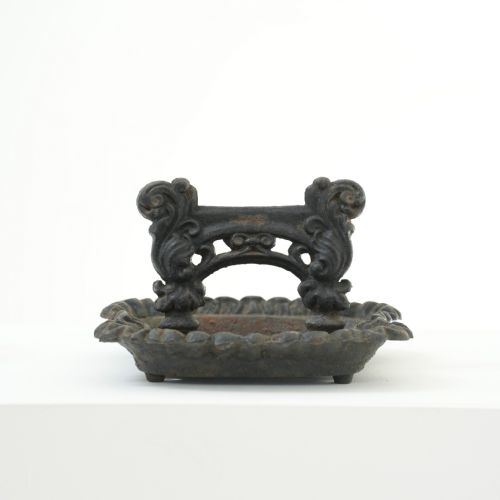


Victorian Shoe Scraper
A victorian shoe scraper keeps heavy dirt outside the doorway, combining practical ironwork with period style for the entrance.

Victorian Shoe Scraper
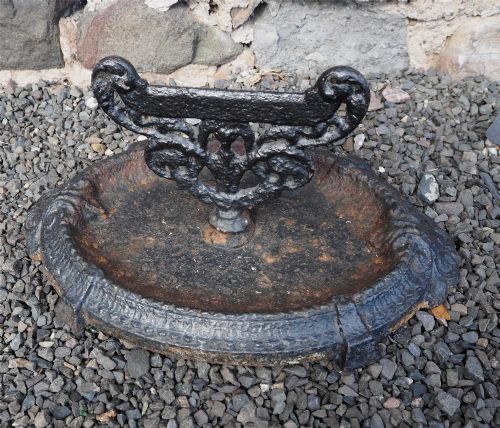
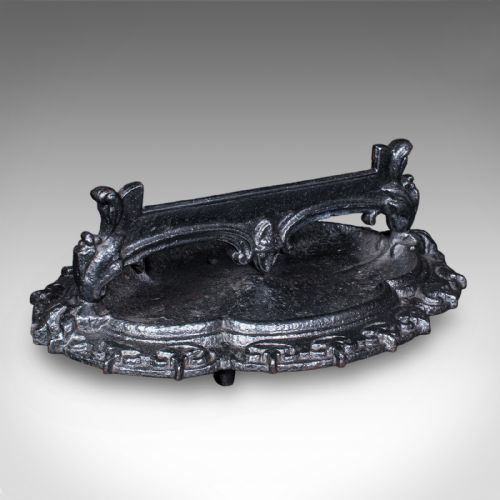
A victorian shoe scraper stands by a doorway to clear mud from boots before entering the house. The pieces on this page span the Victorian and Regency periods, alongside 19th-century and Georgian examples.
Most items take the form of a cast iron blade mounted on a stone block or integrated with a metal frame. Townhouse and country house variants often combine the scraper with shoe pulls for removing muddy boots.
Judgements of quality
Quality rests on the crispness of the iron casting and the presence of decorative motifs like lions or architectural styling. Simpler utilitarian designs contrast with ornate foundry work produced for grand townhouses.
The integrity of the mountings, whether fixed into hewn stone blocks or freestanding frames, dictates the durability of the piece. Foundries such as Coalbrookdale represent particular standards of period ironwork.
Victorian Shoe Scraper Retail Price Guide 2026
Typical asking prices for victorian shoe scraper among the pieces listed under this phrase on Sellingantiques today, from the lower quarter to the upper quarter. They describe what is for sale here now, not the wider market.
Form variations range from small oval footscrapers to large country house pairs with integrated boot pulls.
Coalbrookdale
The Victorian Shoe Scraper Glossary
- Boot scraper
- An iron blade fixed near an entrance for scraping mud from footwear. They are frequently found mounted in stone or integrated with boot pulls.
- Boot pull
- A handle or loop attached to the scraper frame to help draw off heavy boots. This feature appears on many townhouse and country house examples.
- Cast iron
- An iron-carbon alloy poured into moulds to create rigid shapes. It serves as the primary material for these 19th-century objects.
- Hewn stone block
- A block of quarried stone shaped by hand to anchor the metal scraper. These provide a heavy base for freestanding doorway installations.
Victorian Shoe Scraper: Frequently Asked Questions
Where were shoe scrapers placed?
These items were positioned directly outside entrance doors, steps, or pathways to catch mud from visitors before they stepped inside.
Townhouse and country house examples often sat near the main threshold or side entrances of the property.
How do I use a boot pull?
The integrated loop or handle allows a person to steady their foot while pulling off muddy boots without soiling their hands.
This metal fixture works alongside the scraping blade to handle heavy footwear.
What styles are common?
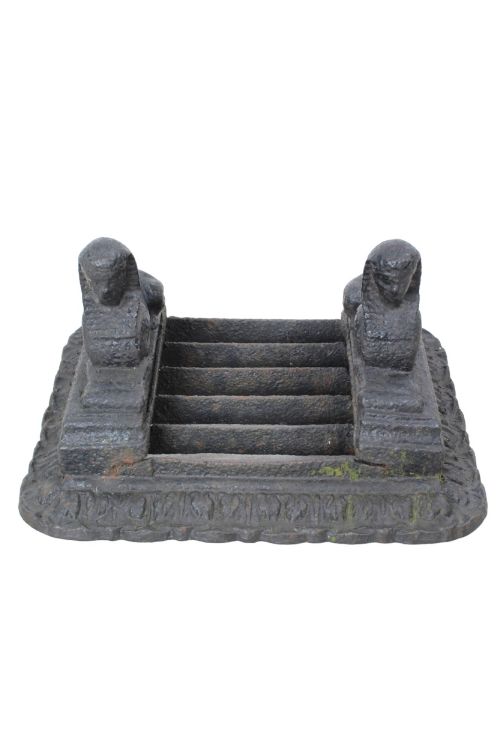
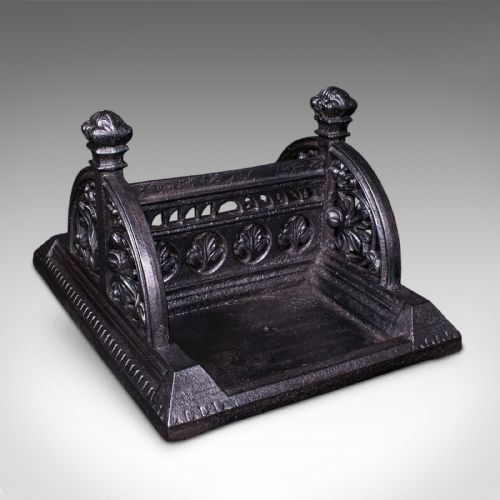
Designs range from plain utilitarian iron blades to Gothic Revival and Egyptian Revival ornamentation. Some pieces feature cast iron lions or decorative frames.
Foundries produced both simple street-facing designs and ornate country house variations.
How do I maintain cast iron?
Keeping the iron clean and free of excessive moisture helps preserve the metal surface outdoors. Periodic treatments protect against rust.
These pieces were built for exterior use and withstand typical weather conditions.