



Cast Iron Shoe Cleaner
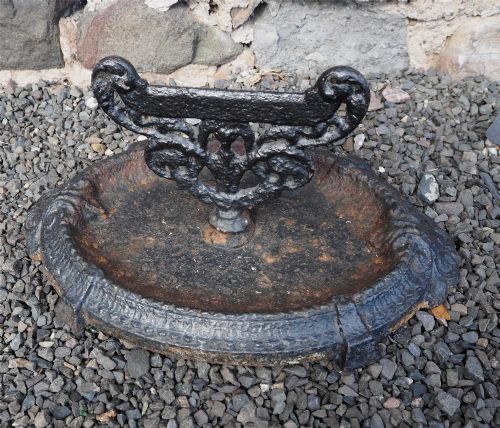
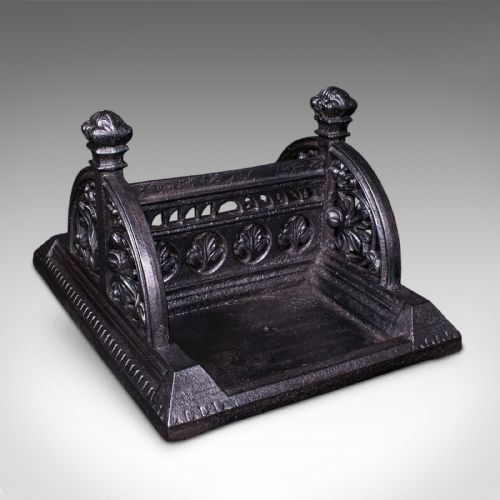
These cast iron shoe cleaner pieces are robust iron and stone thresholds that scrape mud away before it crosses the floor.
Cast Iron Shoe Cleaner
A cast iron shoe cleaner is a permanent doorstep fixture designed to scrape heavy mud and dirt from boots before entering a house. These functional household implements appear in several distinct historical periods and styles.
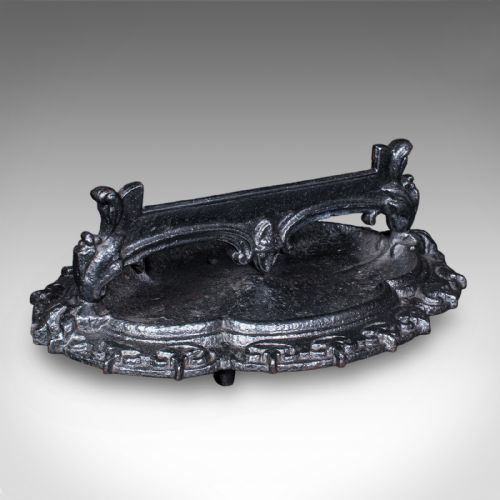
The pieces listed on this page span the Victorian era, the nineteenth century, the year nineteen hundred, eighteen fifty, the Georgian period, and the Regency era. Formats include standalone boot scrapers, small oval footscrapers, and scrapers inset into hewn stone blocks.
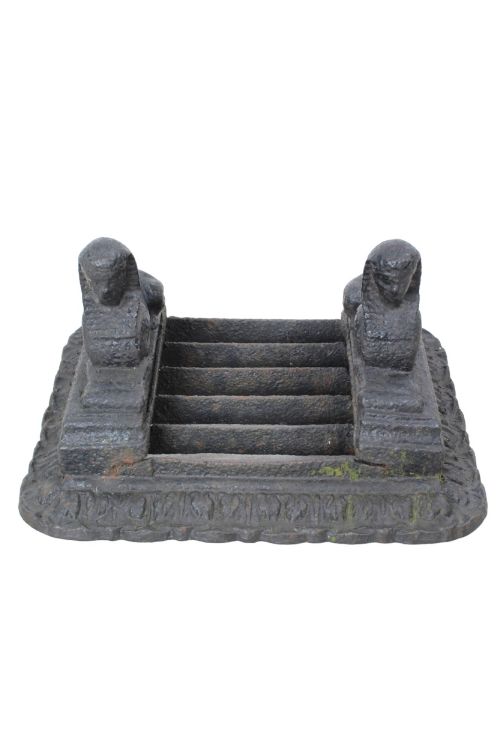
Makers and designers drew on various aesthetic influences, yielding Egyptian Revival motifs alongside plain functional forms. Some examples feature sculptural animal elements such as lions, whilst others remain strictly utilitarian doorway accessories.
Materials and construction
Construction relies upon cast iron for the scraper blade and structural frame, occasionally paired with durable stone blocks for stability. Iron was poured into moulds to create both simple geometric outlines and more ornate decorative designs.
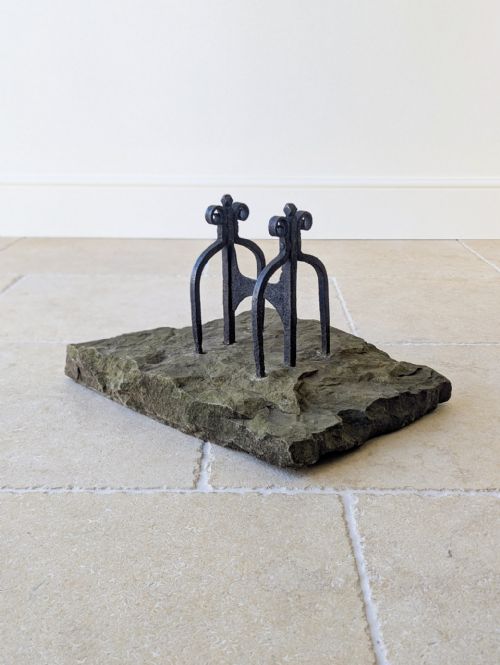
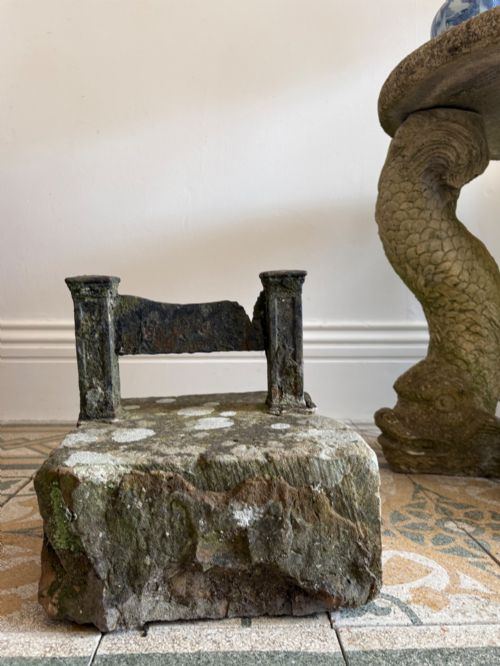
Certain nineteenth-century examples incorporate hewn stone blocks, integrating the heavy iron blade directly into a substantial masonry base. This combination provided the necessary weight to keep the scraper stationary during vigorous use.
Cast Iron Shoe Cleaner Retail Price Guide 2026
Typical asking prices for cast iron shoe cleaner among the pieces listed under this phrase on Sellingantiques today, from the lower quarter to the upper quarter. They describe what is for sale here now, not the wider market.
Cast iron lions stand guard at doorways to scrape away the mud.
Assessing quality
Quality in these boot scrapers rests upon the crispness of the casting and the integration of materials. Pieces featuring sculptural elements like lion motifs or architectural details from the Egyptian Revival or Regency periods demonstrate greater ambition in the foundry.
The choice of base material also distinguishes the work, with heavy inset stone blocks offering a more substantial construction than simpler ground-fixed designs. The overall weight and thickness of the iron casting dictate the durability and presence of the object.
Coalbrookdale
The Cast Iron Shoe Cleaner Glossary
- Boot scraper
- A heavy metal blade or iron appliance fixed near a doorway for removing mud from footwear. They range from simple iron bars to decorative sculptural forms.
- Cast iron
- An iron-carbon alloy poured into a mould to produce solid metal objects. This material provided the strength and weather resistance required for outdoor entrance use.
- Egyptian Revival
- An architectural and decorative style drawing inspiration from ancient Egypt. This aesthetic appears on specific nineteenth-century ironwork through distinctive motifs.
- Hewn stone block
- A solid block of stone shaped by cutting or chipping with a tool. Scrapers are frequently inset into these heavy bases to anchor the ironwork firmly in place.
Cast Iron Shoe Cleaner: Frequently Asked Questions
What is a cast iron shoe cleaner?
A cast iron shoe cleaner is a heavy metal scraper placed outside a doorway to remove mud and dirt from footwear. These items were essential household fixtures before the advent of paved walkways.
They combine a durable iron blade with structural elements designed to withstand harsh outdoor conditions and heavy daily use.
Where were boot scrapers placed?
Boot scrapers were positioned immediately outside front entrances, near porches, or embedded directly into stone doorsteps. This placement ensured visitors and residents cleaned their boots before stepping inside.
Many examples were mounted into stone blocks or secured permanently into the ground near the threshold.
How do I date a cast iron shoe cleaner?
Dating relies upon stylistic markers, such as Georgian, Regency, or Victorian design characteristics, alongside manufacturing methods. Egyptian Revival motifs and foundry attributions also help narrow the period of creation.
The presence of hewn stone bases or specific cast signatures can indicate nineteenth-century production origins.
Can these scrapers be used outside today?
Cast iron and stone are naturally weather-resistant materials well-suited for outdoor placement by a modern doorway. Their original purpose was enduring exposure to rain, mud, and foot traffic.
Placing them outside continues their traditional function as practical entryway accessories.