


Doorstep Mud Scraper
These doorstep mud scraper pieces are solid iron utilities designed to clean footwear before entering the house.
Doorstep Mud Scraper
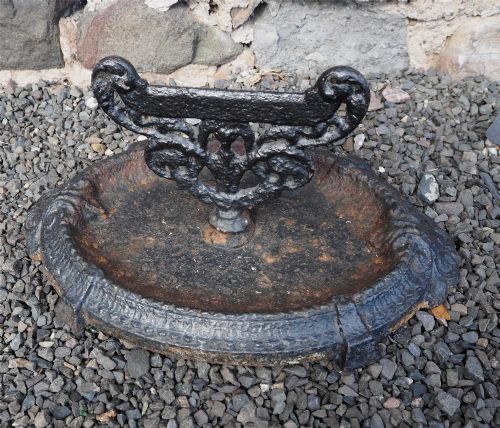
A doorstep mud scraper stands outside the primary entrance of a house to clear heavy soil and clay from boots and shoes before entry. The forms seen here range from simple country house designs to elaborate town models.
Most examples found on this page belong to the Victorian and Georgian periods, utilising durable metalwork built to withstand daily weathering. Buyers encounter these as freestanding or fixed entrance fittings intended for practical use.
The objects combine a horizontal scraping blade with varying structural supports, sometimes incorporating shoe pulls to assist with removal. Their presence reflects the domestic necessity of keeping muddy footpaths outside the threshold.
How they were made
Makers relied primarily on cast iron and wrought iron to form the rigid frames and scraping blades necessary for heavy daily wear. These metals provided the structural strength required to endure constant scraping without bending.
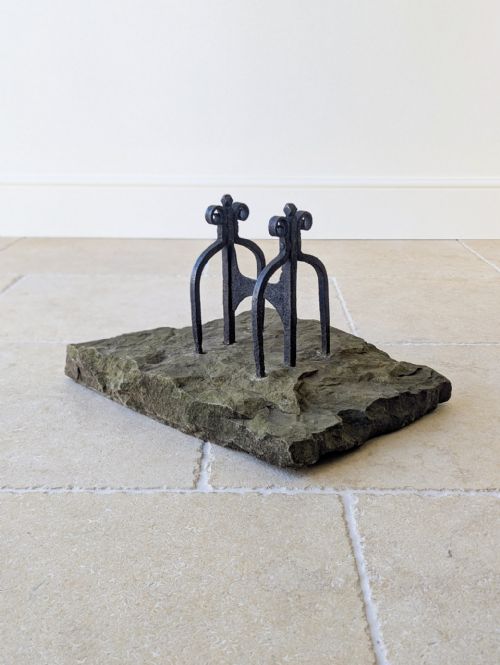
Certain period examples incorporate Yorkstone bases, anchoring the ironwork securely into a heavy stone block that rests independently by the doorway. This combination of stone and metal gave the object stability without requiring permanent installation into the masonry.
Some nineteenth-century makers doubled as domestic boot removers, sparing weary Victorians from hopping on one foot in the rain.
What varies in quality
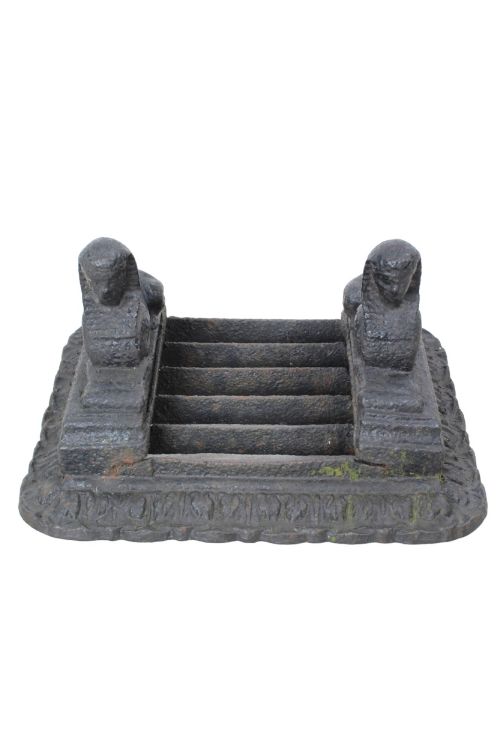
Quality rests in the architectural ambition of the design, moving from utilitarian country pieces to sophisticated examples displaying Gothic Revival or Egyptian Revival motifs. Heavier castings and integrated shoe pulls indicate a more substantial townhouse origin.
The finesse of the ironwork distinguishes standard production items from finer foundry outputs, such as those associated with Coalbrookdale. Better pieces retain crisp decorative details on the frame and solid structural integrity in the blade.
Coalbrookdale
The Doorstep Mud Scraper Glossary
- Cast iron
- A sturdy alloy poured into moulds to create rigid forms. It serves as the primary material for the durable frames and blades seen in these pieces.
- Wrought iron
- A fibrous metal beaten by hand into specific shapes. It provides strong, resilient structural elements for period outdoor ironwork.
- Yorkstone
- A tough British sandstone used historically for paving and heavy architectural bases. It anchors freestanding iron scrapers securely beside the doorway.
- Shoe pull
- An attached metal loop or handle designed to assist with pulling off muddy boots. It appears alongside the scraping blade on various town and country models.
Doorstep Mud Scraper: Frequently Asked Questions
Where were doorstep mud scrapers placed?
These scrapers stood immediately outside the front door or porch entrance of Georgian and Victorian houses. Their primary position allowed visitors and residents to clean their footwear before stepping onto the interior hall flooring.
Positioning depended on the doorway layout, with some mounted directly into exterior stone steps and others resting freely on heavy stone bases.
How do I date a cast iron scraper?
Dating relies on stylistic clues, manufacturing techniques, and period characteristics evident in the ironwork. Pieces from the Georgian era often display simpler, robust proportions, whereas Victorian examples might feature Gothic or Egyptian revival details.
Foundry marks and the integration of specific decorative motifs further help place an object within the nineteenth century.
Can I use an antique scraper outside?
These iron utilities were engineered specifically for outdoor placement and weathering by building entrances. Their robust metal construction handles rain and ground moisture without issue.
Owners simply place them by modern doorways just as previous generations did, though regular checks for surface oxidation help preserve the metal.
What is the difference between town and country scrapers?
Town models frequently display more decorative styling, including shoe pulls and refined cast iron frames suited to urban residences. They often incorporate Yorkstone bases designed for paved city frontages.