
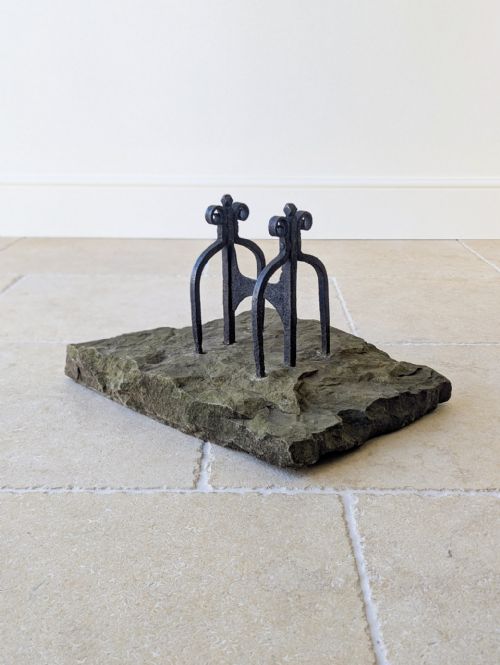
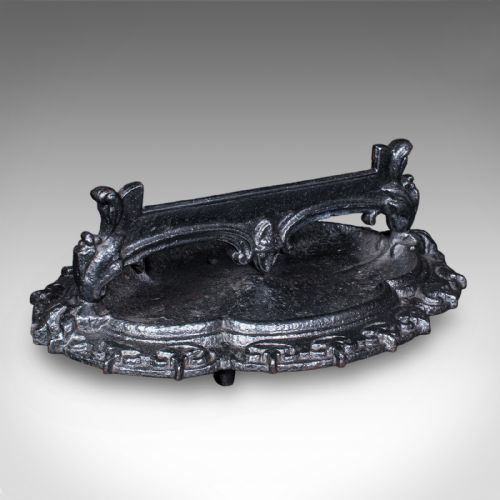

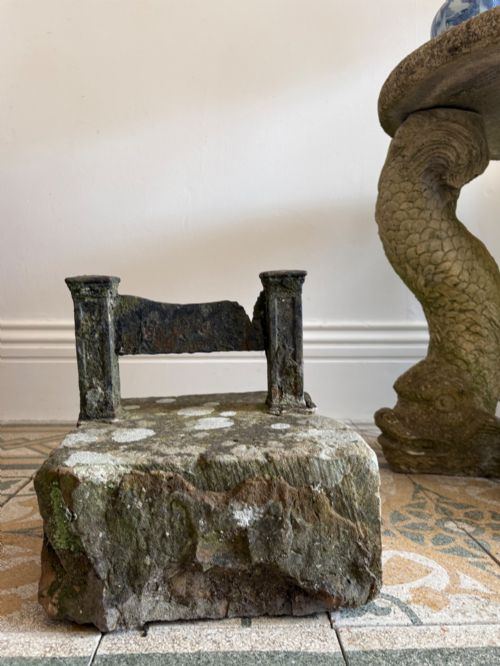


Antique Iron Boot Wiper
These antique iron boot wiper pieces are sturdy period entrance accessories designed to clear mud from footwear before crossing a threshold.
Antique Iron Boot Wiper
When you search for an antique iron boot wiper, you find heavy utilitarian hardware designed for domestic doorways and country house entrances. These pieces serve to clear mud and dirt from boots before entering the house, combining a scraper blade with sturdy mounting or base forms.
You are most likely to meet Victorian and Georgian examples on this page, reflecting periods when exterior footwear care was essential. Forms range from simple cast iron blades to elaborate designs featuring integral boot pulls and stone bases.
The selection includes freestanding or fixed items, often paired with Yorkstone blocks or hewn stone. Country house and townhouse variants appear across the inventory, showing how domestic requirements varied by location.
How they were made
Makers utilised cast iron and wrought iron for the durable scraper blades and structural frames. These metals provided the necessary strength to withstand heavy daily scraping without bending.
Many examples are inset into Yorkstone or hewn stone blocks to anchor the metal securely. This combination of heavy stone and cast iron created stable freestanding units for entranceways.
The inventory spans the Georgian, Regency, and Victorian periods, utilising cast iron, wrought iron, and Yorkstone.
What varies in quality
The distinction between standard utility items and finer examples lies in decorative detail and material combination. Pieces featuring Gothic Revival styling or sculptural elements like lions show greater ambition than plain town boot scrapers.
The quality of the mounting base also differentiates the pieces, with substantial Yorkstone or hewn stone blocks indicating higher status domestic commissions compared to simple floor-fixing blades.
The Antique Iron Boot Wiper Glossary
- Boot scraper
- A metal blade or plate fixed near a doorway for scraping mud from the soles of boots. They often include side flanges or integrated pull handles.
- Boot pull
- A handle or hook attached to the scraper assembly used to steady footwear while removing muddy boots. This feature appears on several entrance models.
- Cast iron
- An iron-carbon alloy poured into moulds to create rigid forms. It is the primary material used for the structural bodies and blades seen here.
- Wrought iron
- Iron beaten and worked by hand into shape rather than cast. It provides strong, fibrous metal components for early country house examples.
- Yorkstone
- A tough carboniferous sandstone quarried in Yorkshire. It provides heavy, weathering-resistant mounting blocks for nineteenth-century scrapers.
Antique Iron Boot Wiper: Frequently Asked Questions
Where were boot wipers placed?
These items were positioned directly outside exterior doorways, entrance porches, and boot rooms of period properties.
Their location ensured visitors and residents cleaned their footwear before stepping onto interior carpets and floors.
How do I mount a freestanding scraper?
Many period examples arrive anchored in heavy Yorkstone or hewn stone blocks that require no additional fixing.
Their substantial weight keeps them stable on stone flags or porch steps during everyday use.
What is the difference between cast and wrought iron?
Cast iron is poured into moulds to achieve detailed forms and rigid structures, which accounts for most Victorian scraper bodies.
Wrought iron is beaten by hand into shape, typically found on earlier Georgian country house pieces.
How do I date a Victorian piece?
Dating relies on stylistic markers such as Gothic Revival motifs, registration marks, or accompanying documentation from the period.
Comparing the casting sharpness and base stone type also helps place pieces within the nineteenth century.