


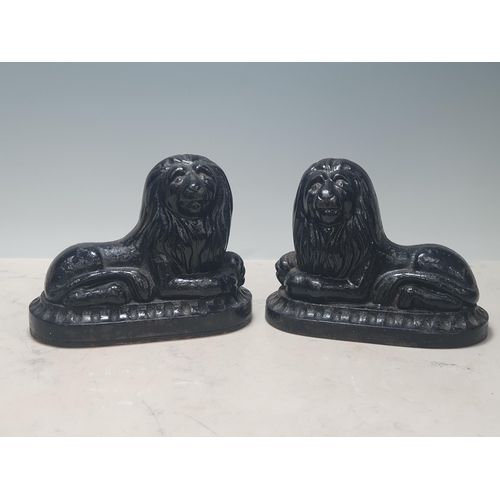


Victorian Lion Door Stop
These heavy Victorian lion door stops hold open heavy interior doors while bringing sculptural weight to a hallway.
Victorian Lion Door Stop
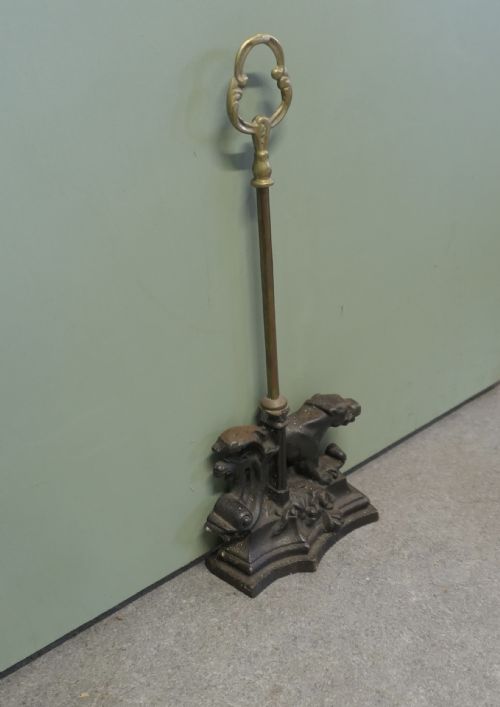
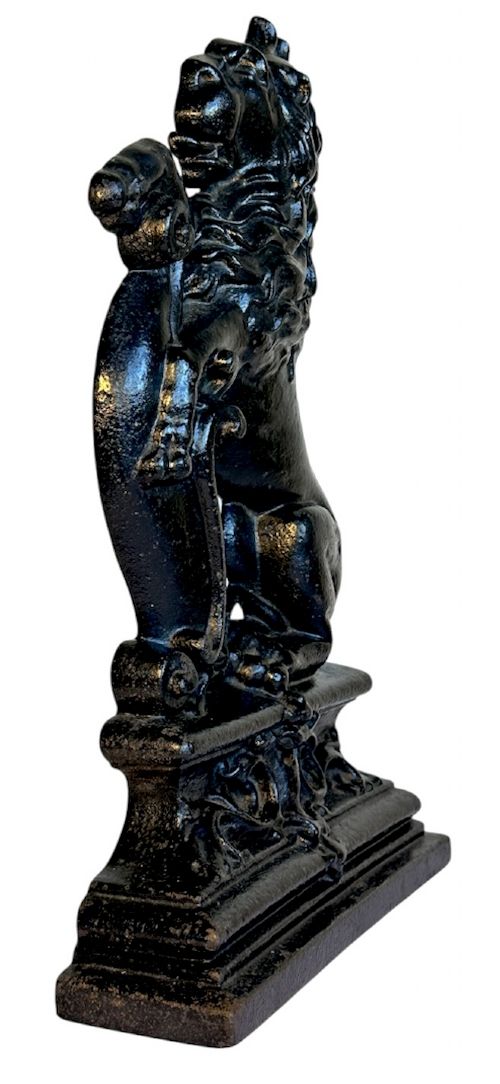
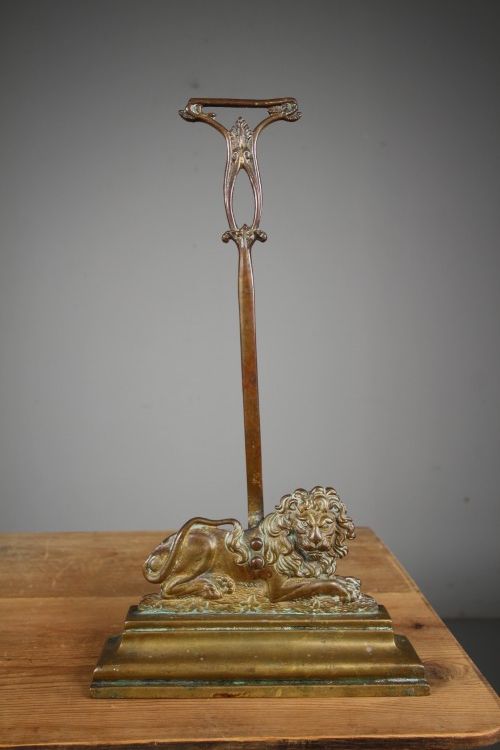
A victorian lion door stop serves to prop doors open using substantial metal weight combined with heraldic or figurative animal design. You will most frequently encounter cast iron examples taking the form of a rampant lion or recumbent beast.
The archive shows these pieces crossing over in utility with door porters and boot scrapers, while variations stretch back into the Georgian era and forward through the nineteenth century. Most pieces adopt distinct English provincial foundry work from the mid-Victorian decades.
Makers shaped these utilitarian objects to double as decorative sculptures in grand hallways and parlours. Collectors find both single stops and matching pairs designed to handle substantial drafty doors.
Materials and Casting
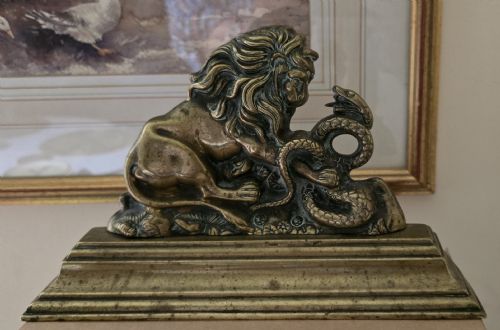
Foundries produced these heavy objects primarily through sand casting in iron and brass, creating solid metal bodies capable of enduring constant use. Molten metal poured into moulds captured sharp details of manes, claws, and serpent motifs.
Many iron examples retain early black paint finishes applied directly over the cast metal to prevent oxidation and enhance sculptural depth. Brass and bronze variants received polished or patinated surfaces suited to more formal interior settings.
Recorded materials span cast iron, brass, bronze, and steel, with nineteenth-century cast iron forming the vast majority of surviving pieces.
Foundry Detail and Original Surface
The presence of untouched early paint or natural age patination separates standard utility pieces from collector examples. Heavy weight and structural integrity remain paramount, as these items served daily functional roles.
The Victorian Lion Door Stop Glossary
- Door porter
- An alternative term for a heavy door stop fitted with a top handle for carrying. These items were designed to be portable heavy weights moved from room to room.
- Rampant
- A heraldic posture depicting an animal standing on one hind leg with forelegs raised. This dynamic stance appears frequently on nineteenth-century iron castings.
- Recumbent
- Lying down or resting while remaining alert. This pose provides a lower centre of gravity well suited to holding heavy doors.
- Boot scraper
- A heavy metal domestic fixture placed near entrances to clean mud from footwear. Some heavy lion castings served this dual household purpose.
- Cast iron
- An iron-carbon alloy poured into moulds in a liquid state. This material provides the substantial mass required for effective door control.
Victorian Lion Door Stop: Frequently Asked Questions
How heavy are these door stops?
These pieces possess substantial weight derived from solid cast iron or brass construction, allowing them to hold open heavy interior doors with ease.
Their heft ensured they remained stationary under the pressure of draughts in nineteenth-century hallways.
Where were door stops placed?
Households positioned them directly inside principal doorways, libraries, and grand hallways where heavy timber doors required steadying.
They sat upon the floor near the threshold, functioning as both practical ironmongery and decorative sculpture.
How do I care for cast iron?
Cast iron requires dry indoor environments to prevent surface oxidation from forming over the metal or historic paint layers.
Applying occasional light wax helps preserve original dark finishes without altering the character of the antique surface.
Can I use them on modern doors?
Their solid mass makes them fully functional for holding open heavy modern doors in contemporary homes.
Users should simply ensure the protective underside or base rests safely against delicate flooring materials.