





Victorian Shoe Wiper
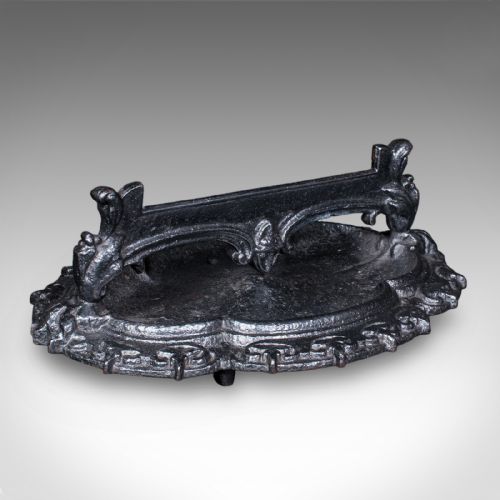
These Victorian shoe wiper pieces are solid cast iron or stone fixtures built to keep mud outside, and every hallway needs one.
Victorian Shoe Wiper
When you search for a victorian shoe wiper, you find heavy iron and stone entrance fixtures designed for scraping mud from boots before stepping inside. The examples meeting you on this page belong mainly to the Victorian period, alongside earlier Regency designs and distinct Gothic Revival forms.
Most pieces combine a sturdy metal scraping blade with an integrated boot pull or heavy mounting block. Townhouse and country house versions appear frequently, ranging from simple utilitarian models to ornate figural designs such as lions.
How they were made
Makers utilised durable cast iron for the structural blades and decorative frames, relying on traditional foundry casting techniques to shape the metal. This heavy material endured constant daily use outside doorways without buckling under pressure.
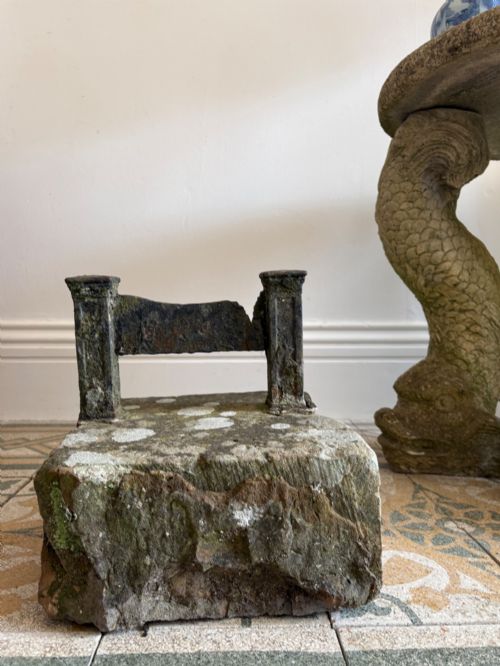
Many heavy scrapers were permanently inset directly into hewn stone blocks to provide maximum stability during use. Others incorporated side pulls cast as a single piece with the main scraping blade.
Victorian Shoe Wiper Retail Price Guide 2026
Typical asking prices for victorian shoe wiper among the pieces listed under this phrase on Sellingantiques today, from the lower quarter to the upper quarter. They describe what is for sale here now, not the wider market.
Cast iron lions stand guard at doorways, turning a muddy chore into a greeting.
What varies in quality
The distinction between standard examples and finer pieces lies in the crispness of the casting and the presence of architectural ornament. Plain utility scrapers contrast with elaborate Gothic Revival iterations and detailed figural forms like lions.
Quality also shows in the heft of the original hewn stone base and whether the scraper retains its integrated shoe pull. Greater sculptural ambition in the ironwork elevates a piece beyond a basic functional door accessory.
The Victorian Shoe Wiper Glossary
- Boot Scraper
- A heavy iron blade fixed outside a doorway for removing mud from footwear. It forms the primary component of every piece listed here.
- Shoe Pull
- A curved metal loop attached to the side of a scraper to help draw off tight riding boots. This feature appears on several townhouse and country house models.
- Cast Iron
- A robust alloy poured into moulds to create strong, rigid architectural metalwork. It forms the main material for the blades and frames seen across these periods.
- Gothic Revival
- An architectural and decorative style drawing inspiration from medieval design. Pieces from this movement often feature pointed arches and ecclesiastical motifs.
- Regency
- An architectural and decorative period spanning the early nineteenth century. Surviving pieces from this era tend towards substantial proportions and classical restraint.
Victorian Shoe Wiper: Frequently Asked Questions
Where were these placed?
These boot scrapers sat permanently outside exterior doorways, often mounted beside the front steps of townhouses and country houses.
Their solid weight kept them firmly in place during daily use by residents and visitors alike.
How do you use a boot pull?
The integrated loop allowed a person to anchor their foot while pulling off mud-caked riding boots without bending down.
This practical addition saved considerable effort after a day spent outdoors or on horseback.
What is the difference between iron and stone models?
Some scrapers consist entirely of cast iron blades, while others are permanently inset into hewn stone blocks for extra weight.
Stone-mounted versions provided exceptional stability without requiring permanent bolting into masonry.
Are these pieces suitable for outdoor use today?
Cast iron and stone are naturally weather-resistant materials built specifically to withstand the elements outside.
They function just as effectively beside a modern doorway as they did during the nineteenth century.