



Iron Door Scraper
These iron door scraper pieces are robust doorway fixtures designed to clean muddy footwear before entry, offering authentic period charm for any entranceway.

Iron Door Scraper
An iron door scraper provides a practical threshold fixture designed to clear mud from footwear before entering a building. When you search for an iron door scraper, you encounter robust examples primarily originating from the Georgian and Victorian eras. These items serve a functional role at doorways while adding historic character to thresholds.
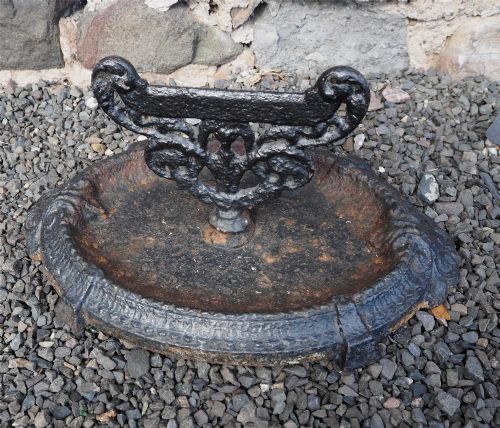
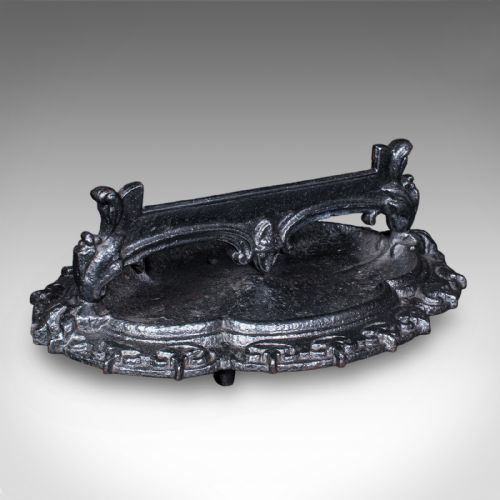
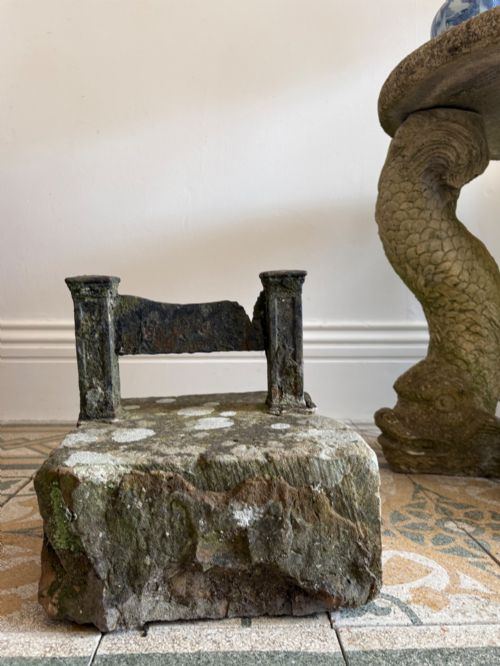
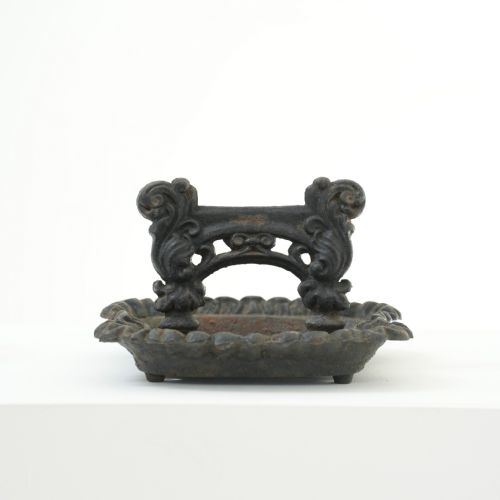
The pieces appearing on this page most commonly take the form of boot scrapers fashioned from cast iron or wrought iron. Many incorporate stone blocks or Yorkstone bases to anchor the metal blade firmly outside the entrance. Townhouse and country house variants both appear frequently among the listings.
How they were made
Makers utilised durable metals such as cast iron and wrought iron to form the primary scraping blades and structural frames. These metals provide the necessary strength to withstand heavy daily use at an entranceway.
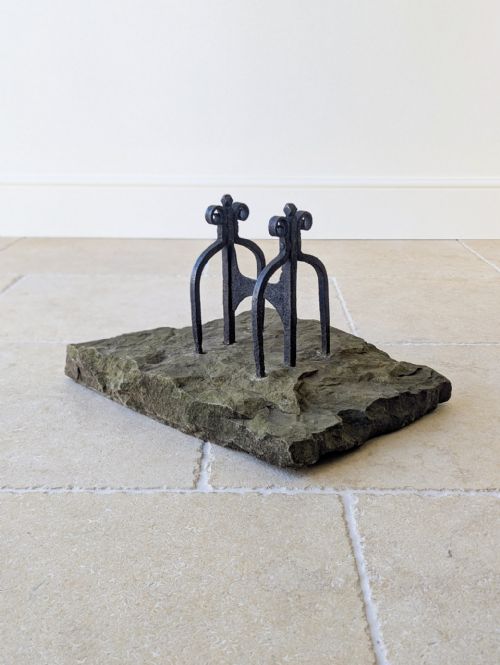
Many examples are inset directly into hewn stone blocks or Yorkstone bases to secure the fixture firmly in place. This combination of heavy ironwork and dense stone creates a stable freestanding or doorstep installation.
Object forms include standard boot scrapers, shoe pulls, and entryway cleaners inset into hewn stone blocks.
What varies in quality
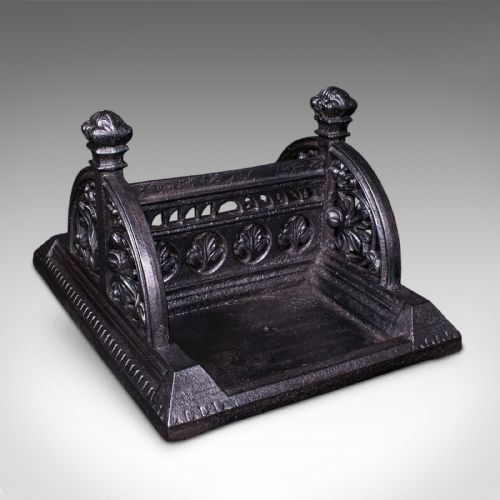
Quality in these pieces depends on the refinement of the metalwork and the presence of decorative details such as Gothic Revival styling or animal motifs like lions. Simpler utilitarian town versions contrast with more elaborate country house designs that feature ornate iron casting.
The integration between the iron blade and its stone base also distinguishes finer examples from basic utility pieces. Heavier stones and more complex architectural styling elevate the visual presence of the threshold fixture.
Coalbrookdale
The Iron Door Scraper Glossary
- Cast iron
- A sturdy metal alloy poured into moulds to create rigid shapes. It forms the primary structure for the majority of these scrapers.
- Wrought iron
- Iron beaten and worked by hand into durable shapes. This material appears in several traditional doorway fixtures.
- Yorkstone
- A tough British sandstone used traditionally for paving and building bases. It frequently serves as the heavy foundation block for the iron blade.
- Gothic Revival
- An architectural style reviving medieval forms. This aesthetic influences the decorative pointed arches and detailing on specific period scrapers.
Iron Door Scraper: Frequently Asked Questions
Where were iron door scrapers placed?
These fixtures were installed directly outside exterior doorways on doorsteps or embedded into the stone paving. Their primary location was right at the threshold to catch mud before visitors crossed inside.
Property owners positioned them where foot traffic naturally approached the main entrance of townhouses and country houses.
How do I clean an iron door scraper?
Gentle brushing removes loose dirt and debris accumulated within the metal blade or stone base. Avoid harsh chemical cleaners that might damage the historic iron surface.
Applying a light protective wax or appropriate metal treatment helps preserve the cast iron against outdoor moisture.
Are these scrapers suitable for outdoor use?
These pieces were specifically built for exterior conditions and naturally withstand outdoor weather. Their heavy iron and stone construction allows them to remain outside permanently.
Regular exposure to elements is standard for these robust threshold fixtures.
How can I tell a Victorian scraper from a Georgian one?
Georgian examples often display simpler wrought iron work or late Georgian styling associated with early nineteenth-century architecture. Victorian pieces frequently utilise heavier cast iron and sometimes incorporate Gothic Revival ornamentation.
Stylistic details in the metal casting and the surrounding stone context help indicate the specific period of manufacture.