




Cast Iron Boot Tray
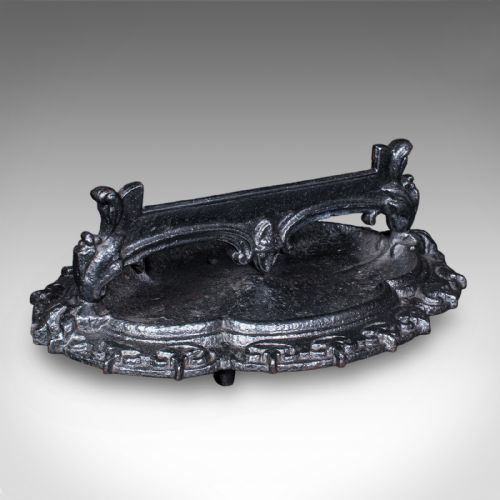
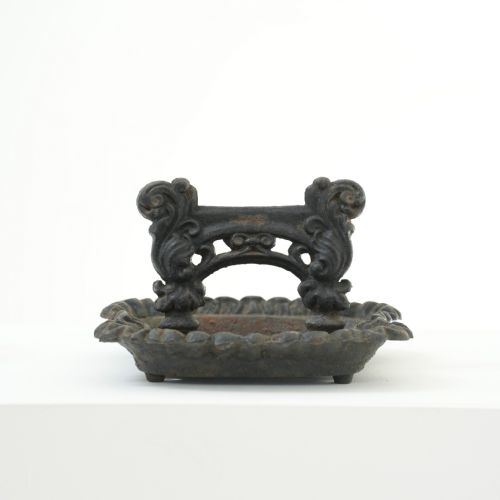
These cast iron boot tray pieces are sturdy domestic items designed to clean footwear by the doorway, bringing practical period utility to an entrance.

Cast Iron Boot Tray
When you search for a cast iron boot tray or scraper, you are looking at entrance accessories designed to remove mud from shoes before entering the house. The items seen on this page predominantly take the form of boot scrapers and shoe cleaners, spanning Georgian, Regency, and Victorian periods.
You will most commonly encounter English examples originating from country houses and townhouses. These functional iron pieces reflect the domestic requirements of the nineteenth century, utilising robust metalwork to withstand heavy daily use by doorways.
Materials and construction
Every piece on this page is formed from cast iron, utilising foundry techniques suited to producing rigid and heavy-duty hardware. This material allows for intricate styling such as Gothic Revival motifs alongside utilitarian architectural shapes.
Makers integrated structural scrapers and pulling mechanisms directly into the metal casting process. This creates a solid single unit or paired assembly designed to endure the elements outside a doorway.
The listings span the Georgian, Regency, and Victorian periods, showcasing cast iron construction exclusively in styles like Gothic Revival.
Assessing the work
Quality in these cast iron items rests on the crispness of the casting and the scale of the object. Finer examples display sharp architectural details, such as Gothic Revival ornamentation, rather than purely utilitarian surfaces.
The distinction between standard domestic items and grander pieces lies in the design ambition. Large country house pairs and pieces associated with exhibitions demonstrate superior presence by the entrance compared to small oval designs.
Coalbrookdale
The Cast Iron Boot Tray Glossary
- Cast iron
- A strong, hard alloy of iron and carbon poured into a mould to shape objects. It forms the rigid body of every item listed here.
- Boot scraper
- A metal device fixed near a doorway to scrape mud from the soles of footwear. These form the primary object type found in this collection.
- Gothic Revival
- An architectural and decorative style drawing inspiration from medieval forms. Pieces in this style feature pointed arches and ecclesiastical motifs.
- Regency
- A period of British design dating from the early nineteenth century. Items from this era show neoclassical restraint combined with sturdy construction.
- Victorian
- The period spanning the nineteenth century under Queen Victoria. Many entries on this page date from this era of heavy industrial ironwork.
Cast Iron Boot Tray: Frequently Asked Questions
Where were these placed?
These items were positioned directly outside the main entrance of a townhouse or country house. They stood on the threshold to allow visitors and residents to clean footwear before stepping inside.
Their heavy iron construction kept them stable on stone steps or pathways without requiring permanent masonry fixings.
How do I use one today?
You can utilise a cast iron scraper by the porch or boot room of a modern home for its original purpose. It serves as a practical spot to clean muddy boots.
Alternatively, many people place them inside an entrance simply as decorative architectural antiques with distinct period character.
How do I date a piece?
Dating relies on stylistic clues and design movements recorded in the item details. Georgian and Regency pieces often show simpler neoclassical lines, whereas Victorian examples may incorporate heavier ornamentation.
Specific design traits like Gothic Revival arches help narrow down the decade of manufacture alongside documented foundry marks.
Are these suitable for outdoors?
Cast iron is naturally suited to outdoor placement by a doorway as it withstands weather exposure. These items were originally engineered to remain outside year-round.
Regular maintenance helps preserve the metal surface against moisture while keeping the historic character intact.