




Painted Iron Garden Ornament
A painted iron garden ornament brings historic character outdoors, offering sturdy metal forms shaped by foundry casting and finished with layered colour.
Painted Iron Garden Ornament
When you search for a painted iron garden ornament, you encounter robust outdoor metalwork spanning the Georgian, Regency, and Victorian periods. These pieces include substantial garden urns, bird baths, figures of boys and girls, and directional silhouettes designed to weather the elements.
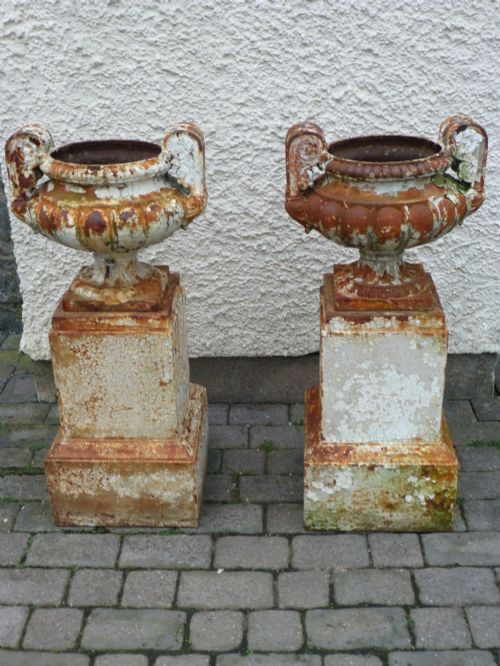
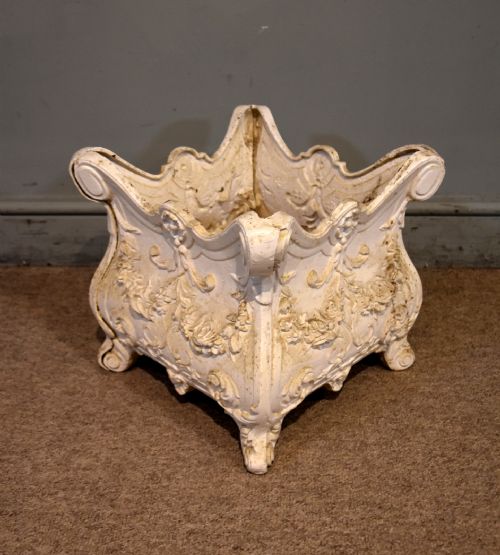
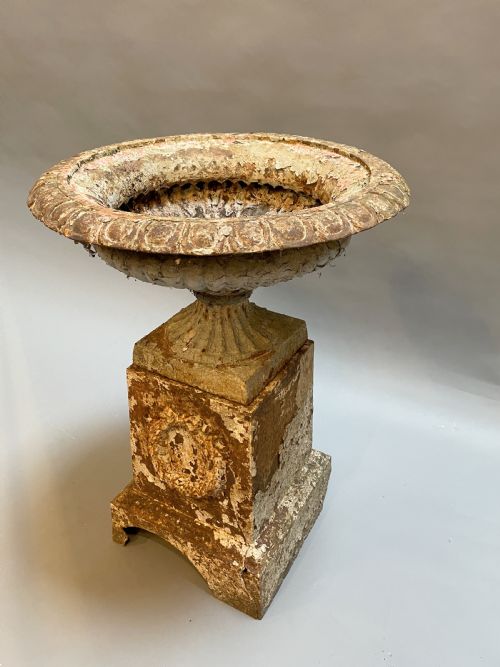
The version you are most likely to meet on this page is the Victorian cast iron urn or planter, frequently paired or matched with a sturdy plinth or stand. Foundries of the nineteenth century produced these heavy vessels in classical shapes to anchor formal garden walks and terrace edges.
Beyond standard vessels, the selection occasionally encompasses architectural salvage and folk art pieces such as a silhouette weathervane or cart wheels combining cast iron and wood. Each item reflects the utilitarian and decorative demands of historic British gardens.
How they were made
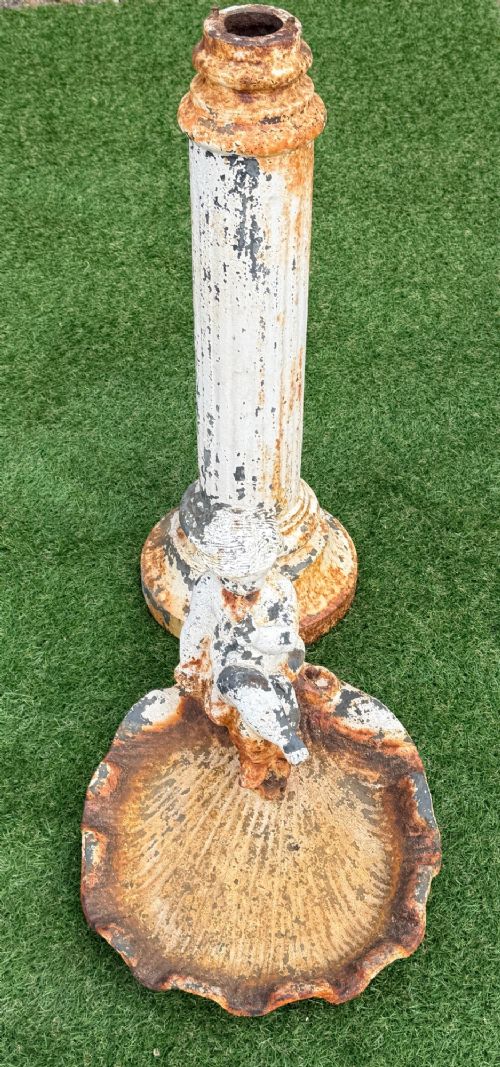
Foundries utilised cast iron poured into sand moulds to achieve the crisp relief work seen on urns, shell basins, and figural statues. This casting method allowed makers to repeat classical motifs, cherubs, and fluted columns with reliable precision.
Wrought iron and sheet iron appear alongside cast elements in structural components and directional vanes, shaped by hand forging and riveting. Wooden elements occasionally supplement the metalwork, as seen in composite cart wheels.
Protective layers of paint historically guarded the iron from corrosion, creating the weathered surfaces that accumulate over decades of outdoor exposure. Subsequent coats built up distinct patinas across the cast decoration.
Painted Iron Garden Ornament Retail Price Guide 2026
Typical asking prices for painted iron garden ornament among the pieces listed under this phrase on Sellingantiques today, from the lower quarter to the upper quarter. They describe what is for sale here now, not the wider market.
A stoic huntsman silhouette keeps watch from the rooftop, quietly pointing the way the wind blows.
What varies in quality
The distinction between ordinary and exceptional examples rests on the crispness of the foundry casting and the presence of matching original components. Urns retain greater visual harmony when they sit upon their correct original plinths rather than replacement bases.
The Painted Iron Garden Ornament Glossary
- Cast iron
- A strong, rigid alloy poured into moulds while molten to create heavy decorative forms. It allows for intricate relief patterns suitable for garden vessels and statuary.
- Wrought iron
- Iron beaten and worked by hand into shape while hot, yielding fibrous metal used for structural resilience. It resists bending better than cast iron.
- Sheet iron
- Thin panels of hammered iron used historically for flat silhouettes and directional elements. This material responds readily to cutting and shaping for weathervanes.
- Plinth
- A heavy base block supporting an urn, statue, or planter. Original plinths elevate the focal piece and complete the intended classical proportion.
Painted Iron Garden Ornament: Frequently Asked Questions
How do I date a cast iron urn?
Dating relies on the stylistic clues of the period, such as Regency classical proportions or Victorian ornamentation. Foundry marks and casting techniques also help narrow the decade of production.
Heavier casting methods and specific design motifs connect individual pieces to nineteenth-century production standards established by major foundries.
Can these ornaments stay outside year-round?
Cast iron withstands outdoor conditions well due to its substantial weight and durable metal composition. Historic pieces have endured generations of exposure in British gardens.
Maintaining a protective coat of paint helps preserve the metal beneath and prevents moisture from causing excessive surface flaking.
Are painted finishes original?
Most historic outdoor pieces have received multiple coats of paint over successive decades of maintenance. Layers build up to create the characteristic textured surface found on older metalwork.
Finding traces of earlier paint schemes beneath the current surface often confirms the age and history of the piece.
What is architectural salvage?
Architectural salvage encompasses decorative and structural elements rescued from historic buildings and gardens before demolition or remodeling. These items include urns, weathervanes, and metal components.
Such pieces bring genuine period craftsmanship and authenticated age directly into contemporary garden layouts.