

Victorian Carved Server Table
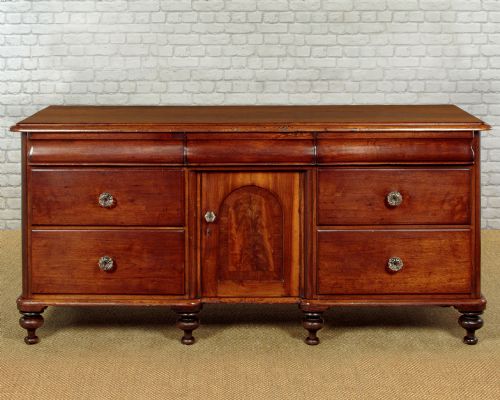
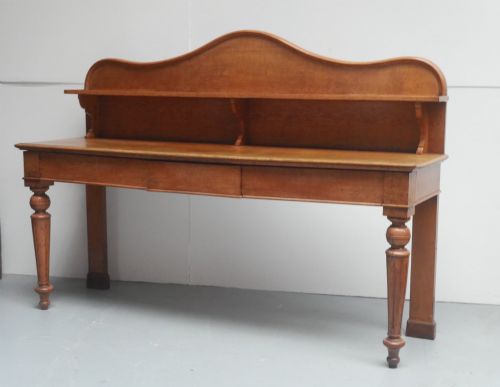
These Victorian carved server tables bring heavy timber and deep relief into dining rooms and halls.
Victorian Carved Server Table
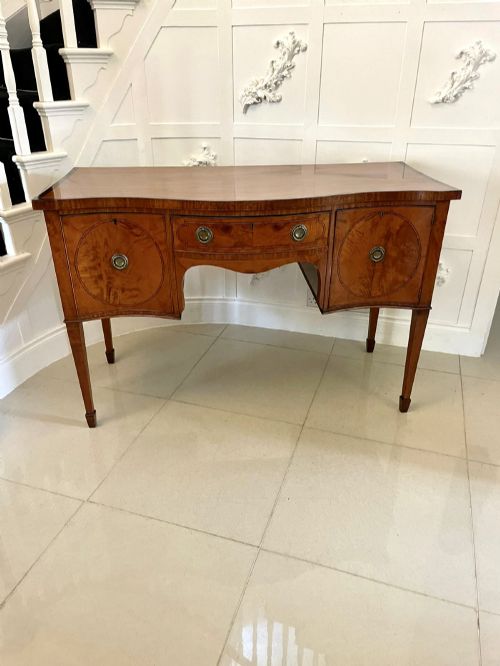
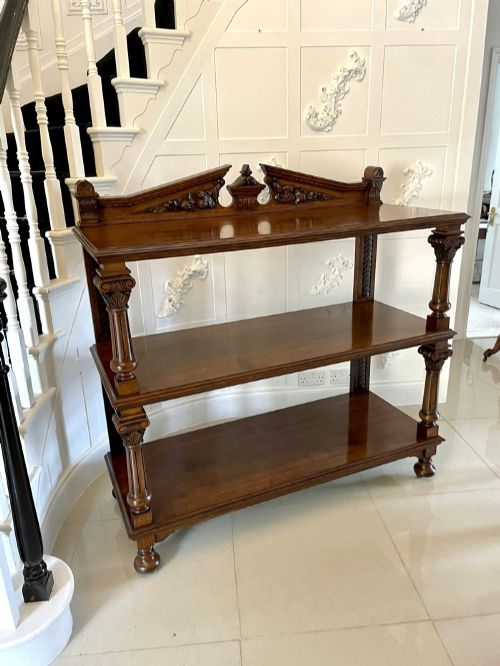
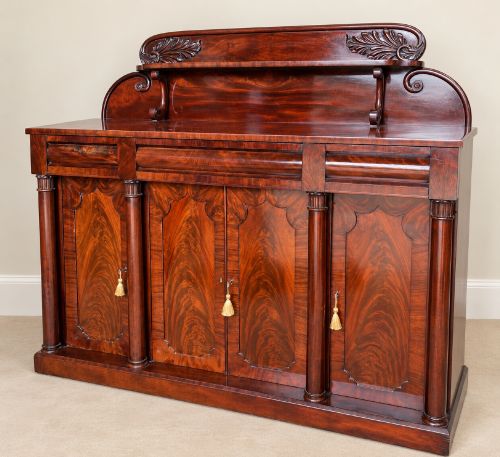
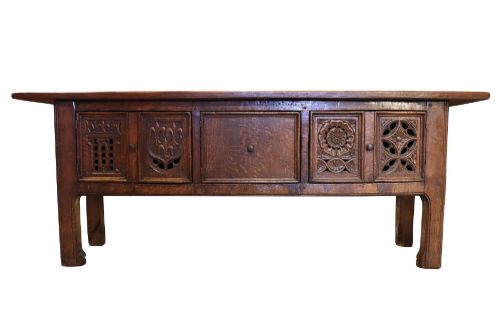
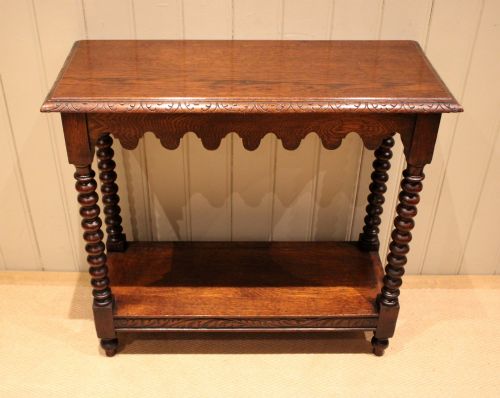
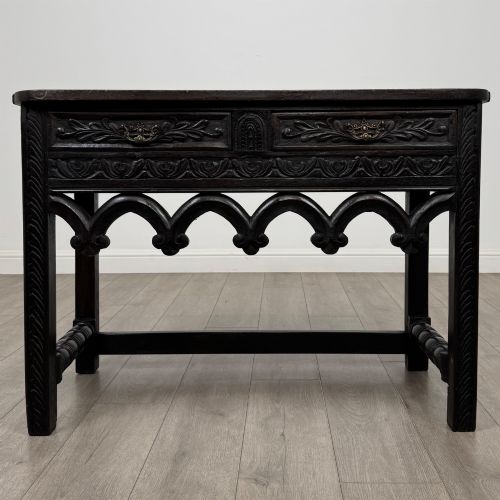
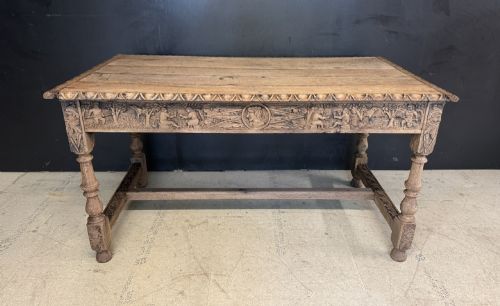
A victorian carved server table is a heavy dining or hall piece built to hold food, silver, or linens, appearing on this page most often in solid oak or mahogany. These boards and servers date primarily from the nineteenth century, stretching from early Victorian periods through the aesthetic and Gothic revival movements toward nineteen hundred.
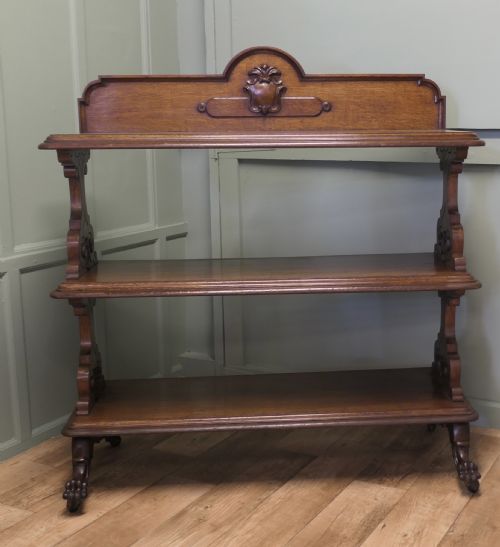
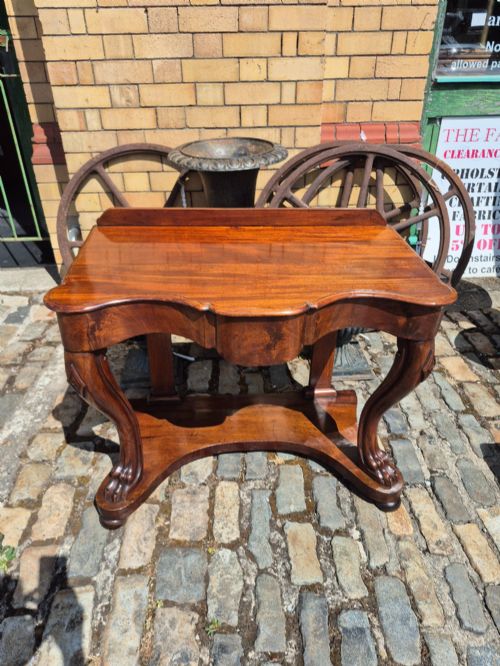
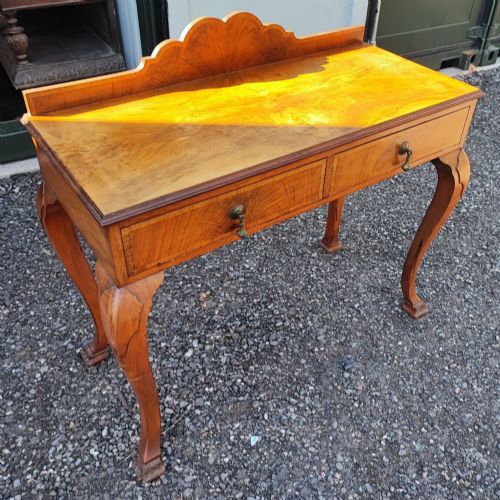
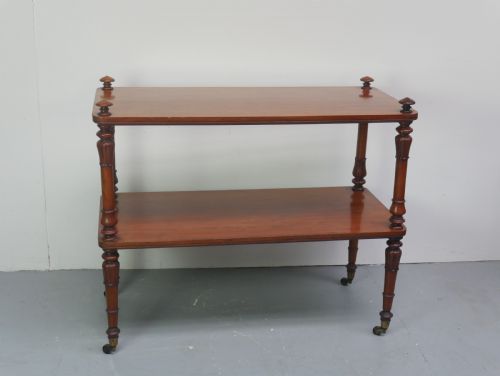
Forms range from console and side tables to multi-tiered buffets, dumbwaiters, and chiffoniers. Oak and mahogany dominate the selection, supported by walnut, pollard oak, and satinwood.
What varies in quality
Quality depends upon the crispness of the hand-carved relief and the selection of figured timbers like pollard oak or flame mahogany. Finer examples display proportional balance across substantial architectural forms, integration of specialist makers, and well-figured secondary woods.
Simpler workshop pieces rely on plain sawn surfaces and standard mouldings, whereas top-tier server tables integrate distinct regional styles like Irish Regency or Anglo-Indian padouk construction.
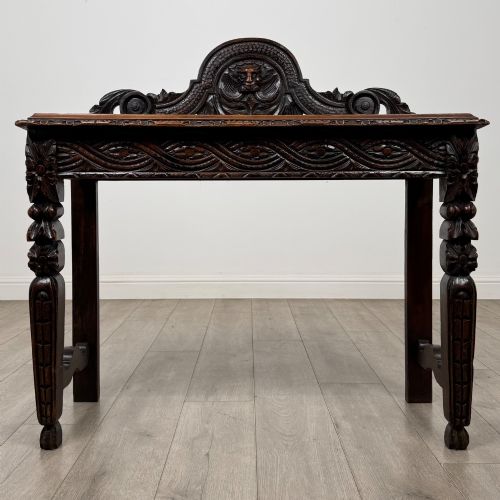
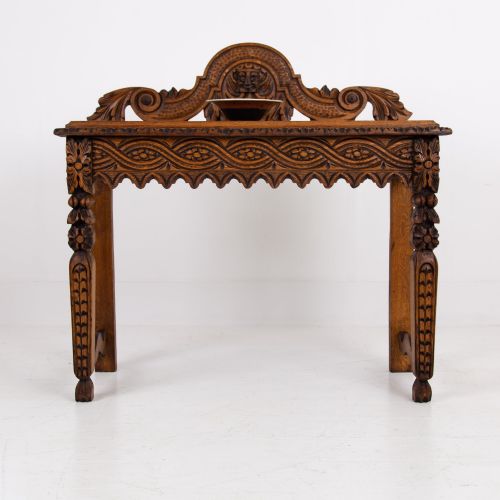
Stare long enough into the foliage of an 1880 buffet and a leafy Green Man will peer right back.
Gillows·Robert Strahan & Co
The Victorian Carved Server Table Glossary
- Buffet
- A sideboard or serving table designed for food presentation and storage. These pieces frequently include tiered shelving or cupboards below.
- Dumbwaiter
- A multi-tiered serving stand, often revolving on a central pillar with a tripod base. They held dishes and glassware beside the dining table.
- Pollard oak
- Oak timber taken from trees that were cut back close to the trunk, producing a dense, knotty grain pattern. Cabinetmakers prized this wood for decorative veneering.
- Serpentine
- A curved furniture front shaped in a continuous convex-concave-convex line. This contour demands precise woodworking skill.
- Chiffonier
- A compact sideboard or tall chest featuring shelves or a mirror superstructure. They emerged during the early Victorian period for smaller reception rooms.
Victorian Carved Server Table: Frequently Asked Questions
How do I date a carved server?
Dating relies on timber choices, construction methods, and stylistic revival markers. Pieces from the earlier nineteenth century often use dense mahogany, while Gothic and aesthetic examples from eighteen eighty favour carved oak.
Hardware, drawer linings, and secondary woods offer further clues. Revolving dumbwaiters and tripod bases point distinctly toward mid-Victorian production.
Where were these servers used?
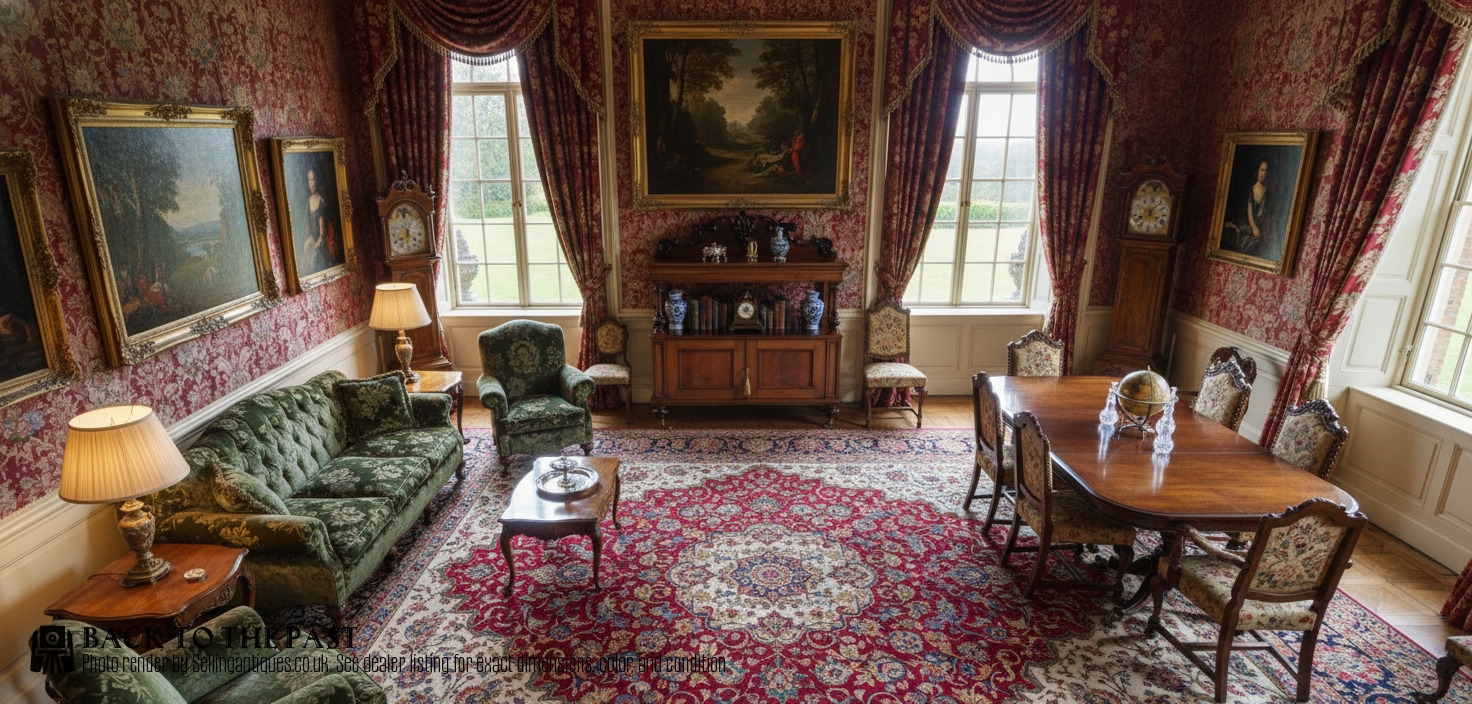
These pieces served primarily in formal dining rooms, entrance halls, and drawing rooms. Servers held heavy platters, silver services, and glassware during large meals.
In the hall, console variants provided a surface for hats, mail, and decorative bowls. Tiers and cupboards kept dining paraphernalia close at hand.
How do I clean carved oak?
Dust deep relief carving regularly with a soft-bristled brush to prevent grit accumulation in the recesses. Apply traditional beeswax sparingly to nourish the dry timber.
Avoid modern silicone polishes, which build up on antique surfaces and dull the grain over time. Keep solid timber away from direct heat sources to prevent splitting.
What is the Green Man motif?
The Green Man depicts a human face disgorging foliage, oak leaves, or vines. This architectural symbol saw a major revival during the Gothic and aesthetic movements.
Carvers applied this motif to table friezes and buffet doors to signal nature and rebirth. Finding this face indicates high-relief nineteenth-century craftsmanship.