
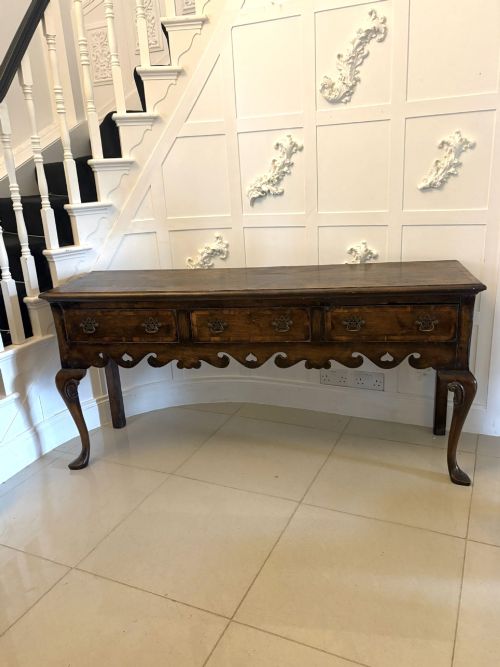
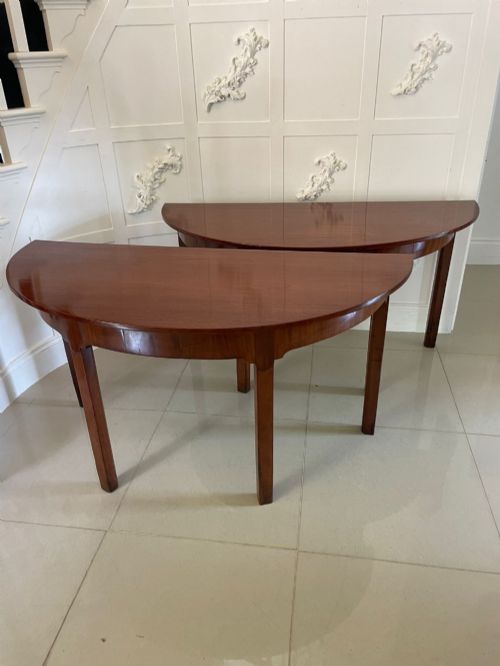
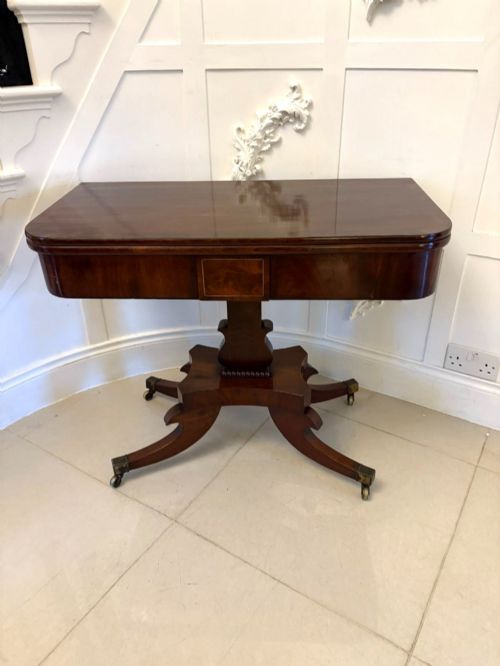
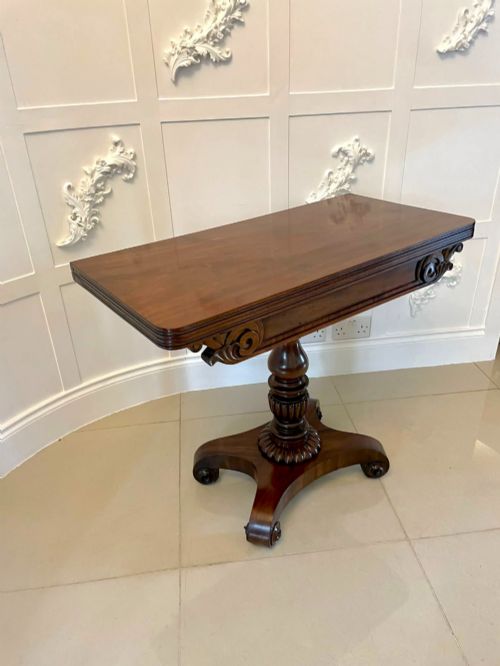
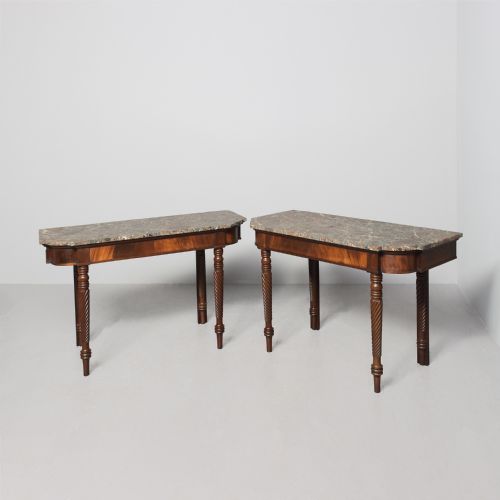
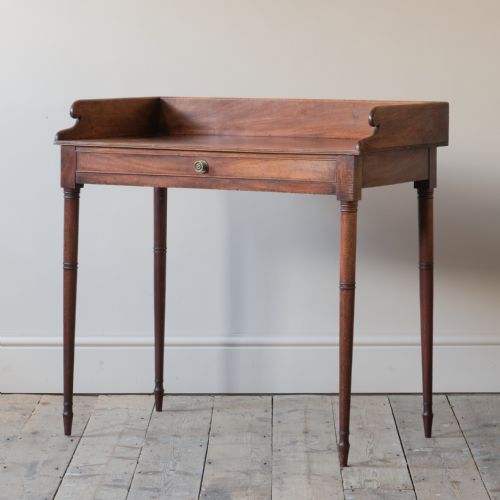
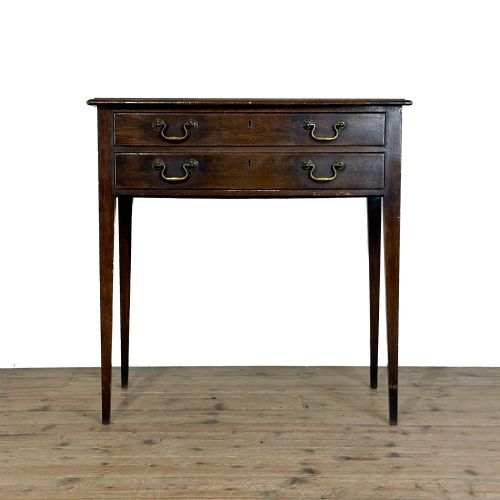
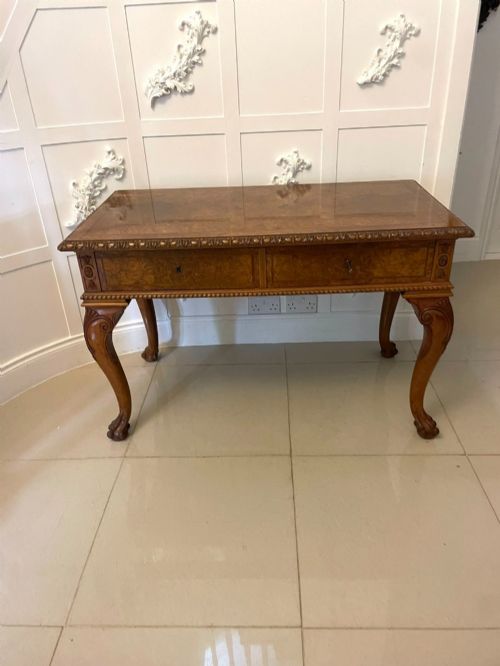
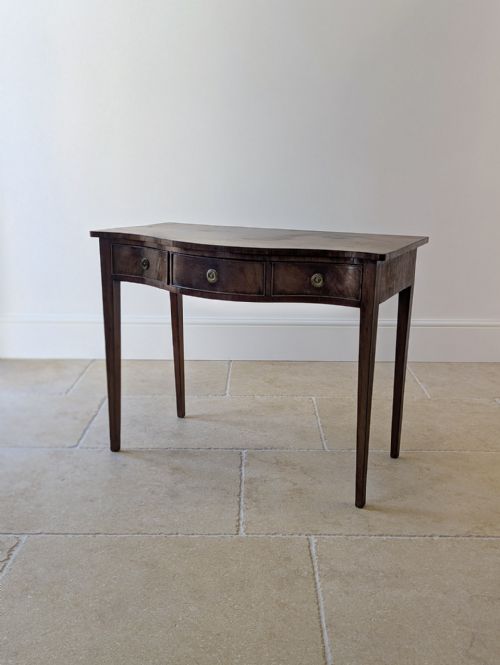
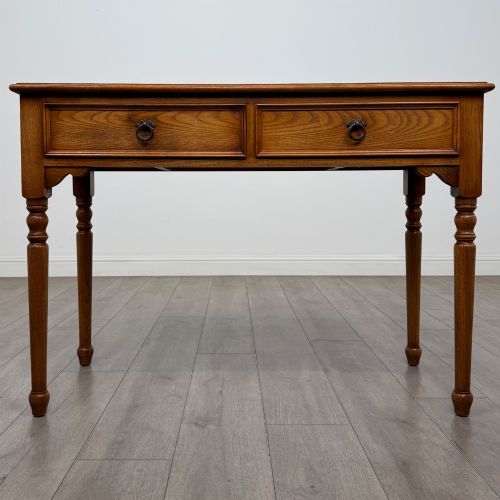
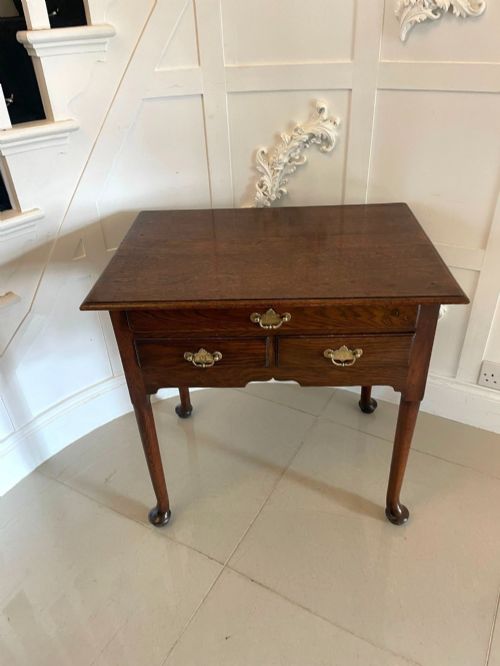
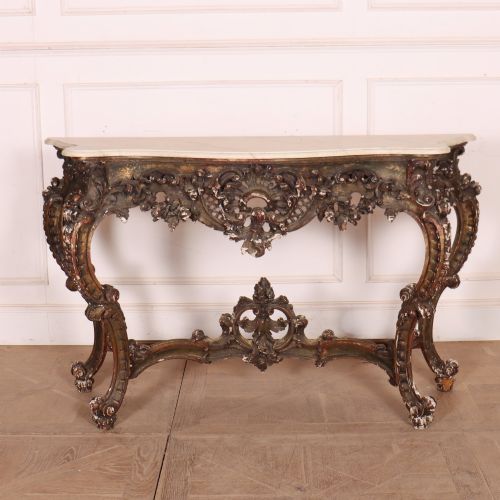
Hall Console Table
A hall console table anchors an entranceway with a surface for correspondence and lamps while keeping a slender profile against the wall.
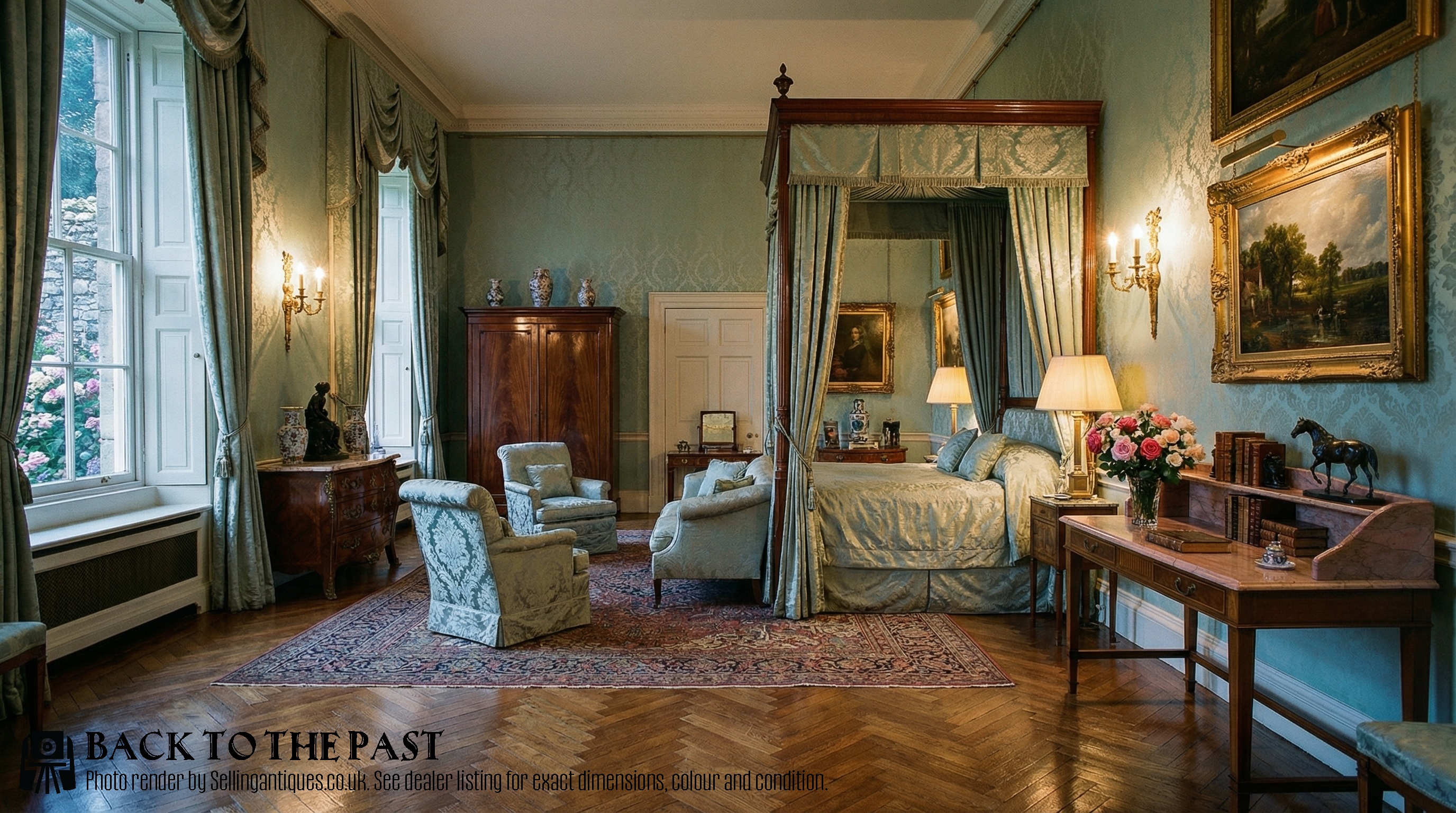
Hall Console Table
A hall console table serves as a functional and decorative focal point in entranceways, hallways and reception rooms. These narrow pieces range from Georgian and Regency masterpieces to Victorian, Edwardian and early twentieth-century interpretations.
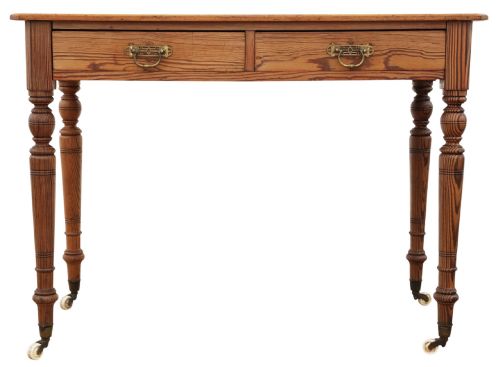
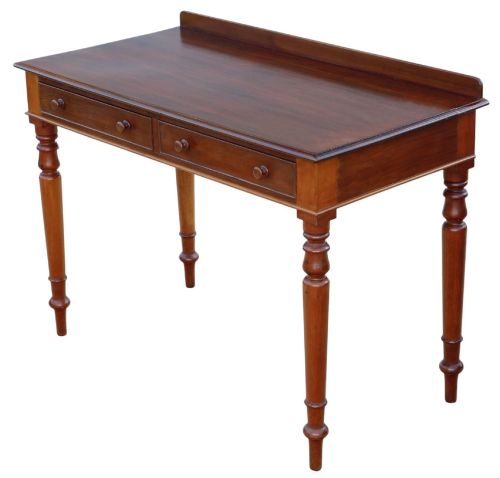
The versions most commonly met on this page span the Georgian, Victorian and Regency periods, utilising timber forms such as mahogany, oak, walnut and pine. Makers adapted these surfaces into serving tables, desks and console tables tailored for domestic corridors.
Buyers encounter architectural demi-lune shapes, straight-fronted serving tables and writing combinations fitted with drawers. Each piece reflects the proportions required for circulation spaces without sacrificing structural integrity.
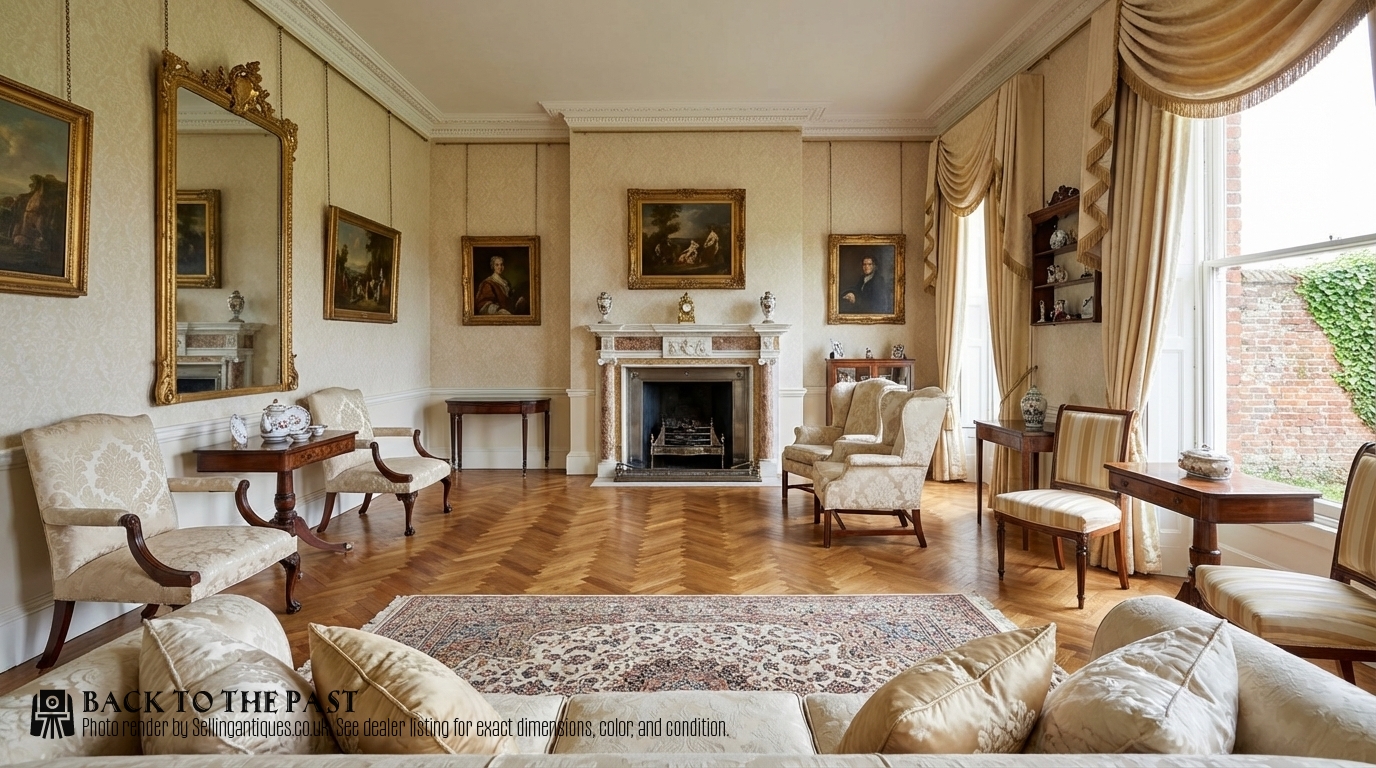
Assessing Quality
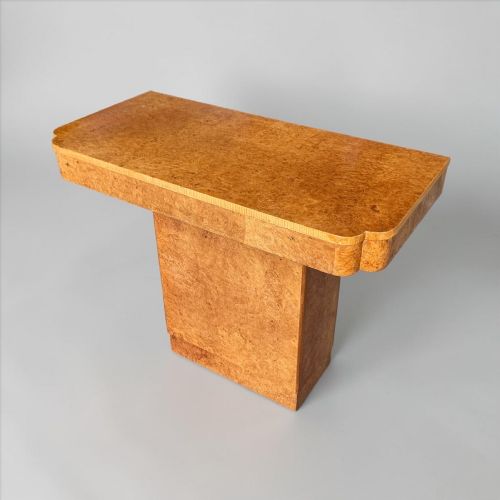
Quality rests in the selection of timbers, such as burr walnut or figured mahogany, and the precision of the joinery. Superior examples demonstrate careful alignment of grain across drawer fronts and tops.
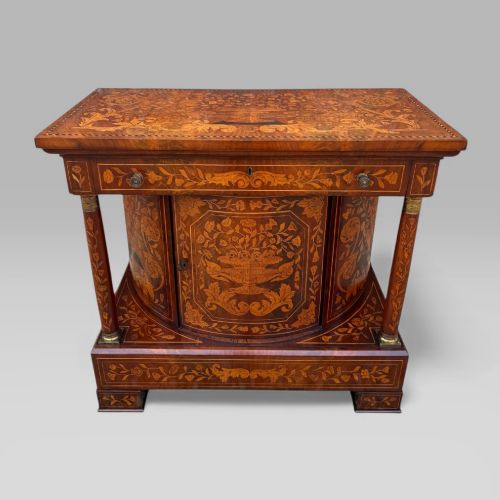
The sophistication of decorative elements, from carved foliage and reeded legs to marble inlays and gilt finishes, separates standard utility furniture from pieces produced by notable workshops.
Retail Price Guide 2026
Typical UK retail prices for hall console table, calculated from the Sellingantiques database of over a million retail prices indexed since 2003. This retail price guide relies exclusively on Sellingantiques data; no external sources or auction records are used, so the figures do not describe the wider market.
Listings feature timbers such as mahogany, oak, walnut, pine, elm, boxwood and amboyna, paired with marble, slate and brass.
James Mein of Kelso·Gillows·Constantine and Co Leeds·Maple and Co
The Hall Console Table Glossary
- Demi-lune
- A half-moon shape used for console tables designed to sit flush against an entrance wall. This profile maximises floor space in narrow hallways.
- Reeded legs
- Cylindrical supports carved with parallel vertical grooves resembling parallel reeds. This decorative turning appears frequently on Georgian and Regency pieces.
- Serpentine
- A curved shape that undulates outward at the centre and inward at the sides. It demands high cabinetmaking skill to shape solid timber and veneers.
- Parcel gilded
- Partially covered in gold leaf to highlight specific carved details or mouldings. This technique adds contrast against dark wood grains.
- Stringing
- Thin lines of contrasting timber inlaid into the surface of a table top or drawer front. Boxwood was frequently utilised for this delicate linear detail.
Frequently Asked Questions
Where should I place a hall console table?
These tables fit best against entranceway walls, narrow corridors and reception rooms where floor space is limited. Their shallow depth allows people to pass freely while providing a surface for daily essentials.
Positioning them beneath a mirror or alongside a hallway chair creates a balanced and practical arrangement for visitors.
Can I use a console table as a desk?
Many examples from the Georgian and Victorian periods incorporate drawers and writing surfaces into their design. These hybrid pieces function effectively as compact writing desks in smaller rooms.
Check the internal clearance and drawer depth to ensure comfortable knee room and adequate storage for modern stationery.
How do I care for a polished wood surface?
Regular dusting with a dry, soft cloth prevents the accumulation of grit that can scratch antique finishes. Avoid placing damp items directly onto the wood to protect the historical polish.
Applying traditional wax polish occasionally nourishes the timber and maintains the natural lustre without sealing the grain permanently.
How do I distinguish between Victorian and Georgian styles?
Georgian pieces often display restrained classical proportions, mahogany or oak construction, and clean lines influenced by Neoclassical design. Their legs may feature straight tapering forms or delicate reeding.
Victorian examples frequently introduce heavier carving, burr walnut veneers, dark oak finishes, and more robust decorative flourishes like the Green Man motif.