


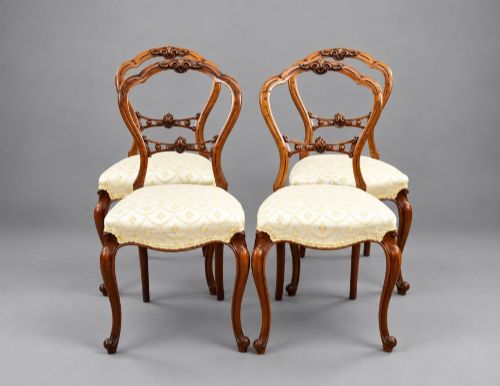
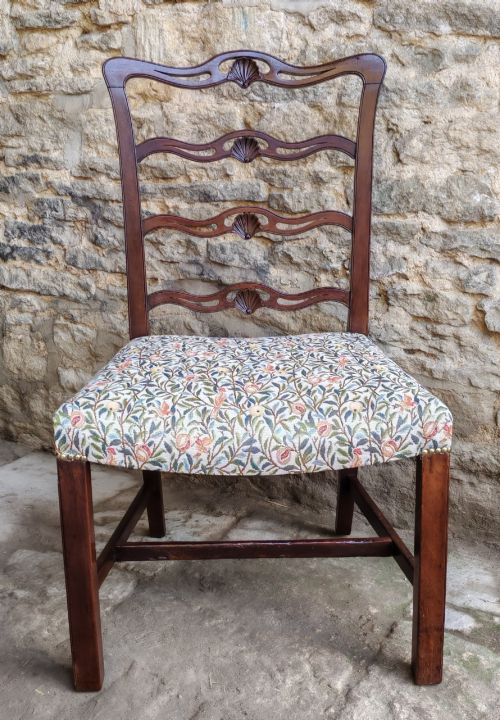
Victorian Carved Dining Chairs
When you want victorian carved dining chairs, you are looking at substantial timber seating built to anchor formal nineteenth-century dining rooms.
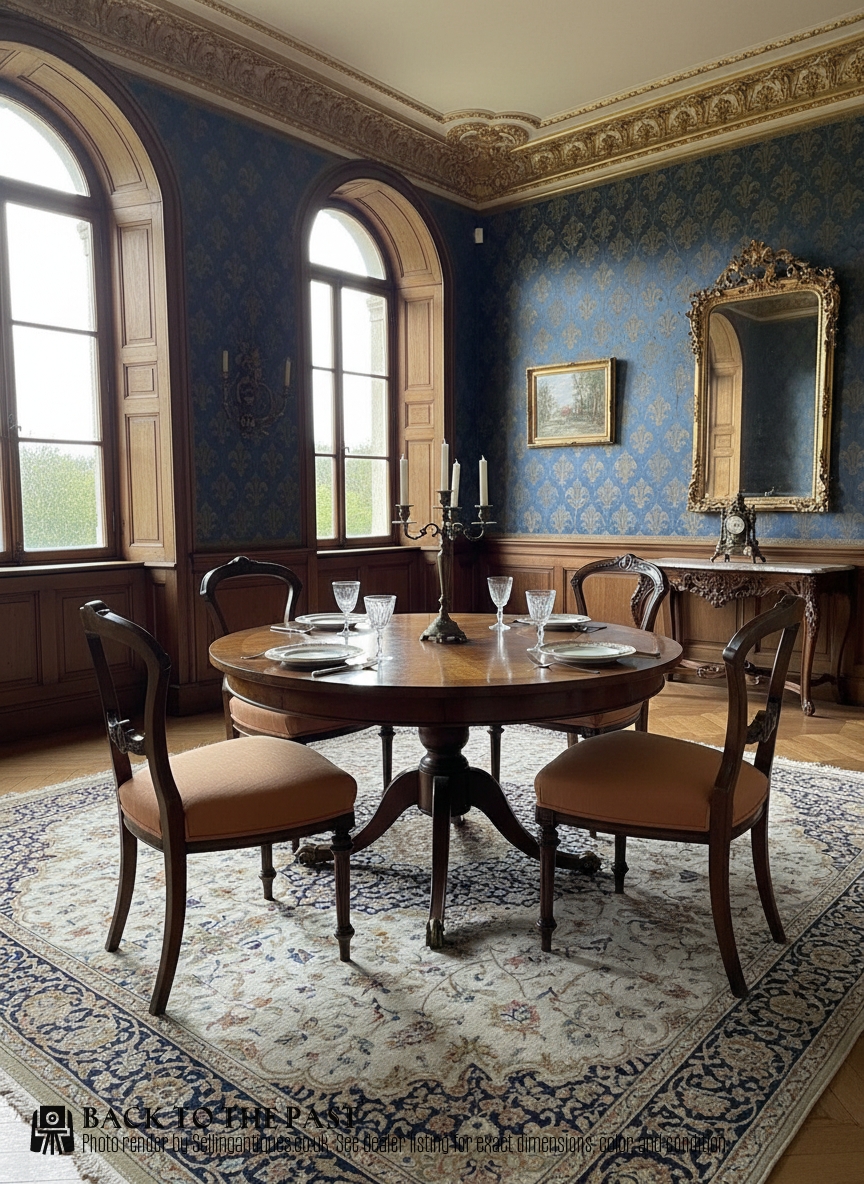
Victorian Carved Dining Chairs
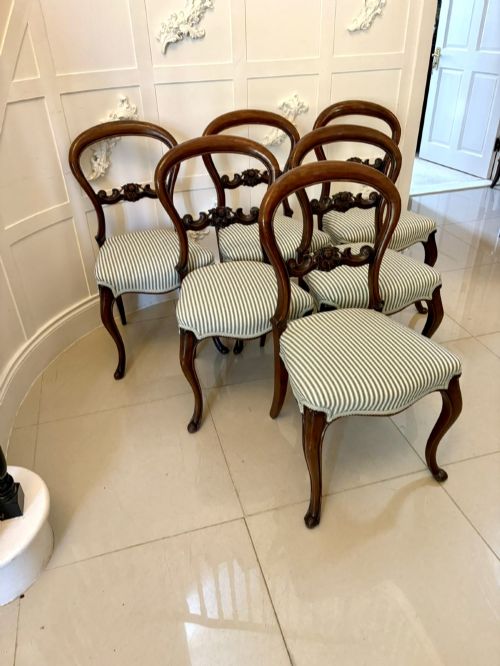
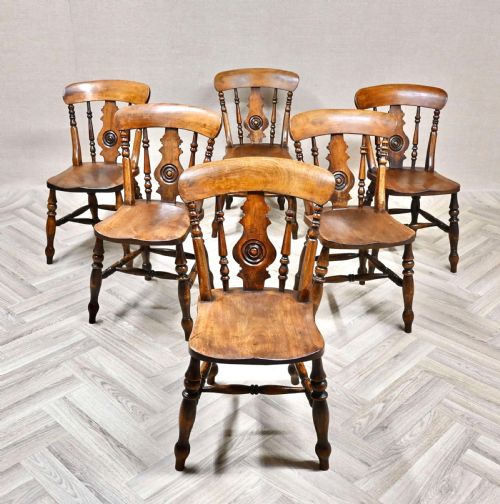
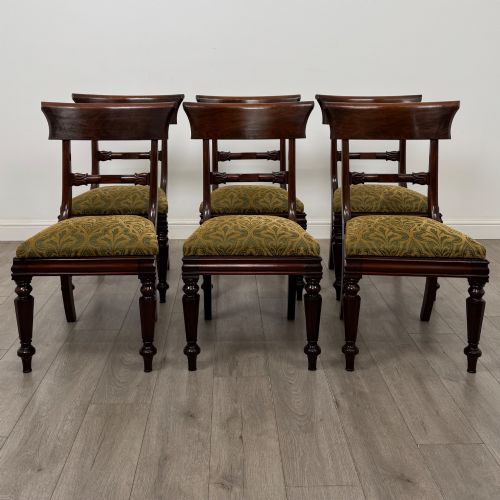
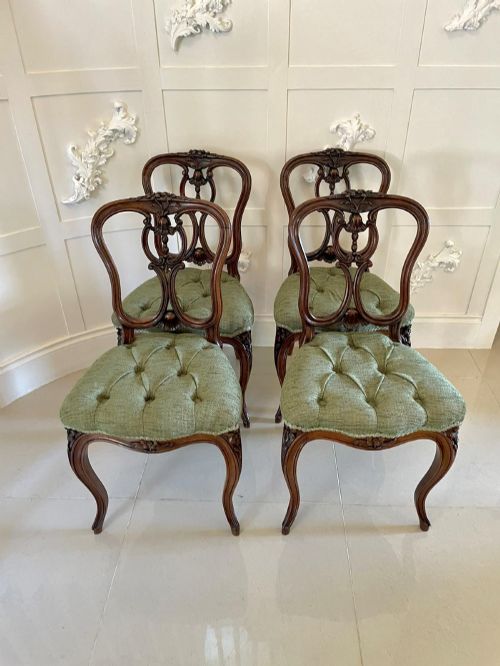
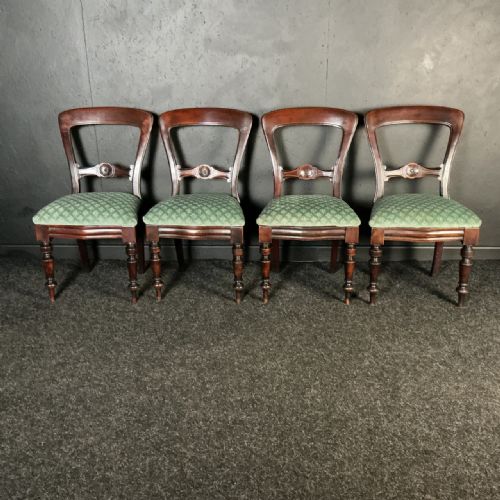
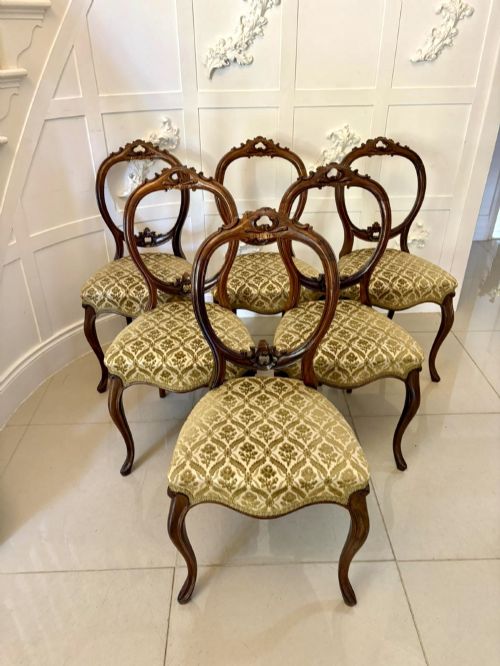
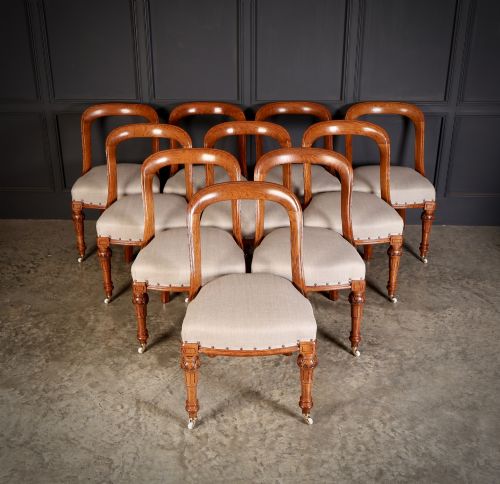
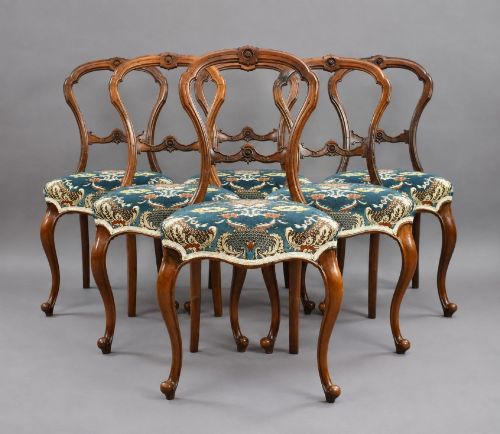
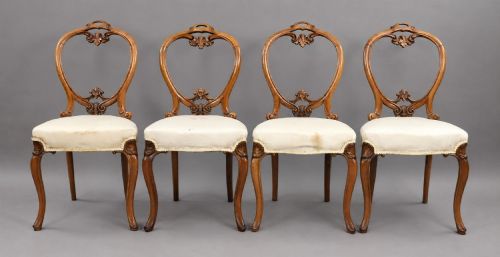
Victorian carved dining chairs span the nineteenth century, encompassing forms from sturdy William IV designs through to elaborate balloon backs and revival styles. The most common iteration met on this page is the set of four, six, or eight chairs fashioned from dense hardwoods with intricate relief work along the top rail and splat.
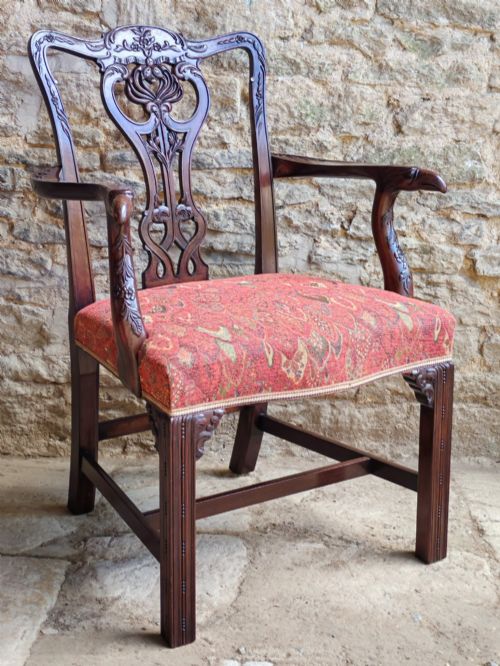
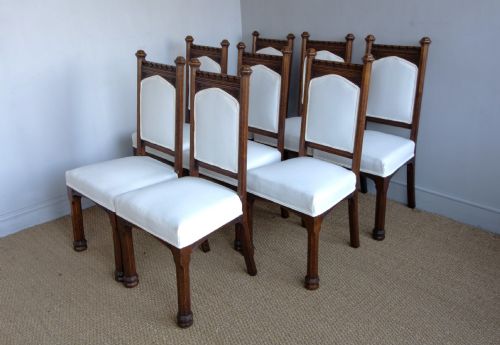
Makers produced these seats in various configurations, including side chairs, carvers with open arms, and high-backed variants influenced by Gothic and Jacobean tastes. Regional workshops across Britain and continental Europe utilised local timbers, resulting in distinct stylistic interpretations within the broader Victorian aesthetic.
How They Were Made
Cabinetmakers constructed these frames primarily from solid mahogany, walnut, and oak, frequently selecting burr veneers to add rich grain patterns to prominent surfaces. Woodworkers shaped structural components using traditional joinery such as mortise and tenon, ensuring the heavy timber frames could withstand daily use around the dining table.
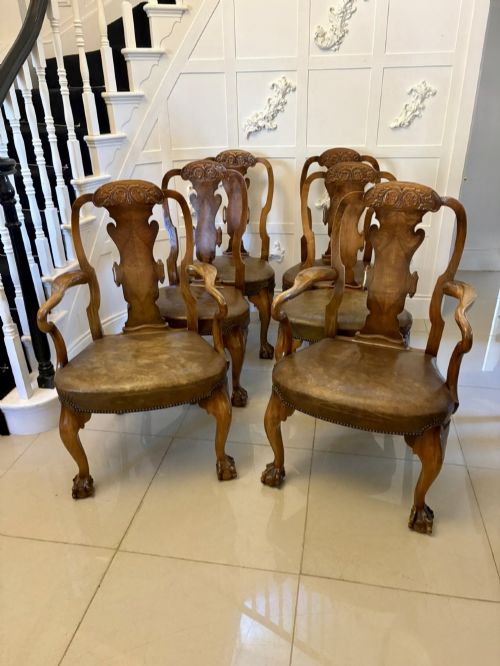
Carvers executed floral, scroll, and leaf motifs by hand using chisels and gouges directly onto the solid wood of the crest rails and cabriole legs. Upholsterers then finished the seats using traditional stuffing techniques, covering them in durable leather, tapestry, horsehair fabric, or velvet secured with brass tacks.
Victorian Carved Dining Chairs Retail Price Guide 2026
Typical asking prices for victorian carved dining chairs among the pieces listed under this phrase on Sellingantiques today, from the lower quarter to the upper quarter. They describe what is for sale here now, not the wider market.
The inventory records regional British and continental production, spanning styles from austere William IV forms to exuberant Rococo and Gothic revivals.
What Varies In Quality
The depth and crispness of the hand-carving separate standard production pieces from exceptional examples, where craftsmen invested hours into undercutting foliage and smoothing intricate scrollwork. Timber selection plays a major role, with densely figured burr walnut or richly grained mahogany commanding greater presence than plainer secondary woods.
Structural integrity and originality dictate the tier of a set, particularly when frames retain their original leather, tapestry, or horsehair upholstery and period brass hardware. Matching sets that survive intact without extensive timber replacement or mismatched legs represent the highest standard of nineteenth-century seating.
Howard and Sons·Warings·Strahan
The Victorian Carved Dining Chairs Glossary
- Balloon back
- A rounded, oval-shaped wooden backrest that curves outward to support the spine comfortably. This profile became immensely popular during the mid-nineteenth century.
- Carver
- An armchair designed specifically for the heads of a dining table, featuring supportive open arms. These often matched a larger set of armless side chairs.
- Crest rail
- The uppermost horizontal wooden member of a chair back, frequently carved with floral motifs, scrolls, or shields. It serves as the primary decorative focal point.
- Splats
- The vertical wooden slat positioned in the centre of the chair back between the seat and the crest rail. Makers often carved or pierced these elements in revival styles.
- Cabriole leg
- A furniture leg that curves outward in a convex arc before tapering inward in a concave sweep to a foot. This shape mimics the leaping posture of an animal.
Victorian Carved Dining Chairs: Frequently Asked Questions
How many chairs come in a typical set?
Most surviving dining sets comprise four, six, eight, or ten matching chairs designed to accommodate formal nineteenth-century dining tables.
Larger sets of twelve are harder to find and typically originate from substantial country houses or institutional dining rooms.
What is the difference between side chairs and carvers?
Side chairs are armless seats built to line the sides of a dining table efficiently during large gatherings.
Carvers feature built-in armrests and were traditionally placed at the head and foot of the table for the hosts.
Are these chairs suitable for daily use?
Nineteenth-century dining chairs were built from solid hardwoods using robust joinery designed for heavy domestic service.
Provided the joints remain tight and the frames are structurally sound, they function reliably for modern dining.
What wood was most commonly used?
Mahogany and walnut dominate the surviving selection, chosen for their strength, rich colour, and ability to hold crisp hand-carving.
Oak also appears frequently, particularly in sets influenced by the Gothic Revival and Jacobean styles.