
Victorian Burr Walnut Chest
A victorian burr walnut chest brings rich grain and warmth to a room, offering practical storage through beautifully figured wood.

Victorian Burr Walnut Chest
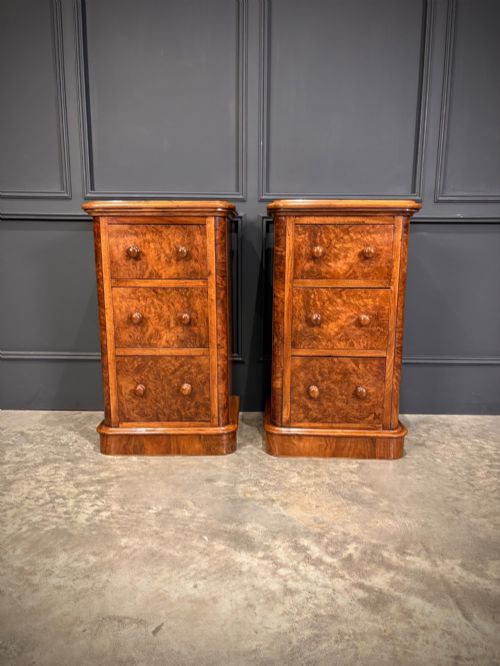
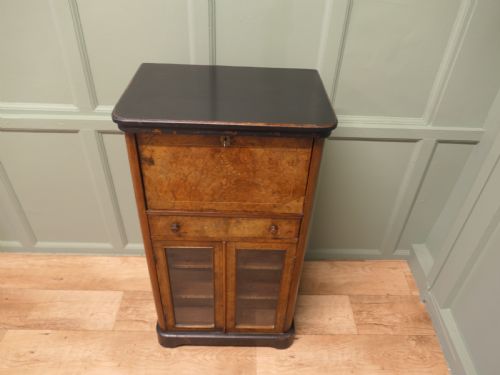
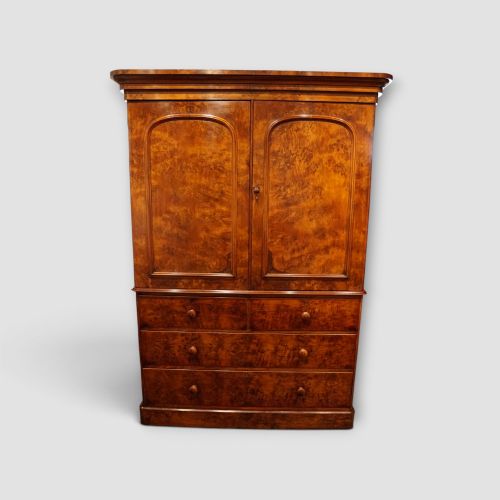
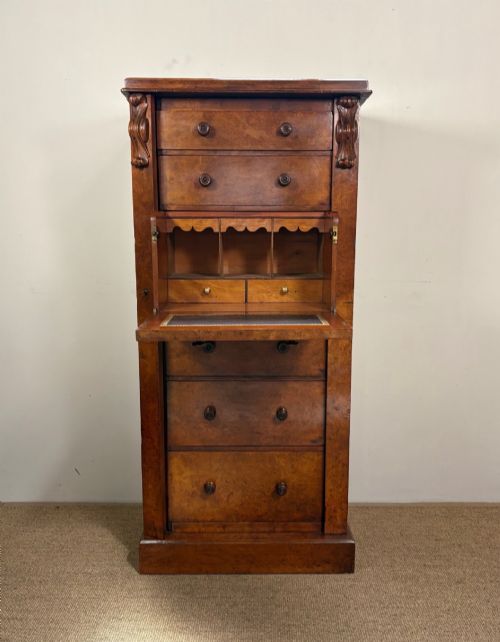
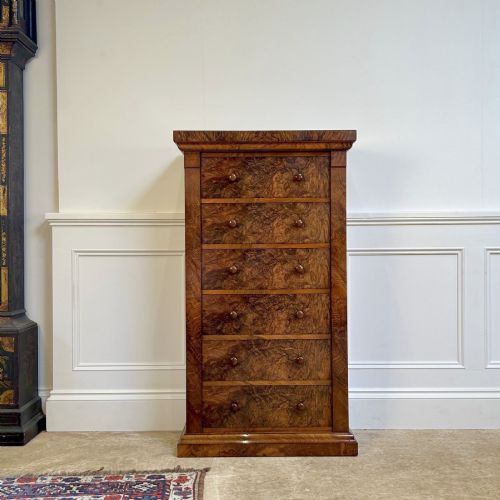
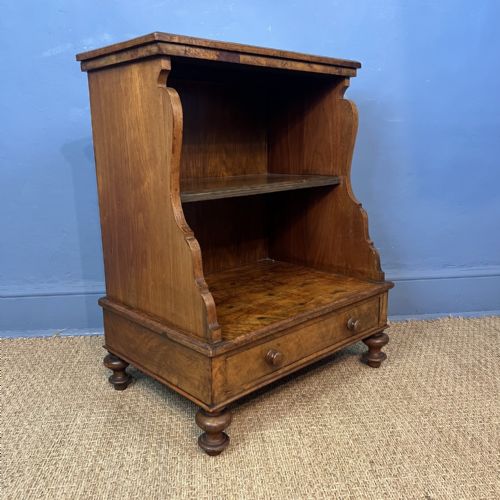
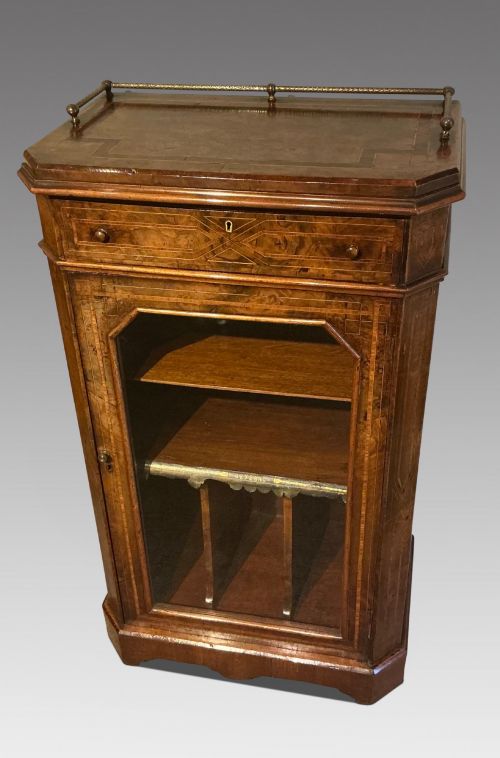
A victorian burr walnut chest encompasses standard chests of drawers, tallboys, and compact bedside lockers designed for bedroom and parlour use. The variety ranges from large linen presses and secretaire chests down to miniature caskets and music cabinets.
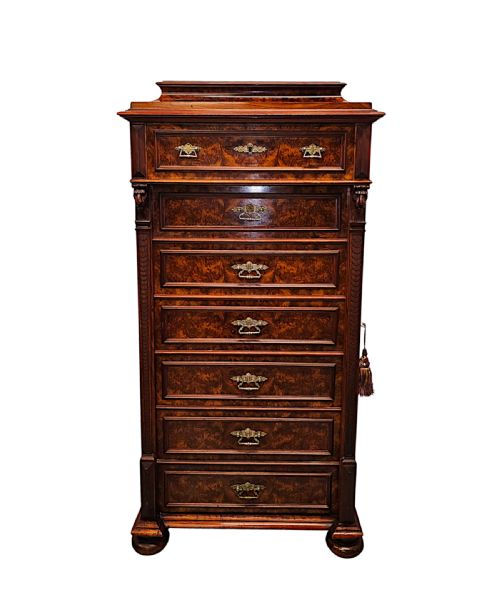
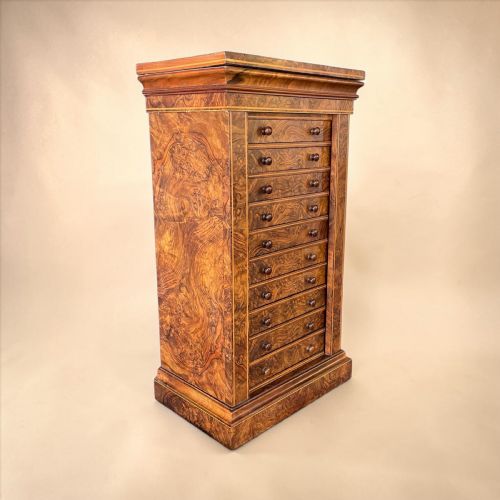
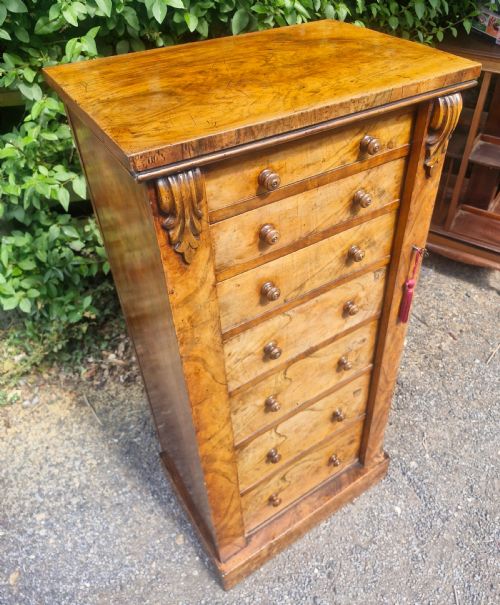
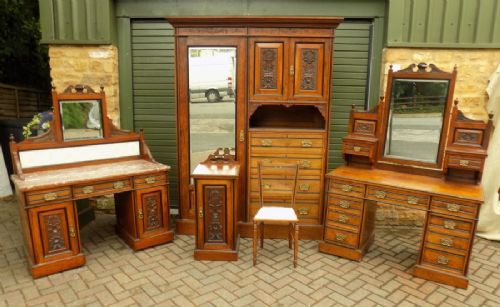
Bedside pairs and taller Wellington chests appear frequently among the listings, often featuring multiple narrow drawers secured by a locking side stile. Cabinets and dressing tables also feature prominently, utilising the same distinctive timber.
The objects date across the nineteenth century, spanning from early examples around 1850 through to late pieces made near 1900. Makers working in England and on the continent applied this distinct style across domestic furniture.
Materials and Construction
Cabinet makers applied thin veneers of burr walnut over secondary structural timbers such as pine to display the swirling, knotty grain patterns. Solid walnut frames formed the carcasses, while internal drawer linings frequently utilised pine or mahogany.
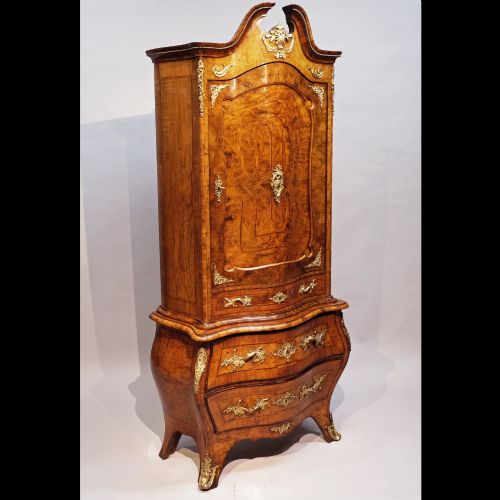
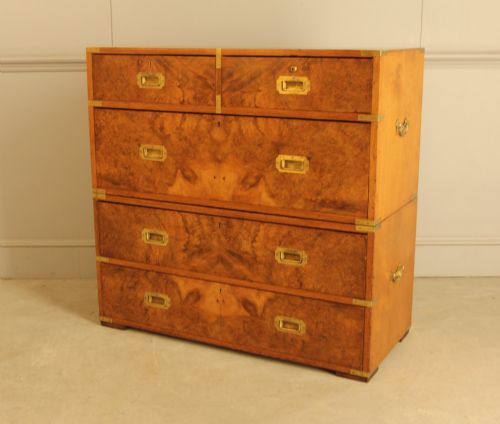
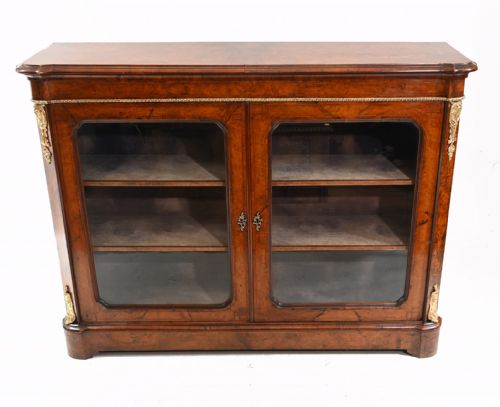
Brass handles, escutcheons, and locking mechanisms provide structural reinforcement, particularly on military and campaign style lockers. Ormolu mounts and marble tops appear on select continental forms, adding weight and decorative contrast.
French polishing finished the surfaces to a high gloss that protected the delicate timber veneers while deepening the natural brown tones. Marquetry inlays and carved wooden details punctuate the facades on specific revival pieces.
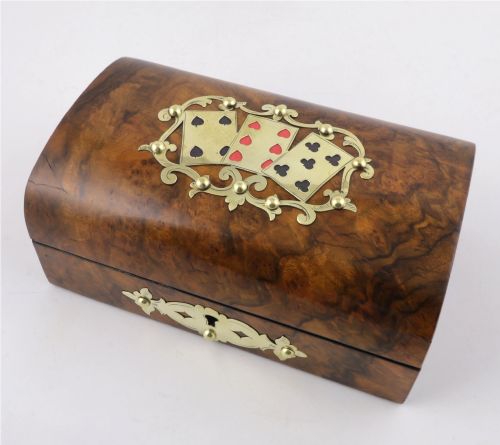
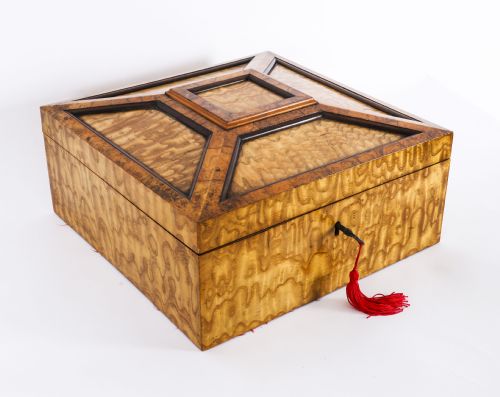
Several Victorian music boxes and playing card caskets share the same burr walnut finish as the large bedroom wardrobes.
Assessing Quality
Quality rests heavily on the selection and matching of the burr walnut veneer across the drawer fronts and top surfaces. Superior pieces display continuous, balanced grain patterns that flow symmetrically from drawer to drawer.
The integrity of the internal construction dictates value, seen in hand-cut dovetails on the drawer boxes and original, working locking mechanisms. Well-executed carving, crisp brass mounts, and substantial secondary timbers separate standard production from exceptional examples.
Gillows·Shoolbred and Co·Holland and Sons·Edwards and Roberts·H Ogden Manchester
The Victorian Burr Walnut Chest Glossary
- Burr walnut
- A wood harvested from the wart-like growths on walnut trees, yielding highly figured, swirling grain patterns. Cabinet makers prized this timber for decorative veneering.
- Wellington chest
- A tall, narrow chest of drawers secured by a hinged locking bar down one side that fastens with a key. This form originated in the nineteenth century.
- Secretaire chest
- A piece containing a fitted writing drawer that drops down to reveal a desk surface and small compartments. It combines chest storage with a writing workspace.
- Ormolu
- Gilt bronze ornamentation applied to furniture for decorative effect. It appears frequently on nineteenth-century continental pieces.
- Marquetry
- The art of applying small pieces of veneer to form decorative patterns and pictures on a wooden surface. It is common on late nineteenth-century cabinet work.
Victorian Burr Walnut Chest: Frequently Asked Questions
What is a Wellington chest?
A Wellington chest is a tall, narrow set of drawers distinguished by a locking wooden stile that fastens over the drawer edges. This design kept contents secure in smaller bedroom spaces.
Most examples include several shallow drawers stacked vertically, making them suited for linen or documents.
How do I care for burr walnut?
Burr walnut requires stable room conditions away from direct sunlight and excessive heat to prevent the veneer from lifting. Gentle dusting with a dry cloth maintains the French polished surface.
Avoid using modern chemical polishes, which can damage the antique finish over time.
Are bedside chests always found in pairs?
Many bedside lockers and chests survive as matching pairs, though single items also appear. Pairs were traditionally made to flank a bed in a Victorian bedroom.
Collectors generally pay closer attention to matched sets due to their scarcity.
How can I date a walnut chest?
Dating relies on examining construction methods, hardware styles, and secondary woods like pine or mahogany inside the drawers. Earlier nineteenth-century pieces often feature hand-cut dovetails and simpler brass fittings.
Design styles, such as Rococo Revival or Gothic influences, also help narrow down the decade of manufacture.