



Victorian Bone Inlay Table
A victorian bone inlay table brings intricate craftsmanship and exotic motifs directly into a room, offering both practical surface space and a striking focal point.
Victorian Bone Inlay Table
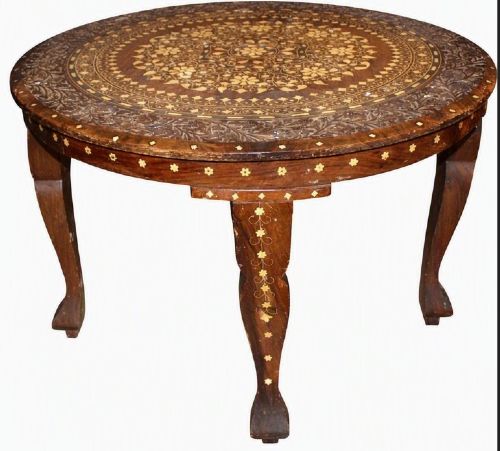
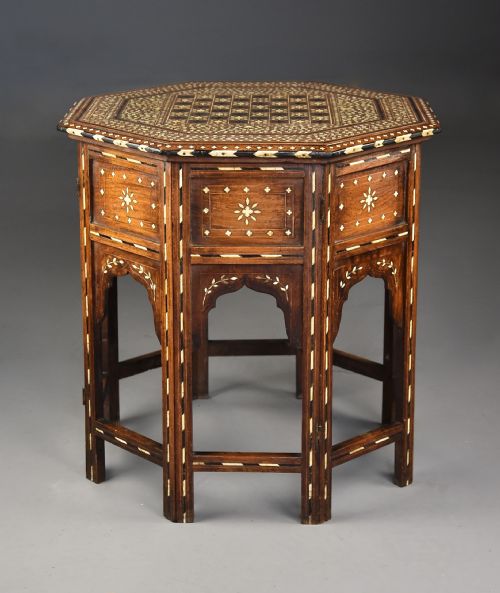
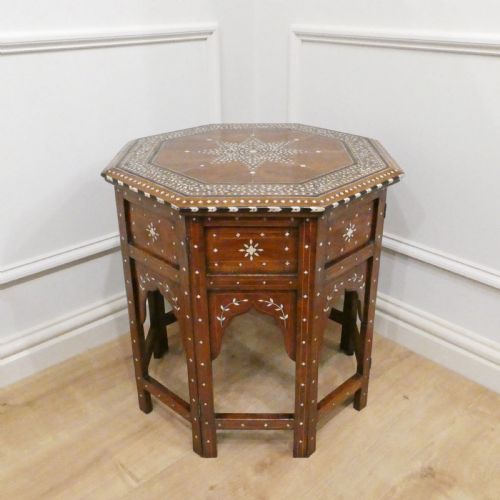
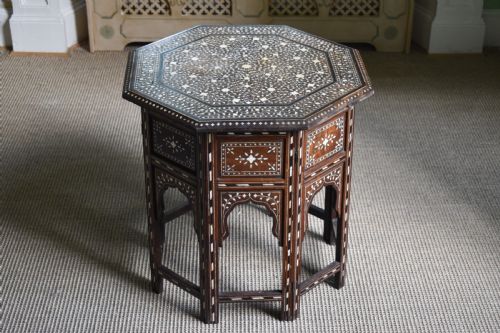
A victorian bone inlay table encompasses a distinct group of occasional furniture produced across the nineteenth and early twentieth centuries, featuring elaborate patterned surfaces. Buyers searching for a victorian bone inlay table will frequently encounter geometric and foliate designs applied to octagonal, circular, and folding forms.
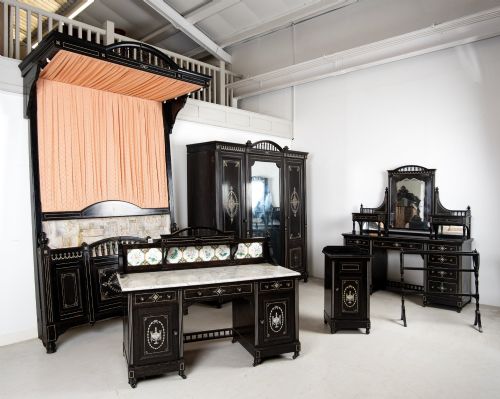
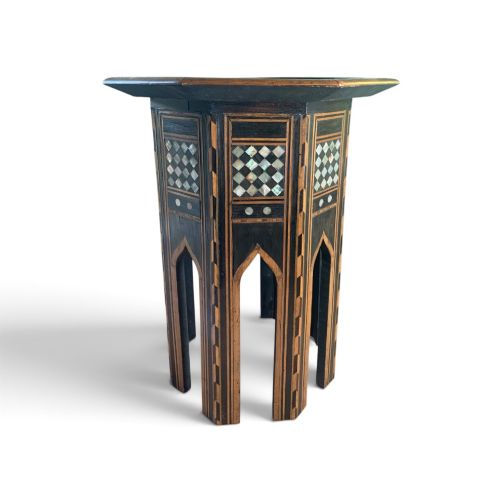
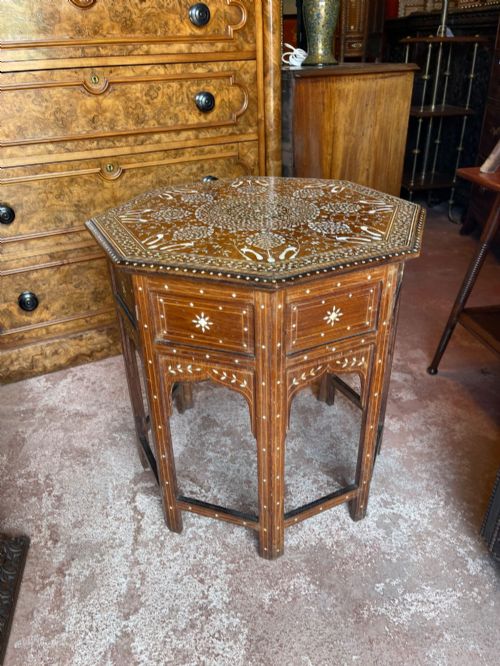
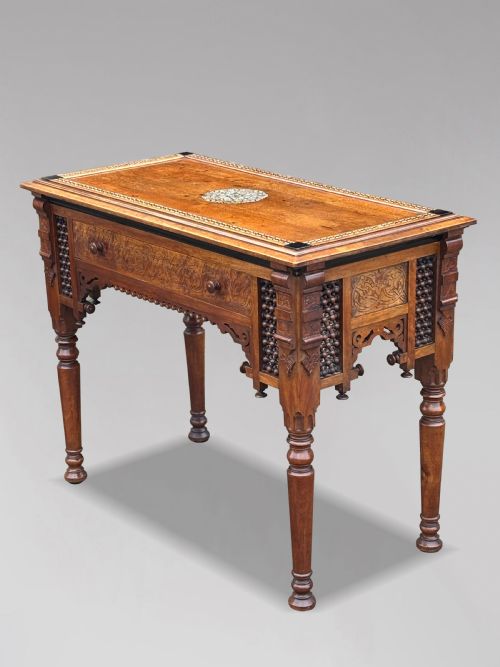
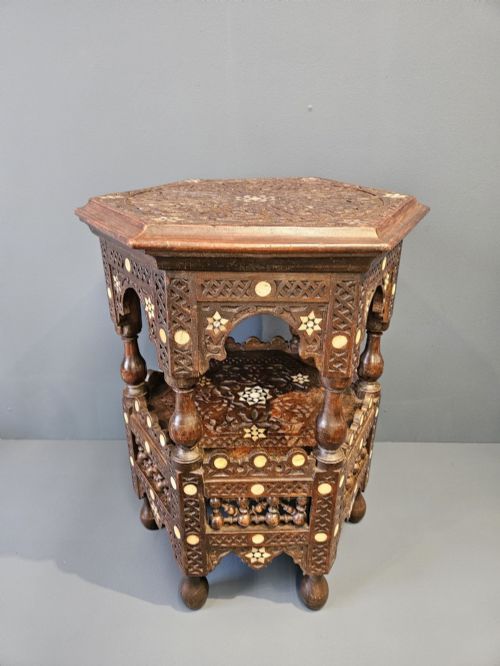
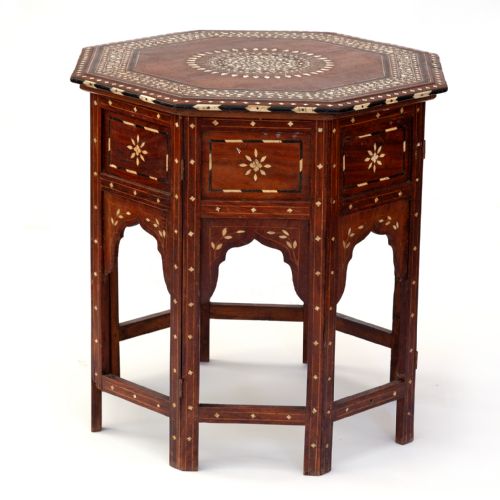
The pieces appearing in this category span several distinct geographic and stylistic traditions, including Anglo-Indian Hoshiarpur work, Moorish Revival pieces, and European interpretations. Side tables and occasional tables dominate the selection, alongside larger furniture such as bedroom suites and work tables.
Many examples demonstrate cross-cultural exchange, blending British furniture forms with traditional craftsmanship from South Asia and the Middle East. These tables served as decorative display surfaces in period homes, a function they continue to fulfil today.
What varies in quality
The precision and density of the surface decoration dictate the standing of an individual piece. Finer examples display tightly packed, perfectly fitted bone segments with virtually no gaps in the surrounding matrix, whereas simpler versions rely on sparser ornamentation.
The underlying timber choice and structural joinery also establish the grade of the object. Solid hardwood frames and complex folding mechanisms or fully integrated carved panels separate standard production pieces from exceptional works associated with prominent retailers.
Liberty & Co·Dumont
The Victorian Bone Inlay Table Glossary
- Bone inlay
- A decorative technique where small pieces of animal bone are shaped and set flush into wooden surfaces to form intricate patterns. The material is often bleached or stained to create visual contrast against dark timbers.
- Hoshiarpur
- A historic centre of woodcarving and inlay work in Punjab, renowned for producing distinctive octagonal and folding tables featuring dense floral and geometric motifs. Pieces from this region frequently incorporate shisham or other regional hardwoods.
- Moorish Revival
- An architectural and decorative style popular during the nineteenth century that drew inspiration from Islamic art and architecture. Tables in this style typically feature horseshoe arches, elaborate fretwork, and complex geometric panelling.
- Aesthetic Movement
- A late nineteenth-century British design movement that promoted art for art's sake and embraced diverse global influences, including Japanese and Middle Eastern aesthetics. Furniture from this context prioritised visual harmony and eclectic ornamentation.
- Occasional table
- A small, versatile piece of furniture designed for specific, intermittent use rather than primary seating or dining. These include lamp tables, plant stands, and side tables intended to be moved easily around a room.
Victorian Bone Inlay Table: Frequently Asked Questions
How do I clean a bone inlay table?
Dust the surface regularly with a soft, dry cloth to prevent dirt from settling into the intricate crevices of the inlay. Avoid using liquid cleaners, harsh chemicals, or excessive moisture, which can loosen the bone segments or damage the surrounding wood.
Condition the wooden portions occasionally with a suitable furniture wax if recommended for the specific timber finish. Gentle care preserves both the natural patina of the bone and the stability of the joinery.
Are these tables sturdy enough for daily use?
Most occasional and side tables are built to support lamps, books, and decorative objects rather than heavy loads. Folding models and pieces with intricate fretwork require careful handling to avoid straining the structural joints.
Placing the furniture away from direct heat sources and fluctuating humidity prevents the wood from warping and the inlay from shifting. With mindful placement, they function reliably as everyday display surfaces.
How do I identify a Moorish style table?
Moorish style tables typically feature dense geometric lattices, star patterns, and arches inspired by Islamic architecture. They are frequently octagonal or feature multi-sided designs that allow for continuous pattern work across the panels.
The integration of bone or mother-of-pearl creates stark contrasts against ebonised or dark hardwood frames. This distinct visual language separates them from standard Victorian European furniture forms.