



Carved Bone Inlay Table
A carved bone inlay table brings intricate geometry and rich timber into a room, offering both surface utility and distinct regional character.
Carved Bone Inlay Table
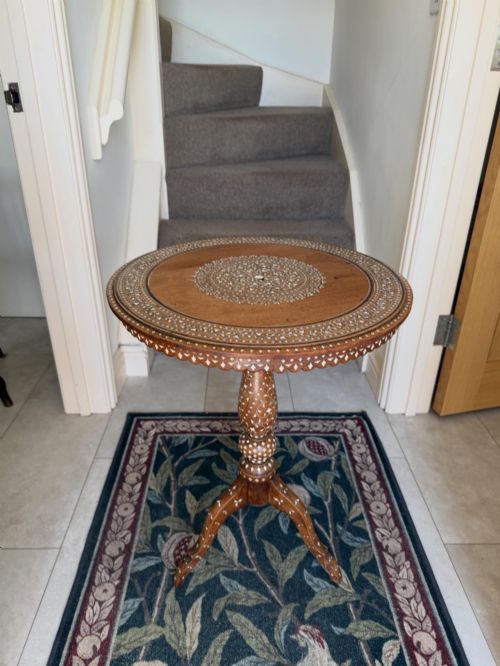
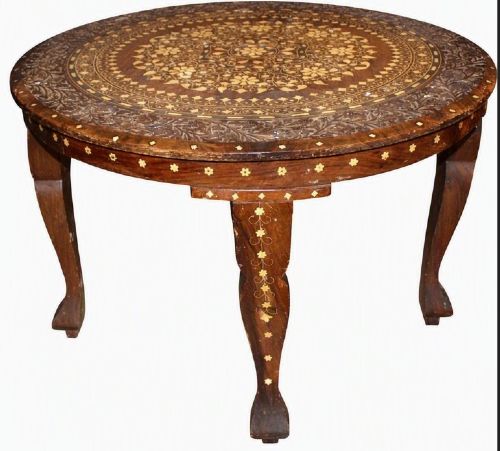
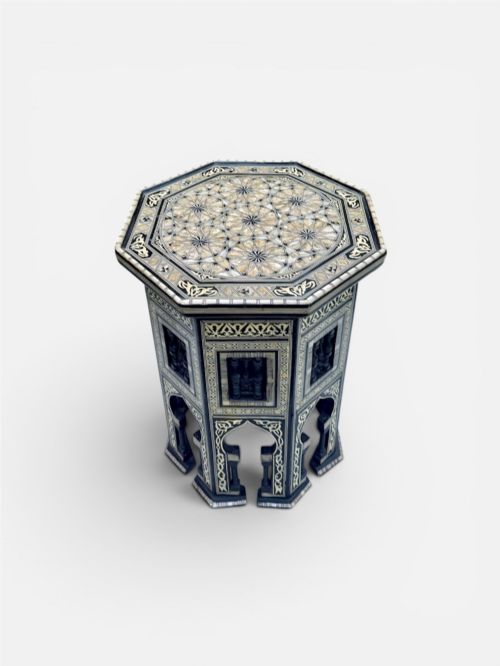
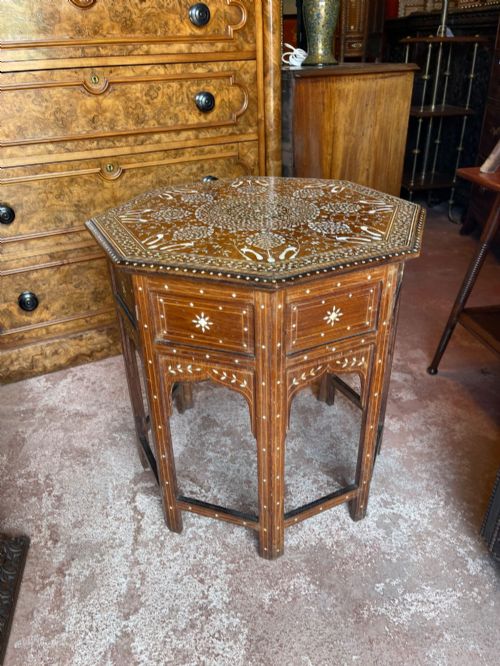
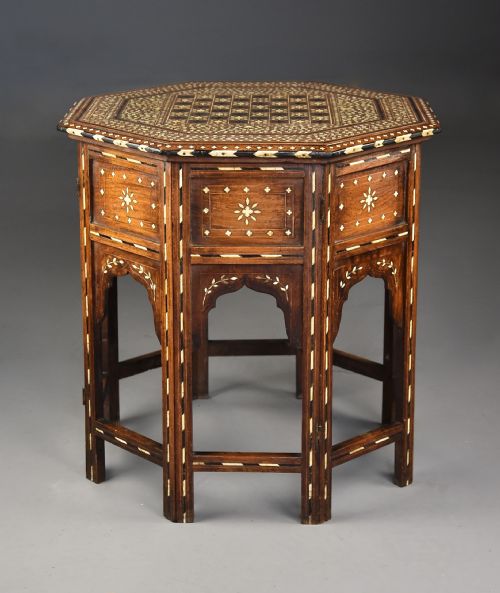
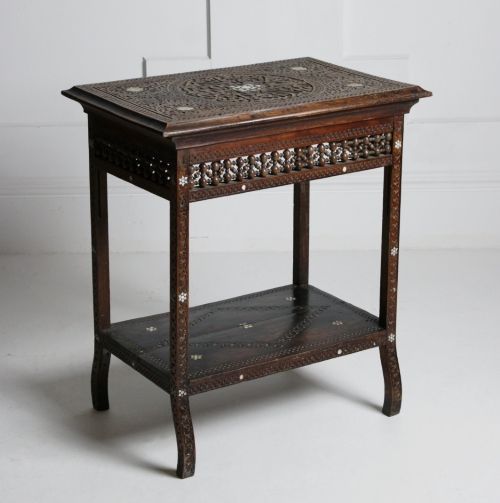
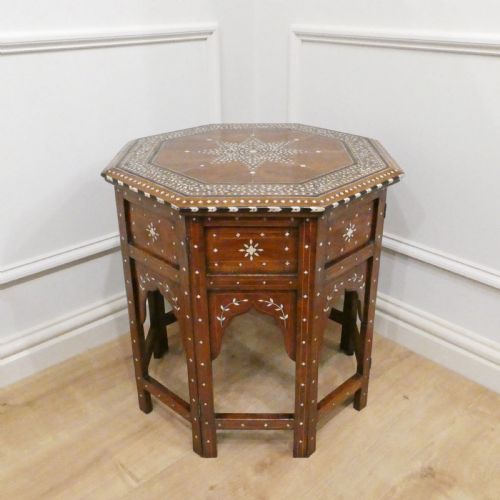
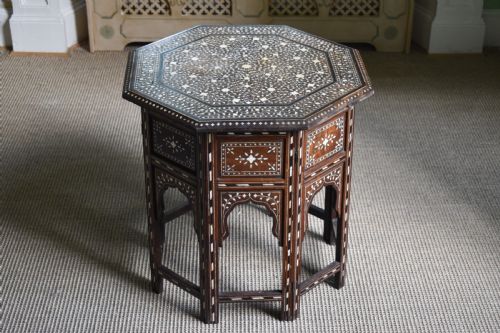
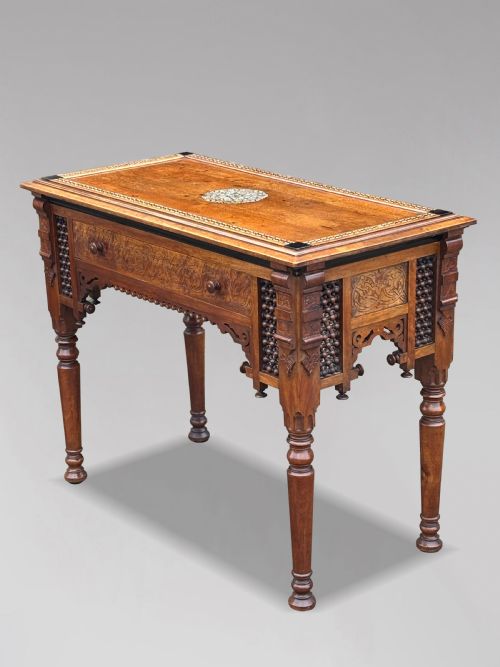
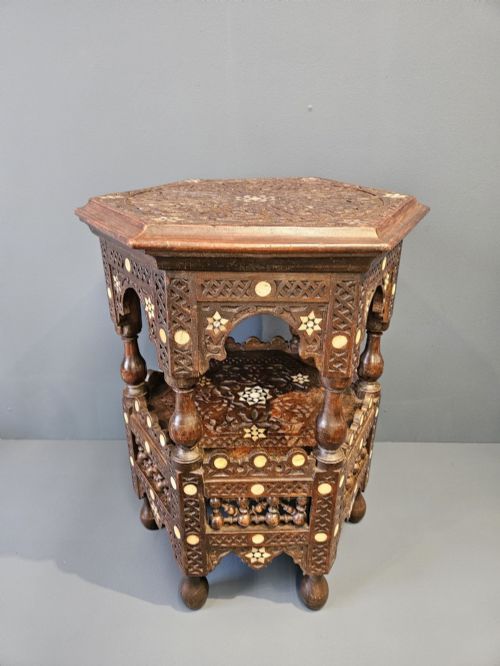
When searching for a carved bone inlay table, buyers encounter intricate occasional and side tables originating primarily from Anglo-Indian workshops, Syrian hubs, and Moorish revival designers. These pieces typically manifest as folding octagonal tables, two-tier stands, or low coffee tables that display dense floral and geometric surface patterns.
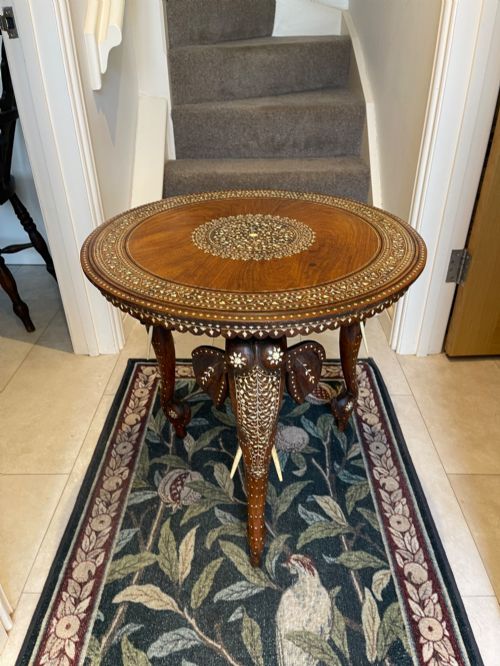
The version most commonly met on this page is the Hoshiarpur table, constructed in resilient tropical timbers and covered in minute bone segments. These pieces range from compact lamp stands to substantial pedestal and elephant tables.
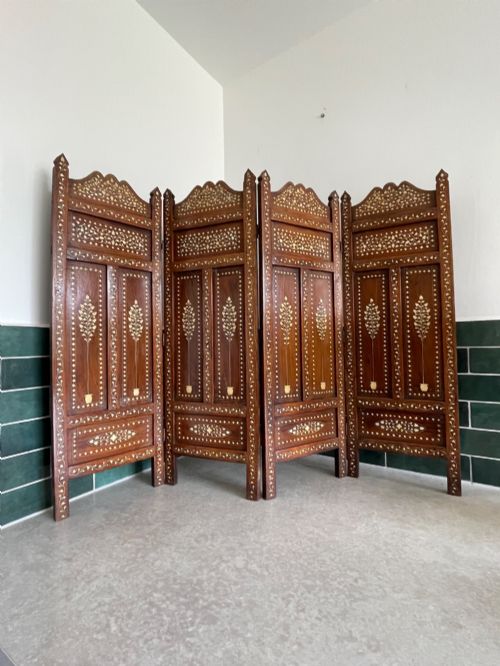
Alongside standard occasional forms, the category extends to specialised furniture including games tables and folding screens, all sharing the same meticulous decorative vocabulary.
How they were made
Artisans carved dense woods such as teak, sheesham, rosewood, and walnut into folding frames, tripod bases, and octagonal tops. These structural timbers provided a dark, contrasting ground for light-toned ornamentation.
Workers cut animal bone into tiny geometric tiles and floral motifs, recessing each piece by hand into shallow channels carved within the timber. Mother-of-pearl was frequently integrated alongside bone to add iridescent contrast to the surface design.
Intricate surface carving framed the inlay work, creating deep relief patterns of foliage, animals, and traditional lattice motifs across the entire visible wooden structure.
Several tables take the form of elephants, complete with carved trunks ready to greet visitors at the door.
What varies in quality
The standard of craftsmanship depends largely on the density and precision of the bone placement, where finer examples feature microscopic registration and minimal filler between the segments. Lesser pieces display wider gaps and coarser, less refined chisel work on the surrounding wood.
The choice of primary timber also dictates the tier of the piece, with dense, heavy hardwoods like padauk and sandalwood holding higher status than simpler domestic timbers. Elaborate structural forms, such as collapsible star tables or multi-tiered designs, demand greater carpentry skill than static four-legged variants.
Liberty & Co
The Carved Bone Inlay Table Glossary
- Hoshiarpur
- A district in Punjab renowned for specialised woodcarving and bone inlay production during the nineteenth and twentieth centuries. Pieces originating from this centre typically exhibit dense floral carving and intricate geometric borders.
- Mother-of-Pearl
- The iridescent inner layer of mollusc shells, utilised alongside bone to introduce shimmering highlights to table surfaces. It reflects light in changing tones according to the viewing angle.
- Octagonal
- Having eight sides, forming the standard geometric footprint for many traditional folding occasional tables. This shape allows complex repeating border patterns to wrap evenly around the perimeter.
- Moorish Revival
- An architectural and decorative style popular in the nineteenth century that incorporated Islamic design motifs into European and colonial domestic furnishings. It frequently manifests in lattice screens and star-patterned table tops.
- Tripod
- A three-legged support structure often utilised on smaller occasional and elephant tables to maintain stability on uneven floors. These bases frequently feature carved animal or figurative elements.
Carved Bone Inlay Table: Frequently Asked Questions
How do I clean a bone inlay table?
Dust the surface regularly with a soft, dry brush to prevent dirt accumulation within the recessed channels. Avoid liquid cleaners and harsh chemicals, which can discolour the bone and loosen the adhesive holding the tiles in place.
Condition the surrounding wood sparingly with appropriate natural waxes if the timber appears dry. Gentle care preserves the contrast between the dark grain and the white inlay over decades of domestic use.
Were these tables designed for everyday use?
Many of these pieces functioned as portable occasional furniture, serving as tea tables or display surfaces in colonial and Victorian homes. Their collapsible frames allowed them to be stored away easily when floor space was required.
Today, they suit placement beside chairs or sofas as low lamp tables and display stands. Their sturdy hardwood construction ensures they handle light daily items securely.
How do I distinguish regional styles?
Hoshiarpur pieces rely heavily on dense all-over floral and geometric carving combined with intricate bone tile arrangements. Syrian and Middle Eastern variants frequently incorporate a higher proportion of mother-of-pearl alongside geometric banding.
Moorish revival examples lean towards arched motifs, intricate lattice work, and star-patterned tops influenced by Islamic design principles. Examining the specific timber species and carving motifs helps clarify the geographic origin.