
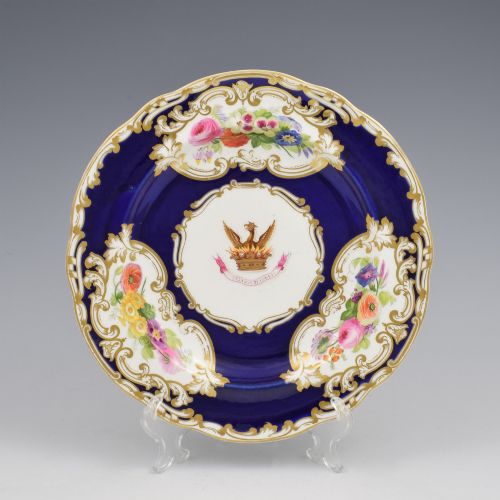


Victorian Bone China Plate
These pieces of a victorian bone china plate are nineteenth-century ceramic tableware designed for display or formal dining, offering painted scenes and gilded edges.
Victorian Bone China Plate
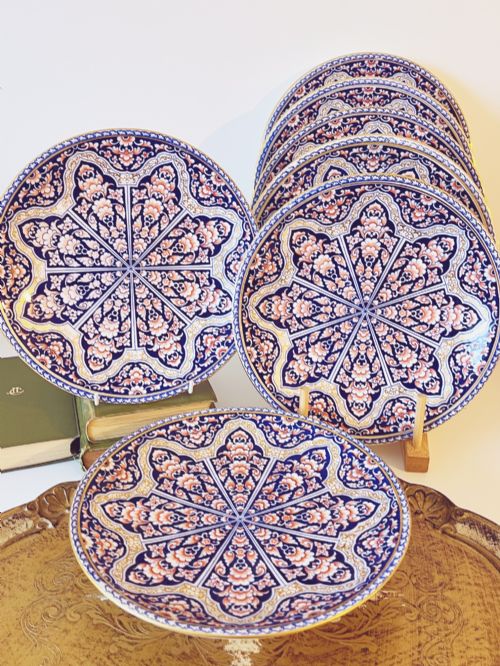
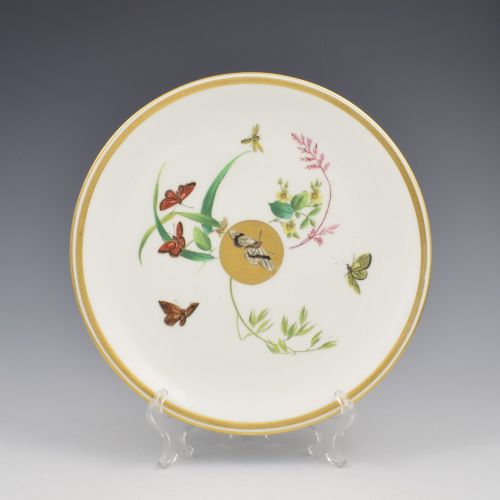
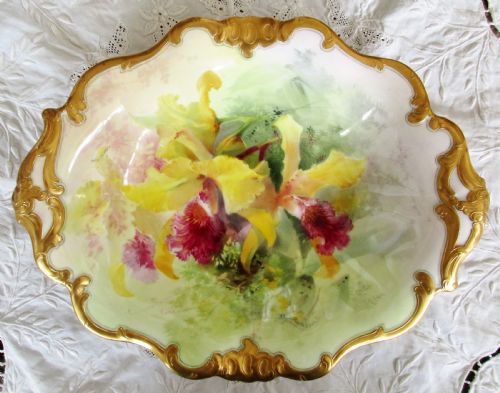
When you examine a victorian bone china plate, you look at nineteenth-century tableware produced for formal dining, dessert services or display cabinets. The versions most commonly met on this page include hand-painted landscape scenes, armorial crests, and botanical studies set against gilded borders.
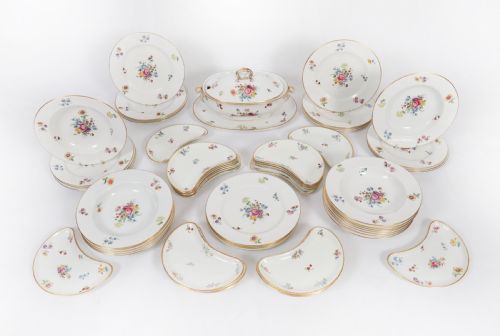
Makers span major English factories operating during the Victorian period, working in styles that range from Aesthetic Movement motifs to Rococo Revival moulding. The forms vary from single cabinet dishes to larger dinner and dessert services intended for grand dining rooms.
How they were made
These items rely on porcelain and bone china bodies, shaped into cabinet plates, soup dishes, and basketweave patterns. Artisans applied enamel colours and gold leaf or gilding by hand to accentuate painted motifs.
Specialised techniques such as pate-sur-pate build up relief designs in liquid clay before firing and glazing. Kiln processes fixed the hand-painted details and metallic leaf firmly onto the ceramic body.
Listings on this site feature Victorian periods, with materials including bone china, porcelain, and gold leaf applied across various decorative services.
What varies in quality
Quality rests upon the skill of the hand-painted decoration, from botanical precision to standard floral transfers. Finer pieces display intricate gilding work and named topographical views rather than generic patterns.
The weight, translucency, and smoothness of the porcelain body distinguish superior services from everyday wares. Form complexity, such as basketweave moulding or shaped rims, also separates standard items from exceptional studio pieces.
Royal Crown Derby·Minton·Royal Doulton·Copeland·Spode·Coalport·Royal Worcester·Wileman Foley Shelley
The Victorian Bone China Plate Glossary
- Bone china
- A type of porcelain containing bone ash, which produces a strong, white, and translucent body suitable for fine tableware.
- Gilding
- The application of gold leaf or gold paint to ceramic edges and motifs, adding metallic lustre to the design.
- Pate-sur-pate
- A ceramic technique where successive layers of liquid clay are built up to create a raised cameo-like design.
- Armorial
- A decorative crest or coat of arms painted onto porcelain to denote a specific aristocratic family.
- Comport
- A raised dish or bowl used as the centrepiece in a dessert service for presenting fruit or sweetmeats.
Victorian Bone China Plate: Frequently Asked Questions
Are these plates safe for food?
Many nineteenth-century plates contain lead or other heavy metals in their glazes, especially within hand-painted or brightly coloured areas. It is safer to treat them as decorative display items rather than functional tableware.
Using them for acidic foods can cause surface wear and leach compounds from the ceramic glaze.
How can I date my plate?
Examine the underside for factory backstamps, impressed ciphers, or registration numbers that correspond to specific production years. Style markers like Aesthetic Movement motifs or Rococo Revival moulding also offer broad chronological clues.
Comparing pattern numbers against factory archives helps narrow down the exact decade of manufacture.
How should I display a cabinet plate?
Support plates securely using wall-mounted brackets or dedicated display stands with protective padding. Ensure the mounting hardware takes the full weight of the ceramic without putting stress on the rim.
Keep display areas away from direct sunlight and heavy foot traffic to prevent accidental knocks and fading.