


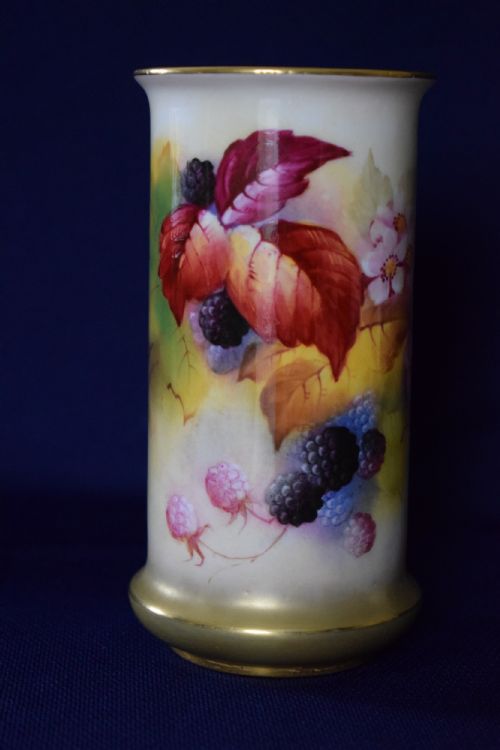


Royal Worcester Floral China
Royal Worcester floral china brings hand-painted botanicals and refined porcelain to your table or display cabinet.
Royal Worcester Floral China
Royal Worcester floral china encompasses a refined range of porcelain plates, vases, figurines, and tableware decorated with botanical subjects. When you browse this selection of royal worcester floral china, you encounter pieces spanning the Victorian, Edwardian, and Art Deco periods, alongside mid-century examples.
The objects vary from cabinet plates and soup dishes to demitasse cups, coffee pots, and decorative ovoid or spill vases. These items reflect British ceramic manufacturing traditions from the mid-nineteenth century through to the mid-twentieth century, including specialised retail commissions.
Materials and methods of production
These items are shaped from porcelain, utilising traditional ceramic moulding and throwing techniques before undergoing high-temperature firing. Artisans then apply detailed hand-painted floral motifs using coloured enamels.
Surface enrichment frequently incorporates gold leaf, gilding, and tooled gilt work to accent the rims, handles, and painted panels. Blush ivory finishes also appear, providing a soft matte background for botanical painting.
Materials documented across the pieces include porcelain, gold leaf, enamel, and blush ivory.
Factors of distinction
Quality in these ceramics rests upon the precision and delicacy of the hand-painted floral decoration, particularly when executed by named artists. The complexity of the gilt work and the application of cobalt accents further separate standard tableware from high-status cabinet pieces.
The refinement of the porcelain body and the crispness of moulded details, such as those found on ovoid vases and figurative works, indicate the tier of production. Early factory dates and special commissioned retail stampings add historical interest.
Kerr & Binns·Kitty Blake·E Raby
The Royal Worcester Floral China Glossary
- Cabinet plate
- A decorative porcelain plate intended for display in a cabinet rather than for dining use. These often feature elaborate hand-painted scenes and rich gilding.
- Blush ivory
- A matte cream-colored porcelain ground developed by the factory, which creates a soft background for floral painting. It mimics the appearance of polished ivory.
- Demitasse
- A small cup used for serving strong black coffee or espresso, typically accompanied by a matching saucer. They frequently form part of larger matched sets.
- Ovoid
- An egg-shaped form frequently utilised for decorative ceramic vases. This profile provides a curved surface suited for panoramic floral displays.
- Gilt
- A thin layer of gold applied to the surface of porcelain for ornamentation. It is often tooled by hand to create textured patterns against the white or coloured body.
Royal Worcester Floral China: Frequently Asked Questions
What periods do these pieces date from?
The items span from the mid-nineteenth century Victorian era through the Edwardian period and into the Art Deco years of the 1930s. Mid-century examples also appear within the selection.
Manufacturing dates are often identifiable through factory backstamps and date codes stamped into the base of the porcelain.
How should I display cabinet plates?
Cabinet plates are designed primarily for visual appreciation rather than functional dining use. They can be mounted securely in wall display brackets or stood upright on dedicated plate displays inside a cabinet.
Keeping them away from direct sunlight helps preserve the vibrancy of the hand-painted enamel floral colours over time.
What is blush ivory?
Blush ivory is a specialised matte ceramic finish developed by the factory during the late nineteenth century. It provides a warm, understated background that enhances the soft tones of hand-painted floral motifs.
This finish is frequently paired with delicate gilding around the rims and handles of vases and jugs.
Are these items safe for daily use?
Many of these pieces, such as demitasse sets, coffee pots, and soup dishes, were created for functional dining and drinking. However, the presence of hand-painted enamels and delicate gold leaf means they require careful hand washing rather than automated cleaning.
Cabinet plates and decorative vases are best reserved for display purposes due to their age and delicate surface decoration.