
Antique English Cabinet Plate
An antique English cabinet plate brings hand-painted botanical scenes, birds, and armorial crests from Georgian, Victorian, and later drawing rooms directly into modern displays.
Antique English Cabinet Plate
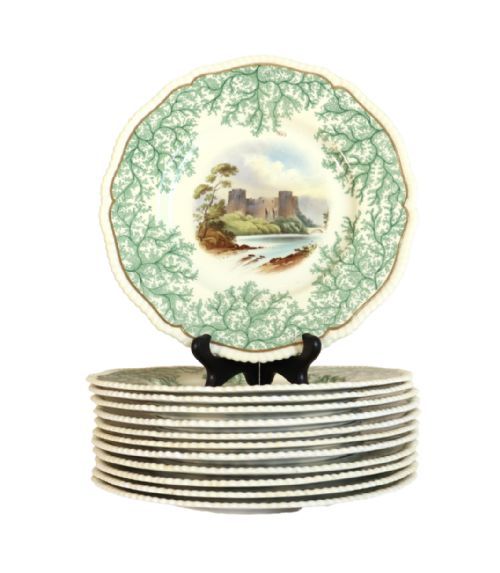
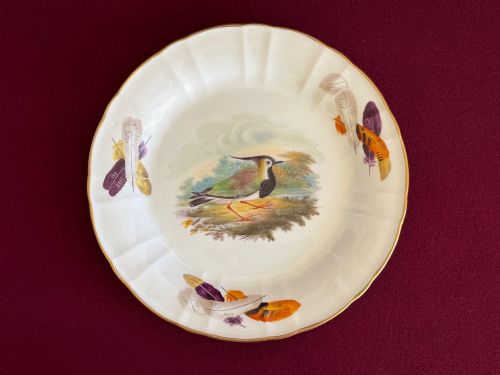
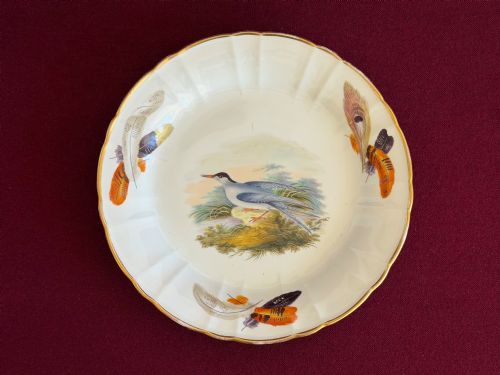
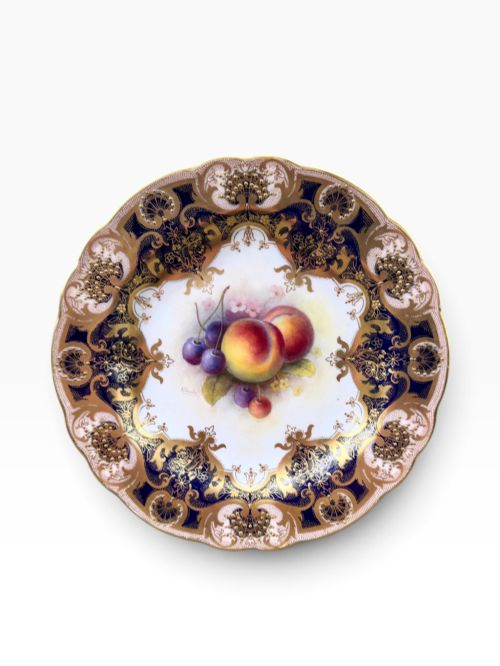
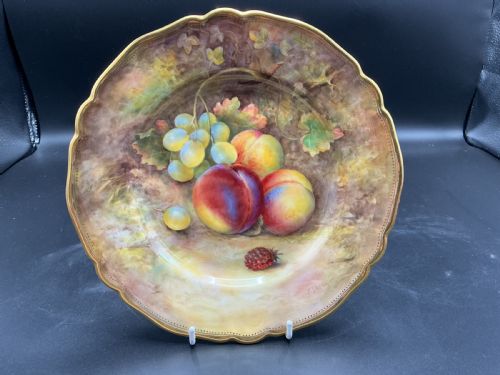
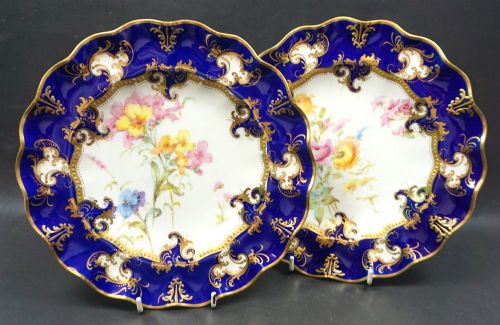
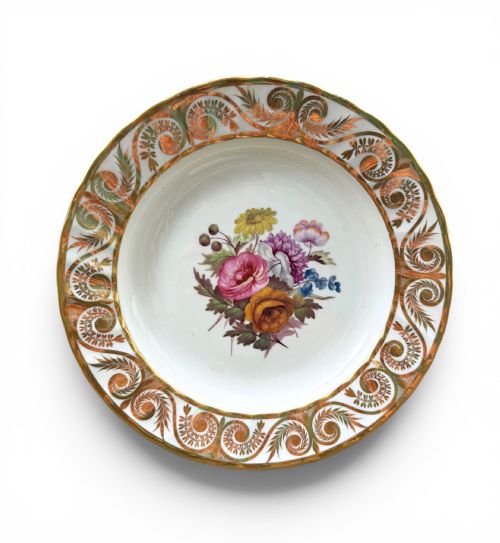
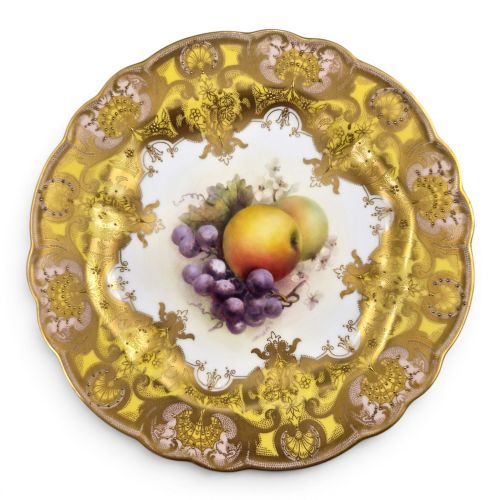
An antique English cabinet plate is a decorative ceramic piece intended primarily for display rather than dining, often featuring elaborate painted scenes, birds, flowers, or family crests. You will encounter these pieces spanning the Georgian, Regency, Victorian, and Edwardian periods, stretching into the mid-twentieth century.
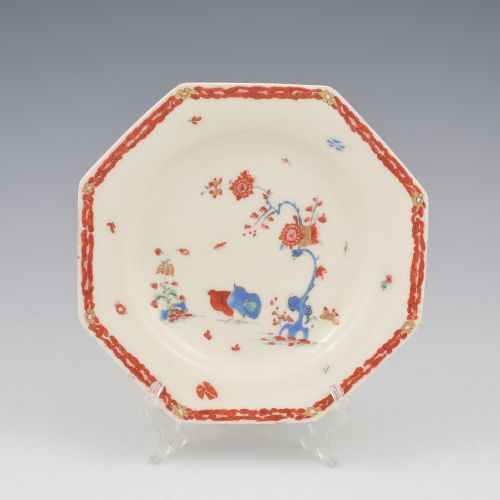
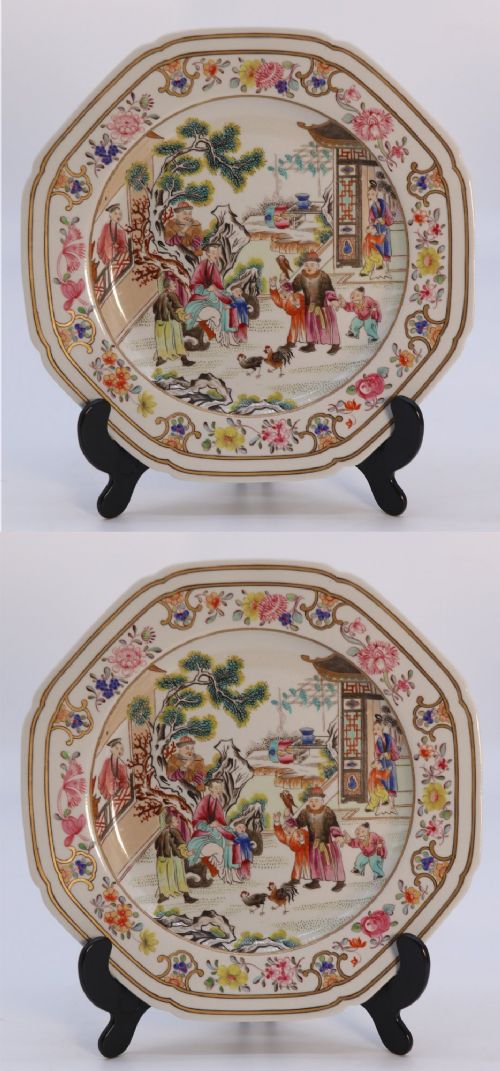
The forms on this page range from octagonal plates and dessert dishes to serving dishes and decorative plaques. These items were produced by notable English factories to showcase skilled artistry and technical ability, rather than for daily domestic service.
Materials and technique
Makers utilised fine porcelain, bone china, ironstone, and earthenware as the foundational bodies for these display pieces. Potters shaped these materials into standard plate and dish forms, often adding moulded borders or octagonal edges.
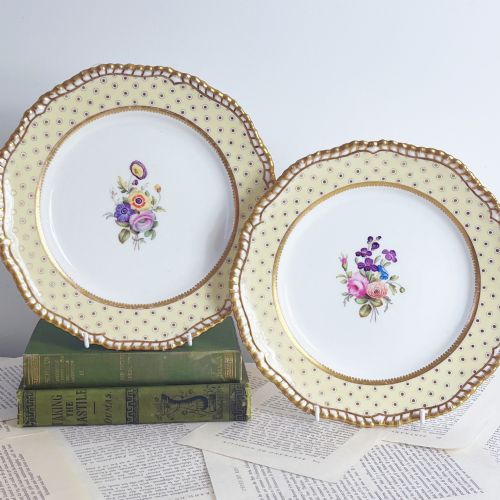
Artisans applied hand-painted enamels, gilt highlights, and gold leaf over the ceramic base. Many examples feature detailed brushwork by named painters, fixed through kiln firing to preserve the vibrant colours and metallic accents.
Materials recorded across the inventory include porcelain, bone china, ironstone, earthenware, enamel, and gold leaf.
Quality variations
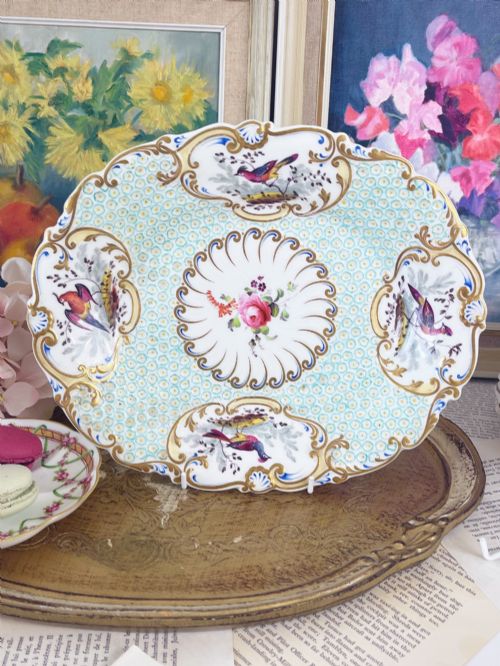
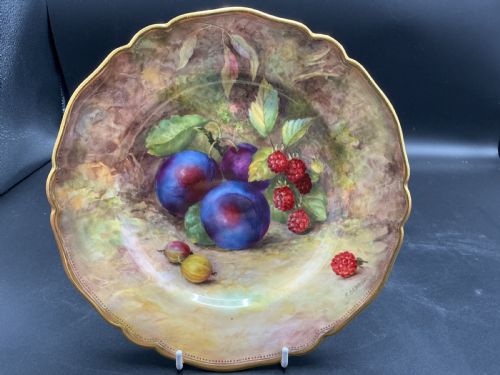
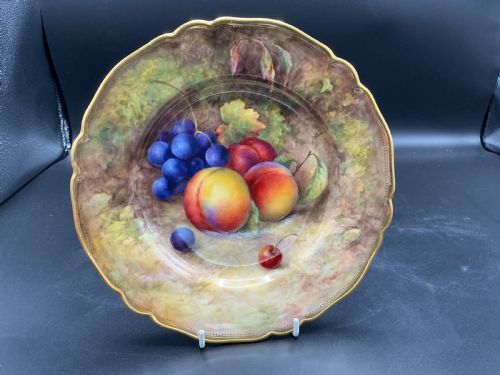
The standard of painting sets the finest pieces apart from simpler output, with named artists executing intricate botanical studies, landscapes, and ornithological subjects by hand. Superior examples display precise brushwork, balanced compositions, and carefully integrated gilding.
Factory pedigree also influences the standing of a piece, with distinguished works originating from established works such as Royal Worcester, Spode, and Derby. The sophistication of armorial details, custom provenance commissions, and rich ground colours elevate the overall character of the plate.
Spode·Royal Crown Derby·H & R Daniel·Wedgwood·Royal Worcester·Derby·Minton·Royal Doulton·John Davenport·Copeland·Bloor Derby·Barr Flight and Barr·Coalport
The Antique English Cabinet Plate Glossary
- Bone China
- A type of porcelain incorporating animal bone ash that produces a strong, bright white body. This material allowed makers to create refined, thin-walled plates with a smooth translucent finish.
- Imari
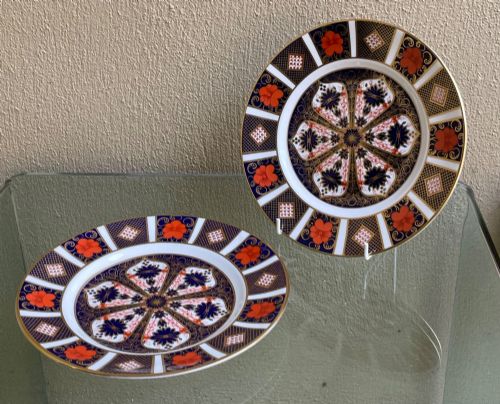
- A decorative style inspired by Japanese export wares, featuring a palette primarily of iron red, cobalt blue, and gilt. English factories frequently adapted this vibrant aesthetic onto ironstone and porcelain bodies.
- Armorial
- A design incorporating a family crest, coat of arms, or heraldic insignia. These bespoke elements were often commissioned for aristocratic households and prominent families.
- Gilding
- The application of gold or gold leaf onto the ceramic surface, typically used to accent rims, borders, and central motifs. Skilled gilding adds a reflective, luxurious quality to cabinet displays.
- Felspar
- A specific porcelain body introduced by factories like Spode in the nineteenth century. It offered enhanced durability and a distinct canvas for detailed hand-painted scenes.
Antique English Cabinet Plate: Frequently Asked Questions
What is an antique English cabinet plate?
An antique English cabinet plate is a decorative ceramic dish made for display in a cabinet, on a wall, or on a mantelpiece rather than for table service. These pieces typically feature detailed hand-painted artwork, gilding, or armorial crests.
Produced across various periods from the Georgian era through the twentieth century, they highlight the decorative skills of notable English porcelain and pottery manufacturers.
How were cabinet plates used historically?
Historically, these plates served as decorative showpieces to demonstrate the wealth, taste, and refinement of the owner. They were displayed in drawing rooms, dining rooms, and specialised display cabinets.
Rather than holding food, their primary purpose was to exhibit fine art, commemorate families through armorial crests, or showcase specific scenic and botanical studies.
How do I display a cabinet plate safely?
Displaying these plates safely involves using secure plate hangers designed specifically for porcelain and ceramic objects, ensuring the weight is distributed evenly without putting pressure on the rim. Alternatively, specialised plate stands provide stable support on flat surfaces inside enclosed cabinets.
Keeping pieces away from direct sunlight and areas of high foot traffic helps protect the delicate hand-painted enamel and gilt surfaces from accidental damage.
How can I tell the period of a plate?
Determining the period of a cabinet plate involves examining the factory backstamps, paste composition, and stylistic clues such as colour palettes and border designs. Georgian and Regency pieces often feature specific hand-painted pattern numbers and early porcelain bodies, while Victorian and Edwardian examples may show impressed registry marks or manufacturer ciphers.
Matching known artist signatures, such as those found on Royal Worcester fruit plates, also helps narrow down the exact decade of manufacture.