
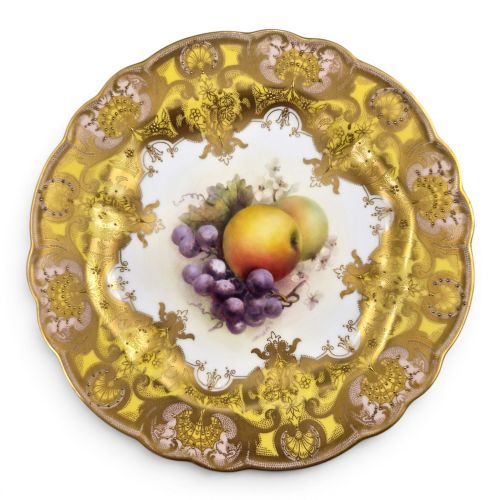
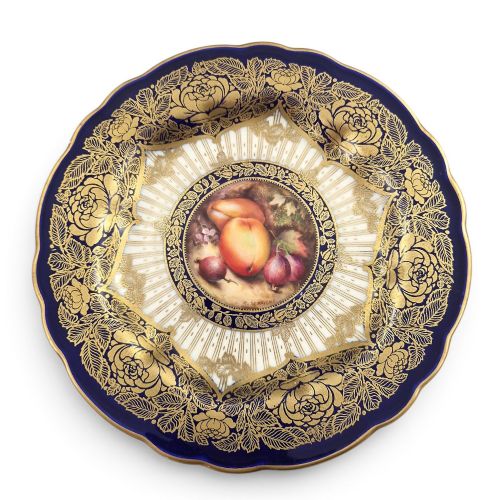
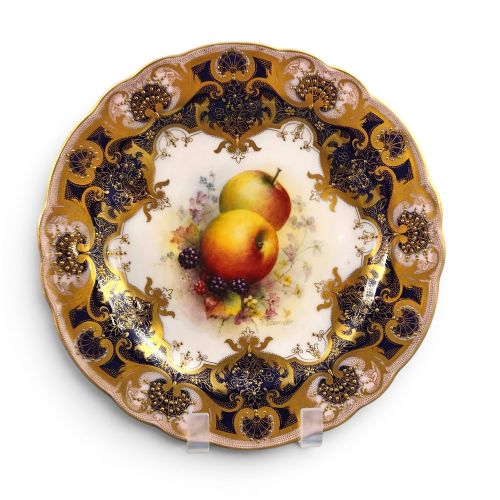
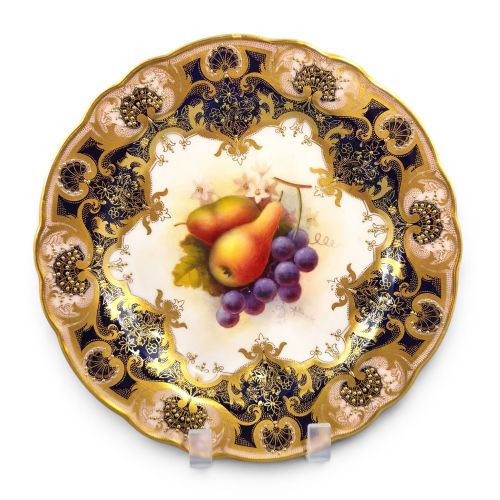
Vintage English China Plates
These vintage english china plates bring historic craftsmanship and painted decoration to the table, offering a tangible link to centuries of ceramic art.
Vintage English China Plates
Vintage english china plates encompass everything from functional tea sets and dinner services to ornate cabinet plates intended purely for display. When searching for vintage english china plates, collectors encounter diverse ceramic bodies spanning the Georgian era through the mid-twentieth century.
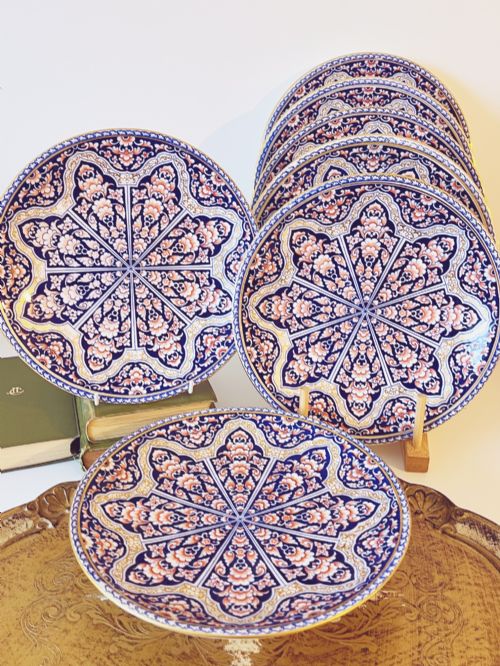
The selection ranges from transfer-printed earthenware and durable ironstone to fine porcelain and bone china. Pieces appear as individual cabinet items, pairs, or matched sets including dessert services and soup dishes.
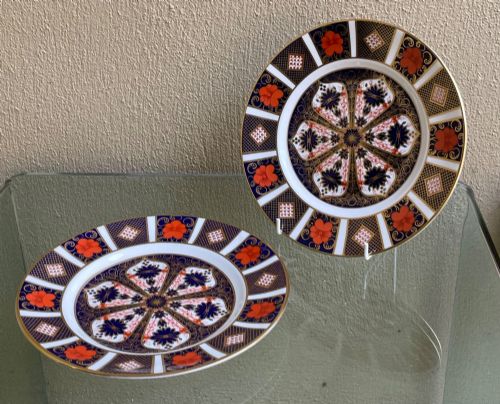
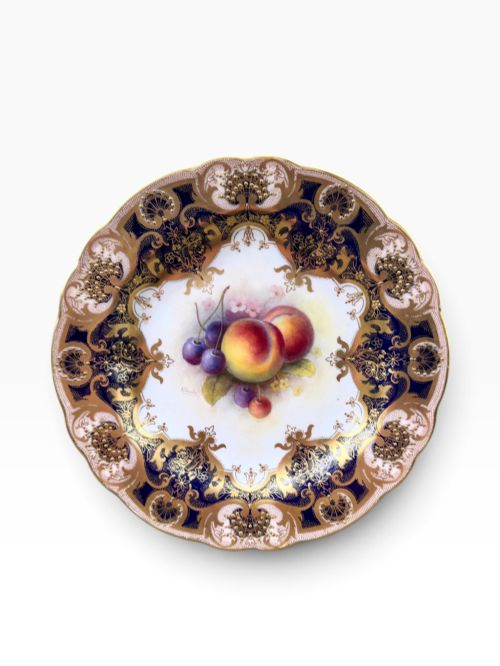
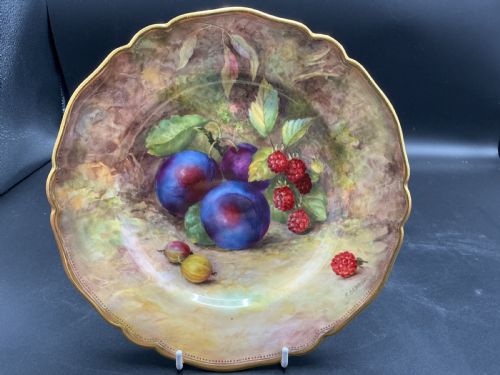
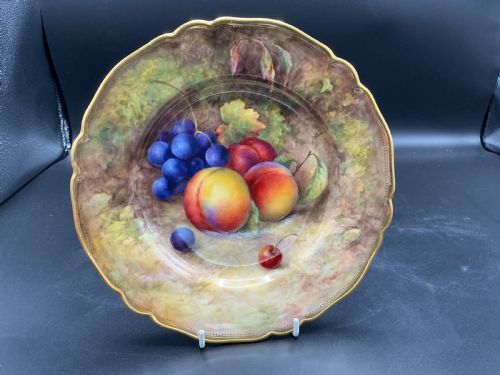
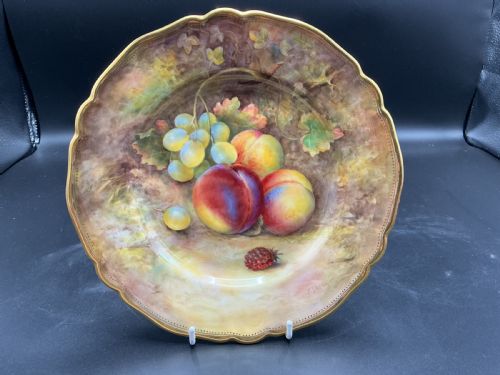
Makers represented across the period styles include prominent factories producing traditional English patterns alongside hand-painted fruit and floral studies. These objects reflect both everyday dining customs and high-status interior decoration of their respective decades.
How they were made
Manufacturers utilised a variety of ceramic bodies including bone china, porcelain, ironstone, and earthenware, shaped either by throwing or moulding. Once formed, pieces received glazes that provided a smooth, vitreous surface suitable for subsequent decoration.
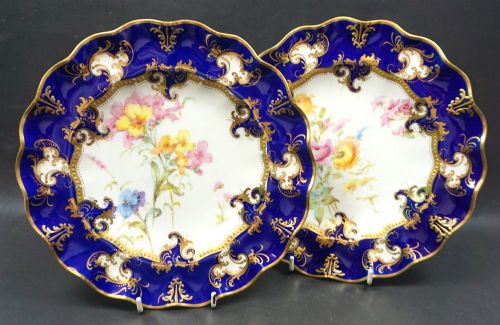
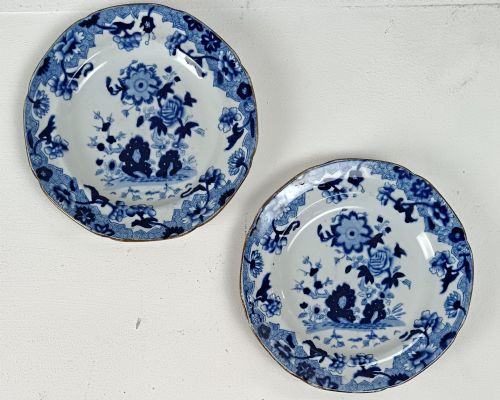
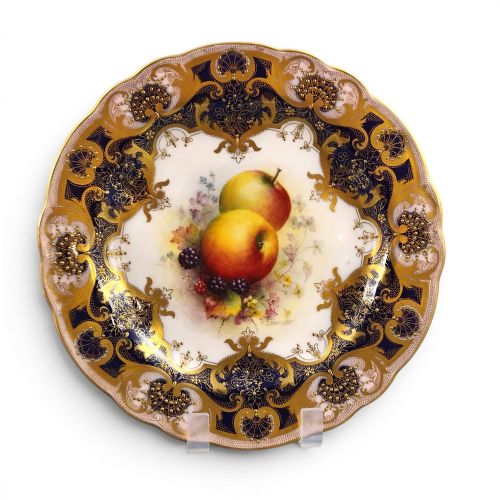
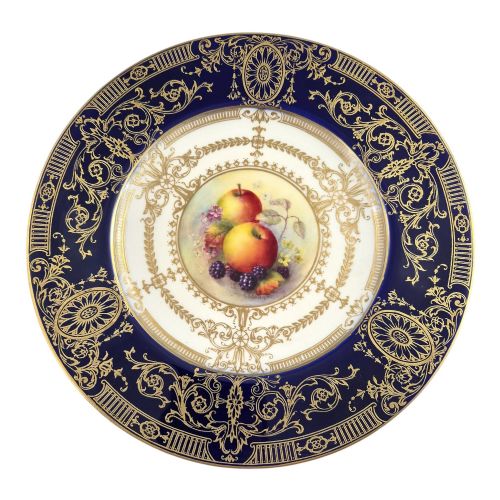
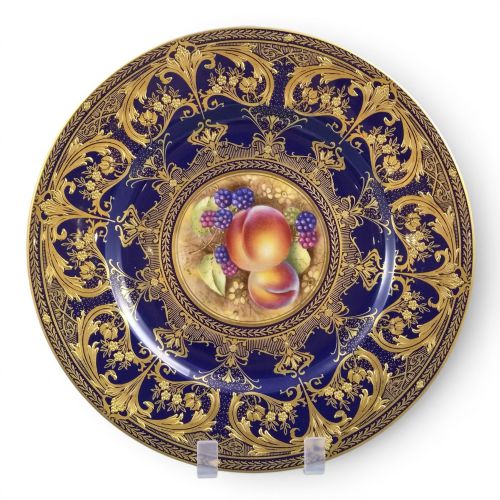
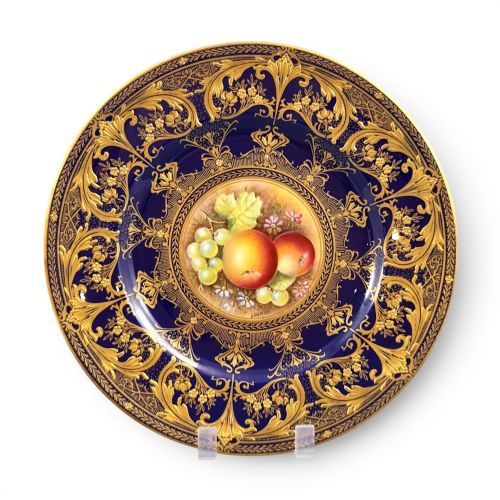
Decoration relied heavily on underglaze blue and white transfer printing, hand-painted enamel colours, and applied gold leaf details. Specialist artists often painted intricate fruit, floral, and landscape subjects by hand before firing the items to fix the pigments.
Listings feature porcelain, bone china, ironstone, and earthenware spanning the Georgian period to the 1960s.
What varies in quality
Quality rests upon the refinement of the ceramic body and the skill applied to the decoration. Finely potted porcelain with translucent qualities and delicate moulding stands apart from heavier, utilitarian earthenware.
The distinction between standard factory output and top-tier items often lies in the authorship of the painting. Pieces bearing the signature of known porcelain artists demonstrate a level of artistic execution that elevates simple tableware to fine art.
Royal Crown Derby·Royal Worcester·Royal Doulton·Spode·New Hall·Booths·Masons·Minton·Grainger and Co·Doric China·Coalport·Chelsea·William Adams
The Vintage English China Plates Glossary
- Cabinet plate
- A decorative plate intended for display in a cabinet or on a wall rather than for practical dining use. These often feature elaborate hand-painted scenes and gilded borders.
- Bone china
- A type of soft-paste porcelain incorporating animal bone ash, resulting in a strong, highly white and translucent ceramic body. It became a staple of English ceramic production.
- Ironstone
- A patented ceramic type developed to be highly durable and resistant to chipping while resembling true porcelain. It bridges the gap between earthenware and stoneware.
- Transfer printing
- A mechanical decoration technique where an engraved copper plate transfers a design onto tissue paper, which is then pressed onto the ceramic. This allowed for intricate blue and white patterns to be produced consistently.
- Enamel
- Opaque glass-based colours applied over the glaze to provide vibrant, multi-coloured decoration on ceramics. These pigments require a secondary low-temperature firing to fuse with the surface.
- Comport
- A raised dish or bowl used traditionally for serving fruit or sweets as part of a dessert service. They often match the design of surrounding plates in a set.
Vintage English China Plates: Frequently Asked Questions
Can I use these plates for dining?
While many vintage english china plates were originally made for dining or dessert services, older pieces with delicate hand-painted enamels or heavy gilding are better suited for gentle use or display.
Ironstone and sturdier earthenware plates handle everyday use more readily, though hand washing preserves the glaze and any gold leaf detailing over time.
How do I identify the age of a plate?
Makers often stamped or painted factory marks, cyphers, or date codes onto the underside of the ceramic body. Cross-referencing these specific marks with historical factory records provides the most accurate date of manufacture.
Stylistic cues such as transfer-printed patterns, paste density, and the presence of registry diamonds also help narrow down the production period.
What is a dessert service?
A dessert service is a matched set of ceramic vessels designed specifically for serving the final course of a formal meal. This typically includes a central pedestal comport accompanied by a series of matching plates.
These services often featured botanical, fruit, or scenic paintings intended to impress guests at the end of dining.
Why are some plates signed by artists?
Certain factories employed master painters who specialised in specific subjects like fruit, birds, or floral studies. Signing a piece denoted a high level of individual artistic merit and factory status.
Plates signed by prominent artists usually command greater attention from collectors than standard factory-printed wares.