
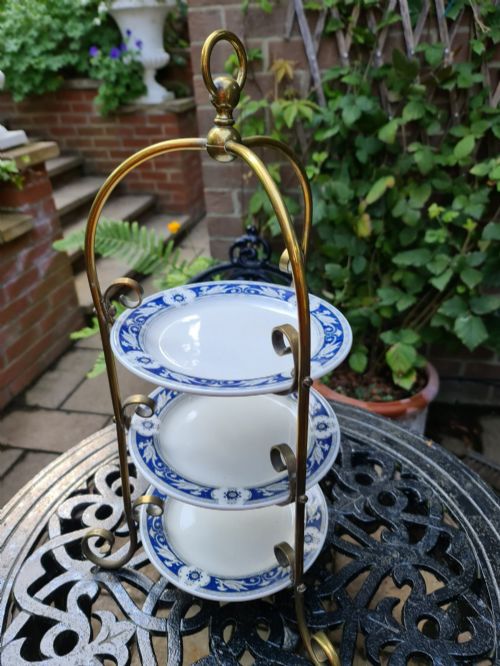
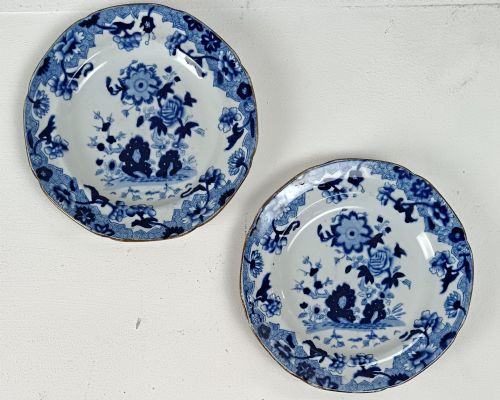
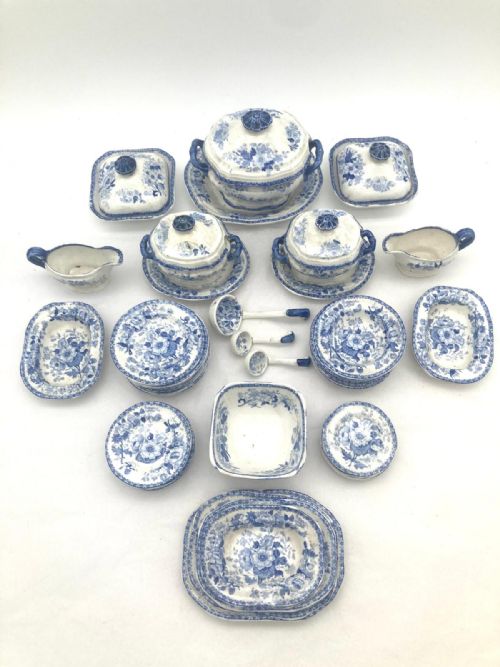


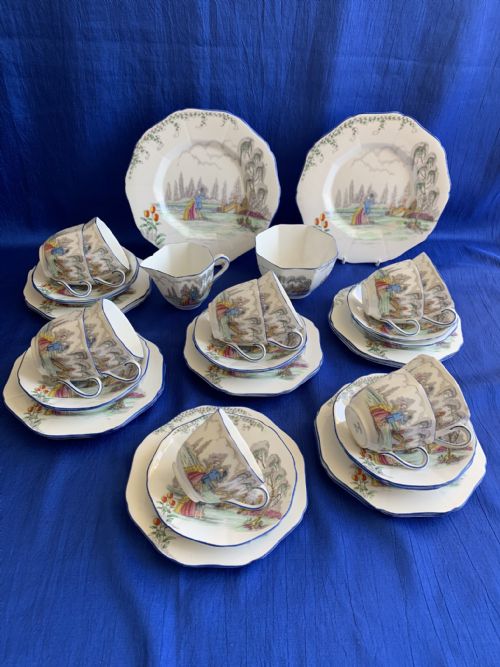
Blue White Tea Plates
These blue white tea plates bring classic ceramic decoration and practical serving to the table, offering a durable way to present afternoon tea.
Blue White Tea Plates
When you search for blue white tea plates, you are looking at small ceramic dishes designed for serving cakes and bread with tea. The pieces on this page span several eras, reaching from Georgian examples through Victorian and Edwardian periods down to the twentieth century.
You will most commonly encounter earthenwares and porcelains decorated in cobalt blue transfer prints, ranging from scenic Chinoiserie landscapes to floral sheet patterns. Makers such as Spode, Minton and Copeland Spode dominate the traditional output found here.
Forms vary from matched pairs of transfer-printed plates to wider tea services and related teaware items like saucers and biscuit barrels. The palette relies on the contrast between crisp white ceramic bodies and deep blue pigments under a glossy glaze.
How they were made
Potters shaped these ceramics using earthenware, bone china or soft-paste porcelain bodies before applying intricate designs via blue and white transfer printing. Skilled engravers etched pictorial scenes onto copper plates, which then transferred the ink onto tissue paper and subsequently onto the ceramic surface.
A protective glaze sealed the pigment before the pieces went into kilns for high-temperature firing, ensuring the cobalt blue design remained permanent and glossy. Some wares also incorporated gilding or silver plate mounts to elevate their status for formal parlour use.
Early nineteenth-century plates bear curious pattern names like 'Crazy Cow' and 'Bengal Tiger'.
What varies in quality
The crispness of the transfer print separates ordinary wares from finer pieces, as detailed engraving retains sharp outlines without blurring or smudging. Early nineteenth-century productions benefit from careful hand-painting over the printed base and superior body preparation.
The weight, translucency of the ceramic body and evenness of the glaze also mark out better examples. Well-potted plates display minimal warping from the kiln and preserve their original cobalt depth.
Spode·Minton·Carlton Ware·Worcester·Copeland Spode·Sutherland
The Blue White Tea Plates Glossary
- Transfer printing
- A decoration technique where an engraved copper plate applies ink onto tissue paper, which is pressed onto the unglazed or bisque ceramic. This method allowed factories to produce complex patterns quickly and consistently.
- Chinoiserie
- A European decorative style reflecting Chinese artistic influences, frequently featuring imaginary landscapes, pagodas and figures. It appears widely on early ceramic plates and tea services.
- Flow blue
- A nineteenth-century ceramic style where cobalt blue pigment blurred intentionally during the kiln firing to create a hazy, atmospheric effect. This technique was especially popular in Edwardian and late Victorian wares.
- Soft-paste porcelain
- A ceramic composition made from clay and glass frit that fires at lower temperatures than true hard-paste porcelain. It yields a warm, slightly creamy body favoured by early factories.
- New Stone
- A durable ceramic body introduced by Spode during the Georgian era to compete with Chinese export porcelain. It offers increased strength while maintaining a fine white surface for blue and white designs.
Blue White Tea Plates: Frequently Asked Questions
Are blue white tea plates safe for daily use?
Most antique and vintage tea plates remain durable enough for careful everyday dining, though hand washing preserves the glaze and any delicate gold leaf.
Older earthenware and soft-paste pieces benefit from gentle treatment to prevent staining through microscopic crazing in the antique surface.
How do I date a blue and white plate?
Makers marks stamped or printed on the underside offer the most reliable guide, alongside the specific style of the transfer pattern and body material.
Georgian and early nineteenth-century wares often feature impressed factory marks, while later Victorian and Edwardian pieces frequently include registration numbers.
What is the difference between earthenware and bone china?
Earthenware is an opaque, porous ceramic that requires a heavy glaze to remain watertight, while bone china incorporates bone ash for a thinner, lighter and translucent body.
Bone china generally denotes a finer, more expensive production standard across nineteenth and twentieth-century tableware.
Can I mix different patterns on the tea table?
Mixing various blue and white transfer patterns creates a traditional collected look that reflects how many historical households actually used their crockery.
Matching the approximate period or tone of the blue pigment helps maintain visual harmony when combining different makers.