
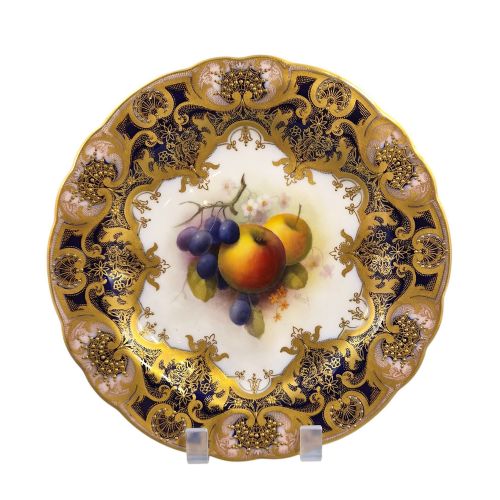
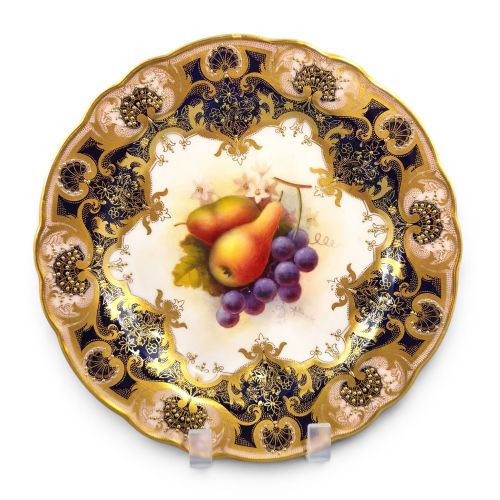
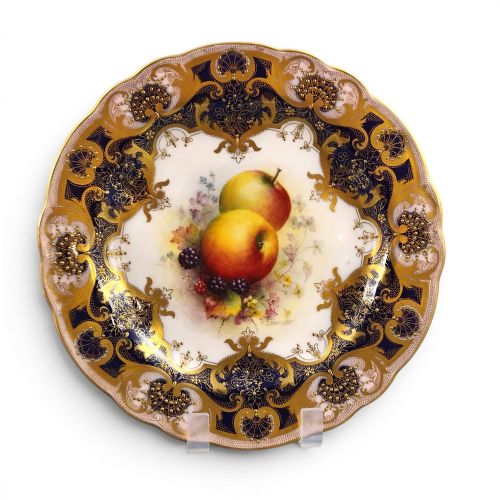
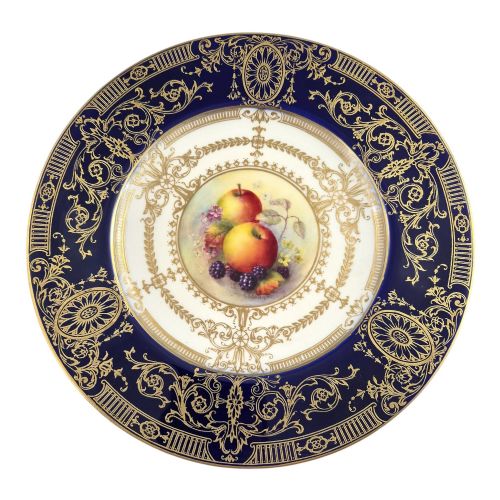


Gilded Blue Cabinet Dish
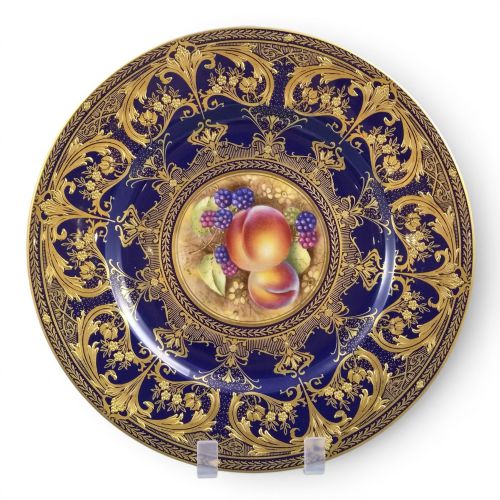
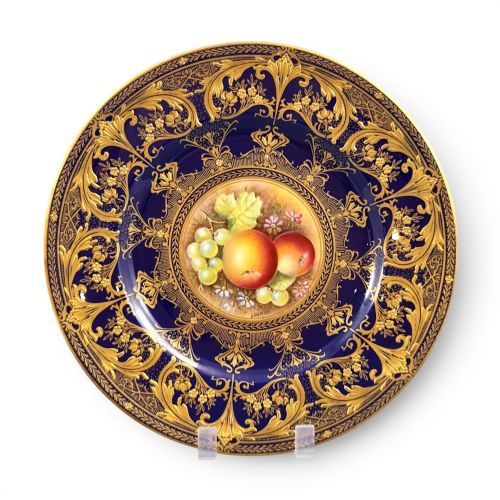
A gilded blue cabinet dish brings together rich cobalt grounds, porcelain bodies, and bright gold leaf in decorative forms meant for display.
Gilded Blue Cabinet Dish
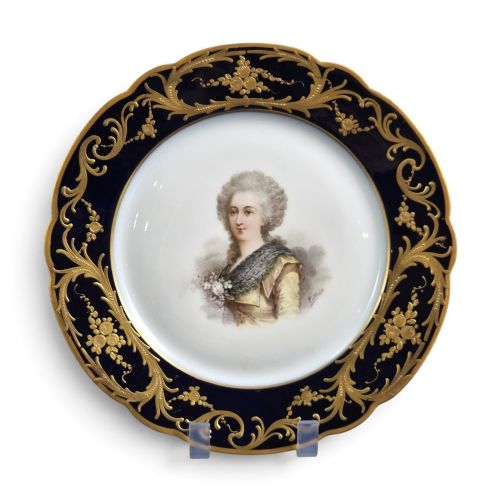
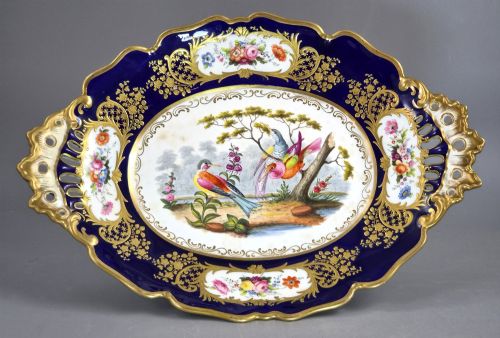
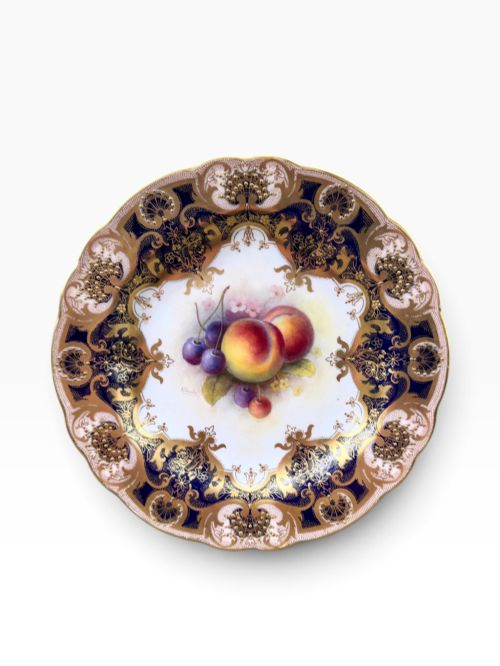
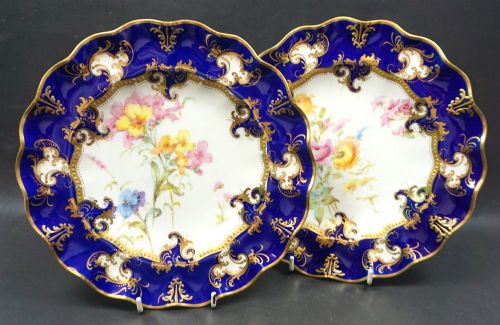
The items span periods from the early nineteenth century through the mid-twentieth century, with strong representation from Victorian and Edwardian makers. Forms include cabinet plates, soup dishes, and serving chargers adorned with hand-painted subjects ranging from botanical studies and fruit to classical figures and armorial crests. Styles incorporate English floral traditions, Japanese Imari designs, and continental revival aesthetics.
Materials and production techniques
Makers shaped these items using fine porcelain and bone china bodies, firing the clay to create a dense, white base suitable for detailed painting. Artisans applied cobalt blue pigments directly to the surface, creating rich, saturated backgrounds beneath subsequent glaze layers. Gold leaf and liquid gilding were then added by hand, often featuring intricate tooling to catch the light.
Painting required skilled artists to execute central portraits, birds, and botanical scenes within reserved panels. After initial shaping and glazing, the pieces underwent multiple kiln firings to set the enamel colours, metallic highlights, and overglaze details permanently into the ceramic surface.
Jabberwocky patterns and portraits of Mme Élisabeth share cabinet space with botanical studies and leaping cupids.
Distinctions in execution and design
Quality rests heavily on the skill of the hand-painted decoration, where named artists and detailed brushwork elevate a piece above standard factory production. Finely tooled gilding and well-preserved gold leaf indicate superior craftsmanship compared to plain flat metallic applications.
The complexity of the ceramic body also defines the tier, seen in pierced porcelain borders, unusual shell or oval forms, and heavy porcelain weights. Maker attribution plays a significant role, with established works like Royal Worcester, Coalport, and Royal Vienna commanding attention for their refined paste and rigorous studio standards.
Coalport·Royal Worcester·Royal Crown Derby·Royal Vienna·Chamberlain Worcester·Dresden Helena Wolfsohn·Mason Ironstone
The Gilded Blue Cabinet Dish Glossary
- Cabinet plate
- A decorative ceramic plate intended for display in a cabinet or on a wall rather than for functional dining use. These items typically feature elaborate hand-painted scenes and rich gilding.
- Cobalt
- A deep blue metallic oxide used to pigment ceramic glazes and body surfaces. It withstands high kiln temperatures without losing its intense hue.
- Gilding
- The application of gold leaf or powdered gold to the surface of porcelain. This technique adds metallic highlights and borders to complement blue grounds.
- Imari
- A traditional Japanese decorative style featuring underglaze blue and overglaze iron red and gold. European factories frequently copied these patterns during the nineteenth century.
- Armorial
- A ceramic design incorporating a family crest, coat of arms, or heraldic motto. Such pieces were often commissioned by landed families for specific dining services.
Gilded Blue Cabinet Dish: Frequently Asked Questions
What is a cabinet dish?
A cabinet dish is a decorative ceramic piece manufactured for display in a cabinet or on a wall. These items prioritise artistic painting and elaborate gilding over practical utility.
They emerged as popular display objects in nineteenth-century homes where collectors showcased fine porcelain works.
How were blue and gold dishes displayed?
Owners placed these items in glazed display cabinets or mounted them on walls using specialised wire hangers. Their reflective gold leaf and deep cobalt grounds caught ambient light within formal drawing rooms.
They served as conversation pieces that demonstrated the owner's taste and access to quality porcelain manufacture.
How do I care for antique gilded porcelain?
Care requires dusting the surface gently with a soft dry cloth and avoiding harsh cleaning agents or abrasive scrubbers. Immersion in water should be limited to prevent moisture penetration through old glaze micro-fissures.
Display environments should remain stable, avoiding direct sunlight and extreme temperature fluctuations that might affect the enamel and gilding.
How do I identify nineteenth-century factory marks?
Factory marks appear on the underside of the ceramic body as printed stamps, impressed ciphers, or hand-painted script. These symbols indicate the operating period and workshop origin.
Consulting standard ceramic reference guides helps match specific ciphers to known makers active during the 1800s.