


Porcelain Landscape Wall Plate
A porcelain landscape wall plate brings topographical views and painted scenes directly into the home on a circular canvas.
Porcelain Landscape Wall Plate
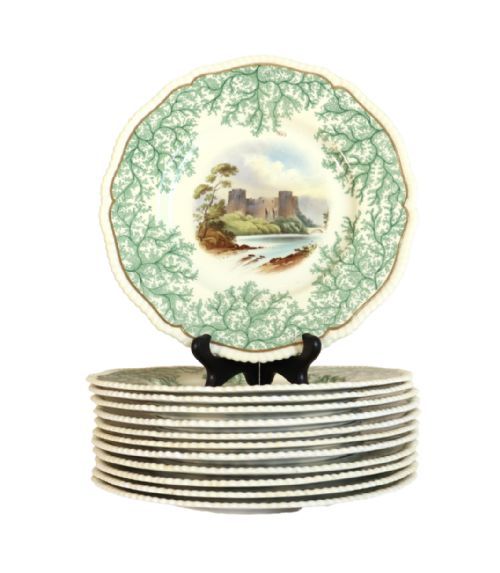
A porcelain landscape wall plate is a decorative vessel displaying painted topographical scenes, architectural views or natural settings. When searching this phrase, a buyer encounters cabinet plates, dinner plates, chargers and wall plaques produced across the eighteenth and nineteenth centuries.
The pieces on this page span several distinct periods including the Georgian, Victorian and Edwardian eras. Origin points range from English potteries such as Spode, Minton and Coalport to French workshops like Darte Brothers and Pucher Deroche, alongside Chinese export wares and Japanese chargers.
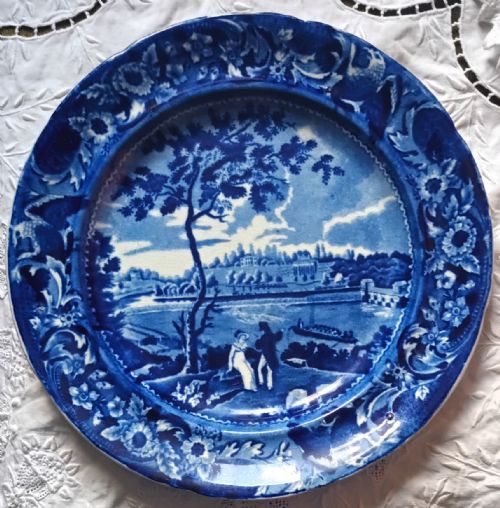
Most examples function primarily as display items rather than utilitarian tableware. They provide a glimpse into historical tastes for scenic art, capturing specific landmarks from Fair Mount near Philadelphia to Lake Menteith and Kilchurn Castle.
Materials and methods of manufacture
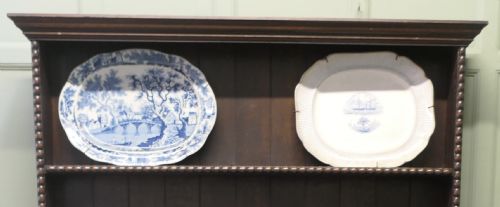
Manufacturers shaped these plates using ceramic bodies such as fine porcelain, earthenware and ceramic glaze. Artisans applied cobalt blue transfer printing or hand-painted enamels directly onto the surface before firing.
Many better pieces incorporate supplementary enrichment like gold leaf, gilding and pearl jewelled borders. These metallic and raised enamel details frame the central landscape views to create depth and contrast.
The listings on this page span the eighteenth, nineteenth and early twentieth centuries, featuring porcelain, earthenware and ceramic glaze.
Distinctions in quality and execution
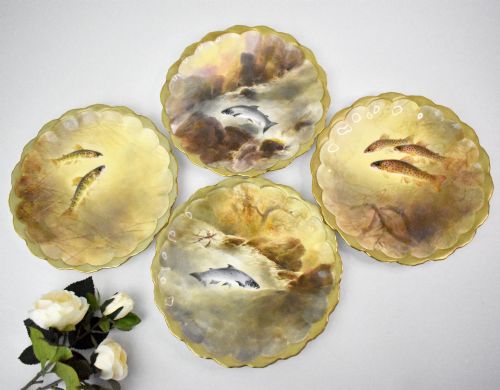
Quality rests in the precision and artistic execution of the painted landscape. Hand-painted scenes by named artists display a level of detail and brushwork that separates them from standard transfer-printed commercial output.
The choice of body and secondary decoration also defines the tier of a piece. Fine porcelain blanks paired with careful gilding, pearl jewelled borders or specific topographical inscriptions indicate higher workshop standards.
Spode·Stubbs·Royal Doulton·Darte Brothers·Pucher Deroche·Coalport·Minton·Copeland Pottery
The Porcelain Landscape Wall Plate Glossary
- Cabinet plate
- A decorative plate intended for display in a cabinet or on a wall rather than for dining use. These often feature hand-painted scenes or rich gilding.
- Transfer printing
- A mechanical method of applying a design to ceramics by transferring a printed paper pattern from an engraved copper plate to the glazed surface. This technique allowed for consistent reproduction of complex landscape scenes.
- Charger
- A large ornamental plate or platter used primarily for display or as a base setting beneath other courses. In landscape ceramics, chargers provide a wide expanse for panoramic views.
- Gilding
- The application of gold leaf or gold powder to ceramic surfaces for decorative accent. It frequently highlights the rims and borders of nineteenth-century plates.
- Topographical
- Depicting a specific real-world place, building or landscape. Many plates in this category name exact locations on their fronts or versos.
Porcelain Landscape Wall Plate: Frequently Asked Questions
How do I hang a wall plate safely?
Use a specialised spring-loaded plate hanger that grips the rim securely without causing damage to the ceramic body or glaze. Ensure the wall fixing matches the weight of the specific plate or charger.
Avoid wire adhesives that rely on glue, as these can fail over time and cause the piece to fall. Padded prongs protect the edges of antique porcelain from scratching.
Were these plates used for dining?
While some forms began as dinner plates or dessert plates, many examples with detailed landscape painting were intended exclusively for visual display. Cabinet plates and wall plaques served as decorative art objects within the nineteenth-century interior.
Plates featuring delicate gilding or pearl jewelled borders are particularly unsuited for functional dining use. Examining the surface for wear helps determine if a piece saw active service on the table.
How can I tell an English plate from a French one?
English plates from this selection often feature maker marks associated with Stoke-on-Trent potteries or distinct blue and white transfer patterns. They frequently record specific British or American landmarks.
French pieces from Parisian workshops tend to exhibit different enamel palettes and distinct porcelain compositions characteristic of nineteenth-century French manufacturing traditions. Backstamps and impressed marks provide definitive evidence of origin.
What does pearl jewelled mean?
Pearl jewelled refers to a raised enamel technique where small dot-like beads of enamel are applied in relief around the border or motifs of a plate. This creates a tactile, jewelled effect that catches the light.
Minton utilised this decorative method on high-end dessert and cabinet plates to add texture and luxury. The raised pearls contrast with the smooth painted landscape at the centre.