
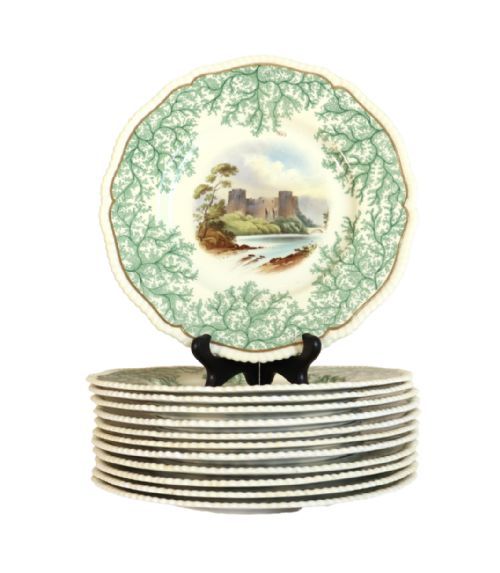
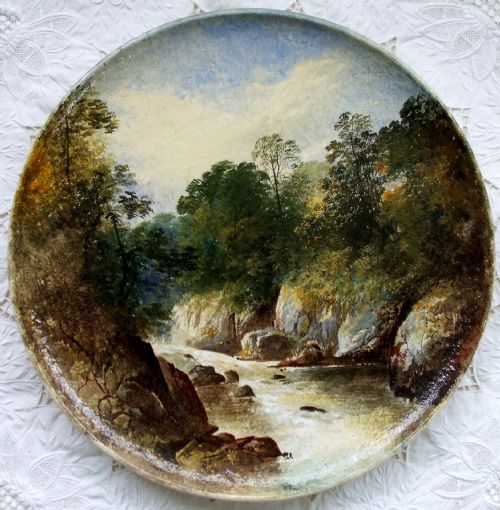

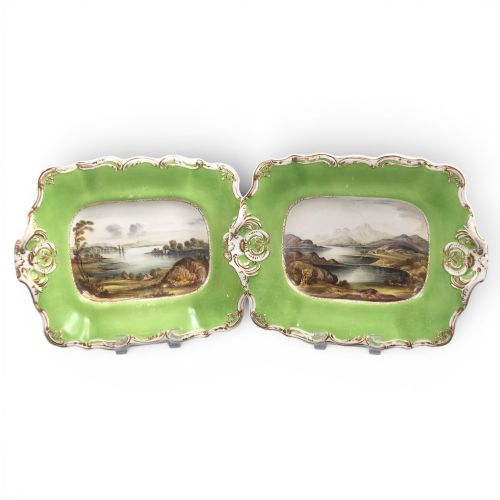
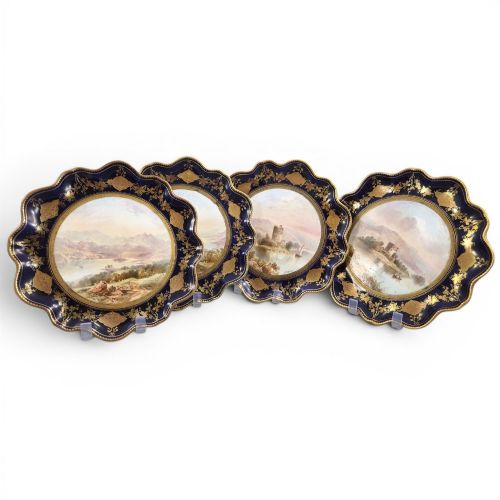
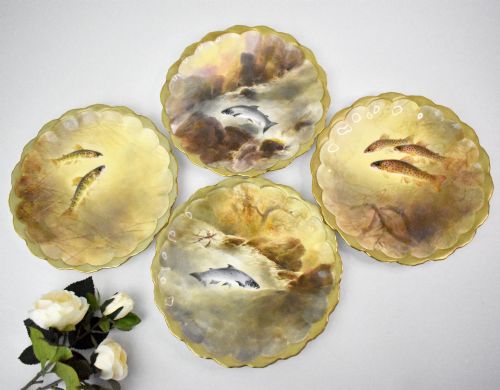


Hand Painted Landscape Plate
These hand painted landscape plate selections bring picturesque nineteenth century scenery straight into the room on fine porcelain.
Identifying a hand painted landscape plate
A hand painted landscape plate is a decorative ceramic piece designed primarily for display rather than daily dining. These cabinet plates feature detailed topographical or romantic scenery rendered directly onto the ceramic surface by skilled artists.
The versions met most frequently on this page belong to the nineteenth century and the Victorian era. They take the form of dessert plates and cabinet plates created to showcase pictorial skill.
Makers recorded in the evidence such as Coalport, Minton, and Aynsley illustrate the high standard of British ceramics from this period. Each piece captures specific views, such as Lake Menteith or Kilchurn Castle, framed by ornamental borders.
Materials and construction
These pieces are constructed from fine porcelain fired to create a smooth, durable base for pictorial work. Artisans then applied enamel paints by hand to build up the intricate landscape scenes.
Many examples incorporate gold leaf and rich gilding along the rims and borders to frame the central view. Pearl jewelling and coloured grounds, such as pink, further enhance the decorative effect before a final protective glaze is applied.
Retail Price Guide 2026
Typical UK retail prices for hand painted landscape plate, calculated from the Sellingantiques database of over a million retail prices indexed since 2003. This retail price guide relies exclusively on Sellingantiques data; no external sources or auction records are used, so the figures do not describe the wider market.
Current listings feature nineteenth century porcelain forms exclusively from the Victorian period.
Assessing quality and execution
Quality in a hand painted landscape plate rests primarily on the skill of the artist and the fineness of the porcelain body. Delicate brushwork that captures light and shadow in a landscape separates superior pictorial plates from simpler factory output.
The application of secondary decoration, such as raised gold leaf, pearl jewelling, and coloured enamel grounds, contributes significantly to the visual impact. Well-preserved gilding and carefully balanced borders indicate a higher tier of Victorian ceramic production.
Coalport·Minton·Aynsley
The Hand Painted Landscape Plate Glossary
- Cabinet plate
- A decorative ceramic plate intended for display in a cabinet or on a wall rather than for serving food. These pieces often feature elaborate painted scenes or rich gilding.
- Dessert plate
- A small plate historically used for the dessert course of a formal meal. In nineteenth century ceramics, these were frequently produced in sets with individual painted designs.
- Gilding
- The application of gold leaf or gold powder to the surface of porcelain. It provides a bright metallic border that frames the central landscape.
- Enamel
- Vitreous coloured glass fused to the porcelain surface during firing. It forms the stable, vibrant pigment used for the landscape scenes.
Frequently Asked Questions
What is a hand painted landscape plate?
A hand painted landscape plate is a nineteenth century ceramic piece featuring a detailed pictorial view created by an artist. These items were made for display in cabinets.
They combine fine porcelain bodies with intricate enamel painting and gilded borders to showcase scenic art.
How do I identify Victorian plates?
Victorian plates often display specific stylistic markers like pearl jewelling, coloured grounds, and elaborate rococo revival moulding. Nineteenth century factory marks on the reverse also help confirm the era.
Examining the depth of the enamel work and the quality of the gilding provides further clues to their period of origin.
Were these plates used for dining?
Most pieces catalogued as dessert plates or cabinet plates were intended for formal dining courses or elite display. Their delicate enamel and gold leaf make them less suited to heavy everyday use.
Over time, collectors shifted these decorative ceramics entirely into display cabinets to protect the hand painted surfaces.
What subjects appear on these plates?
The painted scenes typically depict British landmarks, romantic countryside views, or specific castles and lakes. Named locations add historical interest to the individual ceramic piece.
Artists drew inspiration from the picturesque movement to create idealized or recognizable natural vistas.