




Victorian Porcelain Dessert Plate
A victorian porcelain dessert plate brings nineteenth-century dining elegance to the table, offering finely painted scenes and gilded porcelain for display or service.
Victorian Porcelain Dessert Plate
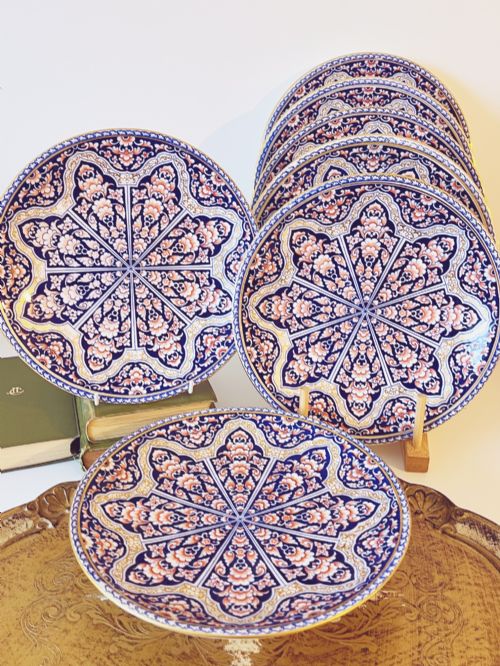
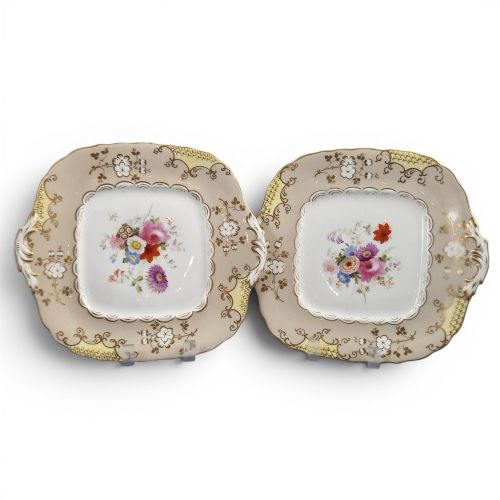
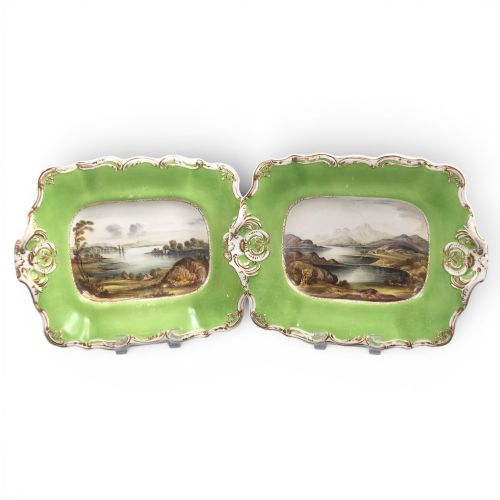
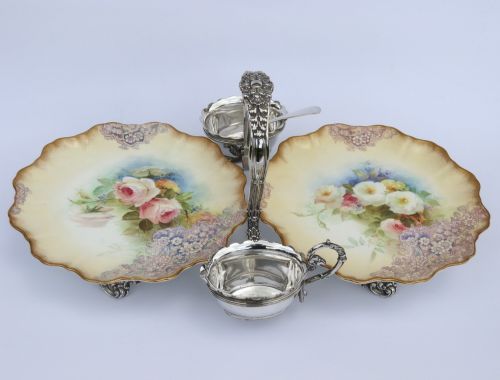
When you search for a victorian porcelain dessert plate, you encounter items designed for nineteenth-century dining and dessert courses. The selection includes individual cabinet plates, pairs, and elements from larger dessert services.
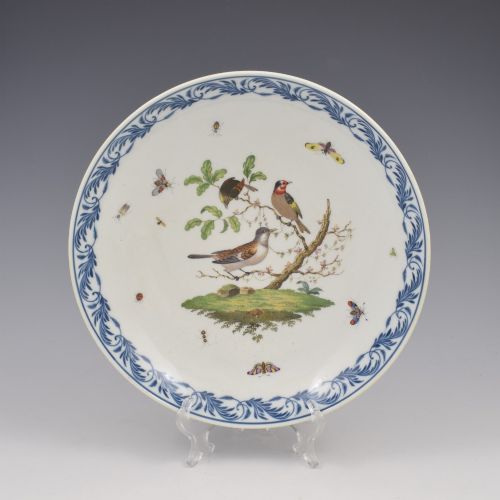
The pieces emerge from periods spanning the nineteenth century, with Victorian, Regency, and Georgian influences shaping their forms. You will find decorative plates featuring landscapes, ornithological subjects, and floral motifs.
Makers and factories represented in the evidence include Minton, Coalport, Royal Crown Derby, Meissen, and Copeland and Garrett. These items serve both functional dining roles and ornamental display purposes.
How they were made
Potters utilised hard-paste porcelain and bone china as the primary substrates for these plates. Glazes were applied to create smooth, vitreous surfaces suitable for detailed painting.
Decorations incorporate hand painting, enamel colours, and gilt or gold leaf applications. Techniques such as pearl jewelling and basketweave moulding appear across various regional styles.
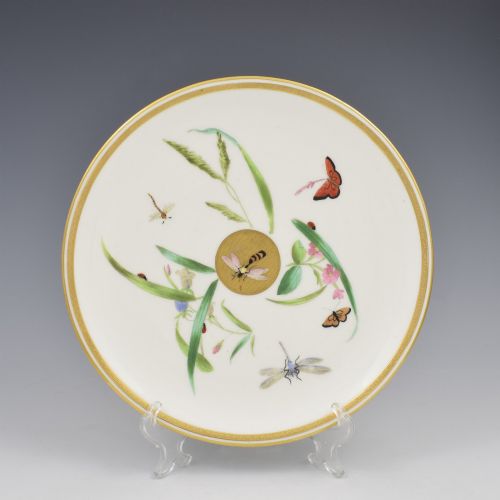
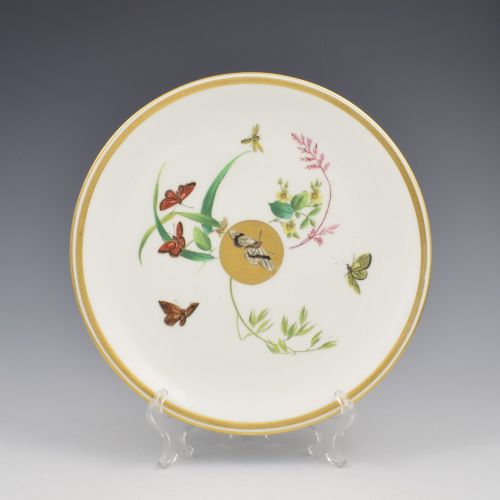
Factories employed specialised artists to execute floral studies, Scottish views, and Japanese style motifs. Gilding finishes edges and highlights relief details on the porcelain body.
Plates painted with Japanese style insects and suns reflect nineteenth-century Britain's sudden fascination with all things Japonisme.
What varies in quality
The sophistication of the hand painting determines the visual standard of the plate. Finely detailed ornithological studies or landscape scenes elevate the piece above standard floral transfers.
The application of gold leaf and enamel work reveals the skill involved in the manufacturing process. Raised gilding and jewelled enamel effects require precise craftsmanship.
The prestige of the producing factory influences the standing of the plate within the market. Works from established makers like Minton or Meissen demonstrate superior ceramic bodies and artistic execution.
Royal Crown Derby·Meissen·Minton·Coalport·Copeland and Garrett·Doulton Burslem·John Ridgway·Carrington·Kerr and Binns
The Victorian Porcelain Dessert Plate Glossary
- Cabinet plate
- A decorative plate intended primarily for display in a cabinet rather than for serving food. These pieces often feature elaborate painted scenes or rich gilding.
- Bone china
- A type of porcelain containing bone ash, developed to provide strength and a translucent body. It allows for thinner walls while maintaining durability.
- Gilding
- The application of gold leaf or gold paint to the surface of the porcelain. This technique highlights rims, handles, and raised decorative elements.
- Hard-paste porcelain
- A ceramic material fired at high temperatures using kaolin and petuntse. It results in a dense, vitrified body that resists scratching.
- Enamel
- Opaque glass-like paint applied to the surface of fired porcelain and fixed by secondary firing. It provides vibrant colours for painted motifs.
Victorian Porcelain Dessert Plate: Frequently Asked Questions
Were these plates used for actual dining?
Yes, these items formed part of dessert services used to serve fruit, sweets, and confections at the conclusion of formal nineteenth-century meals.
Many survived because they were reserved for special occasions or transitioned into display pieces as dining customs changed.
How do I identify a Victorian plate?
Look for factory date marks, registration numbers, or stylistic clues such as Aesthetic Movement motifs and Rococo Revival shaping.
Material composition, including bone china and hard-paste porcelain, along with characteristic hand-painted subjects, helps confirm the period.
Can I use them for serving food today?
While structurally sound, antique plates often feature delicate hand-painted enamels and gold leaf that can be damaged by modern dishwashers.
Hand washing in lukewarm water with mild soap preserves the fragile surface decorations and historic glazes.
What is the difference between a plate and a comport?
A plate is a flat or slightly rimmed circular vessel designed for individual portions.
A comport is raised on a pedestal base and functions as a centrepiece for presenting fruit or larger sweet courses.