

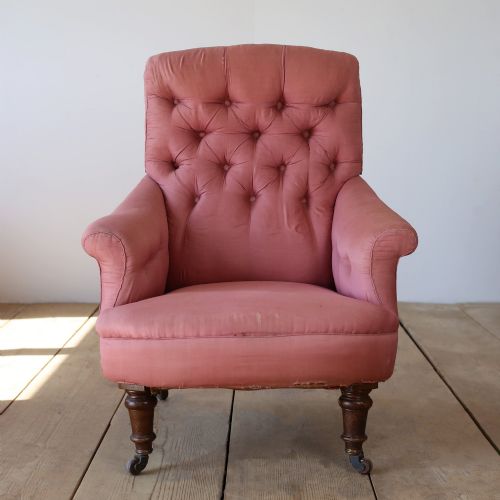
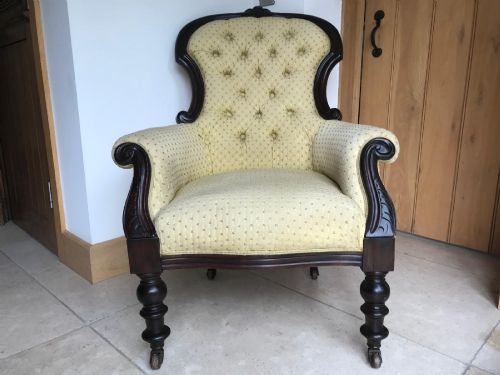
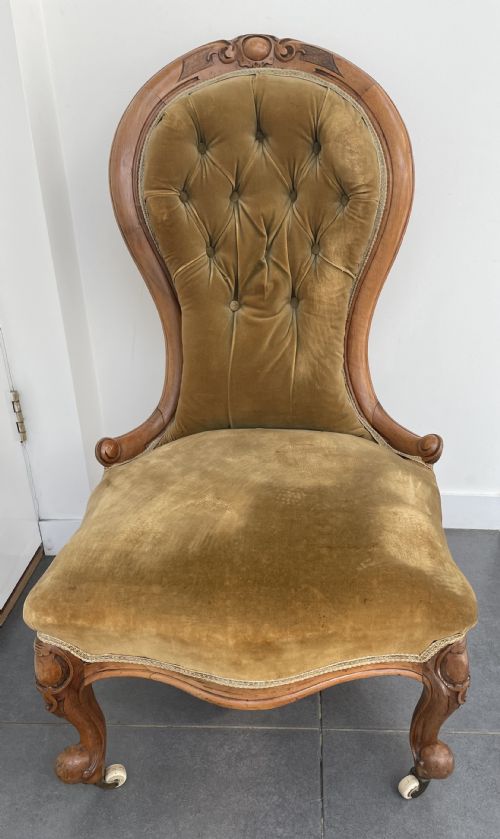
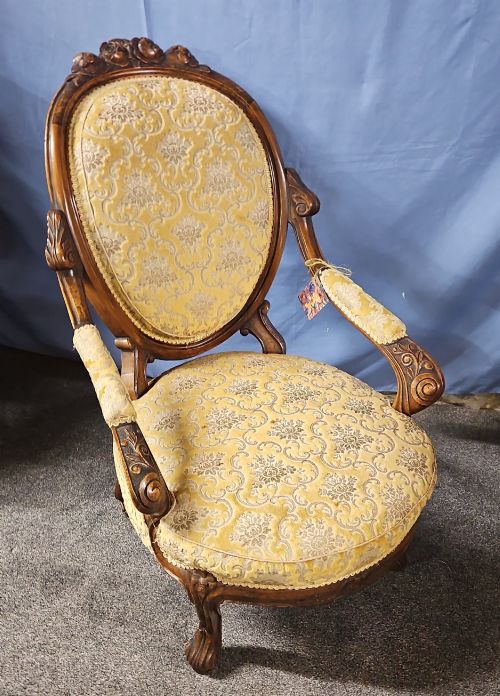
Upholstered Nursing Chair
An upholstered nursing chair is a low-seated seat designed for comfort, and these historic examples bring Victorian character directly to your interior.
What an upholstered nursing chair is
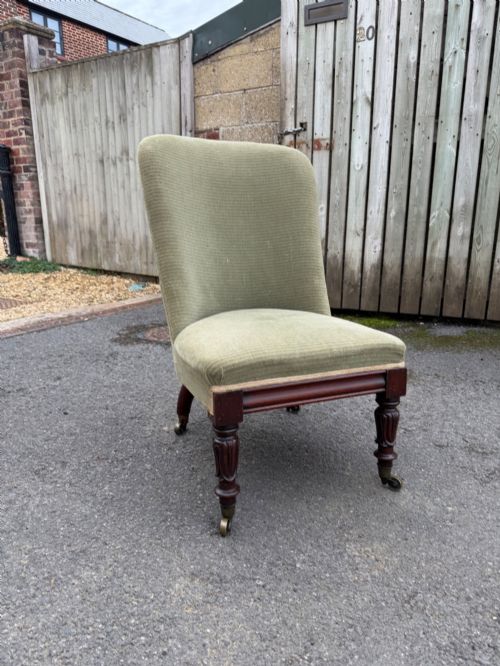
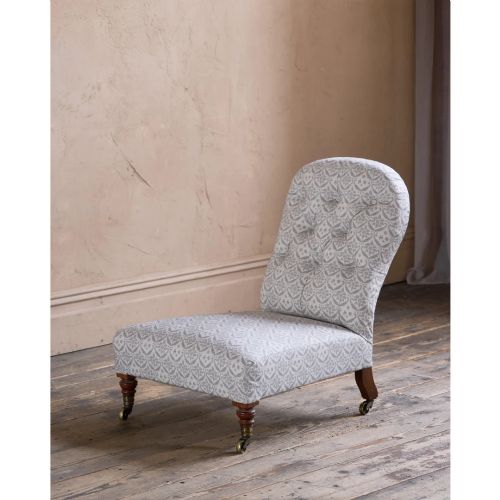
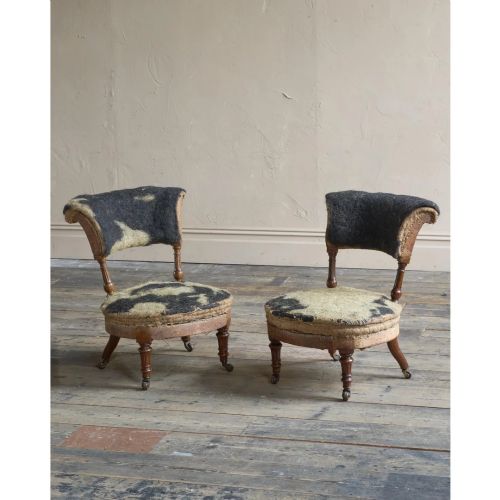
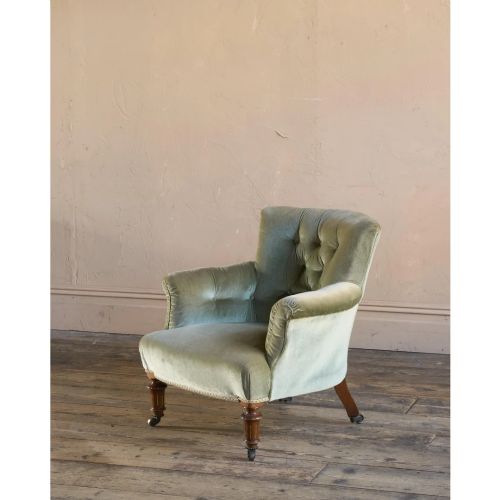
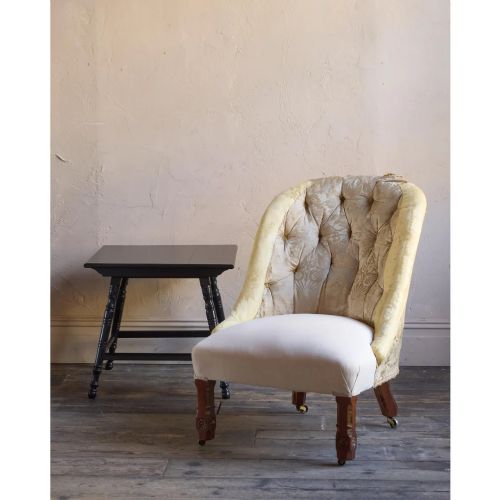
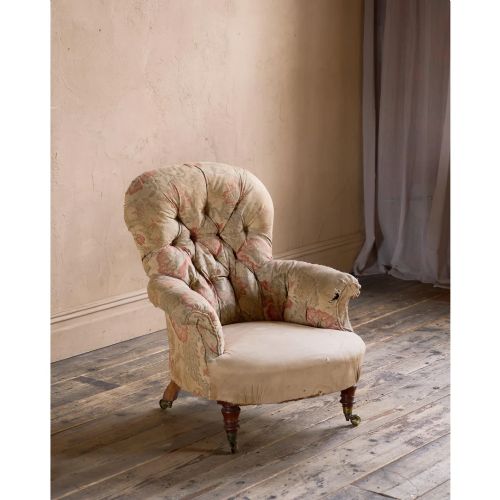
When you search for an upholstered nursing chair, you find low-seated Victorian and nineteenth-century armchairs and occasional chairs designed for comfort and ease. These pieces typically feature low seats that distinguish them from standard parlour seating, originating from a period when specific domestic tasks required lower proportions.
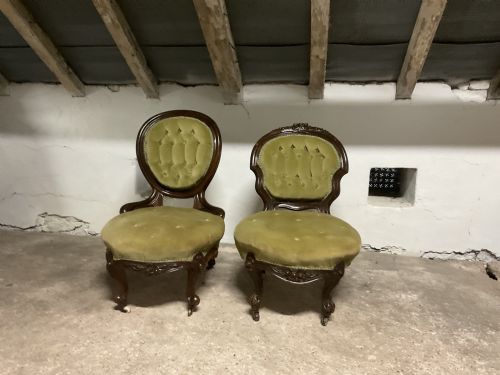
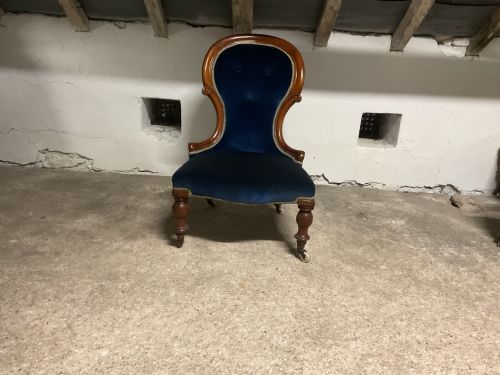
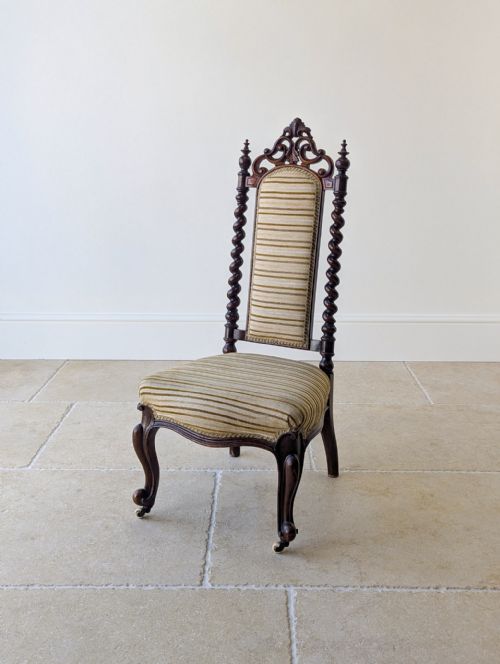
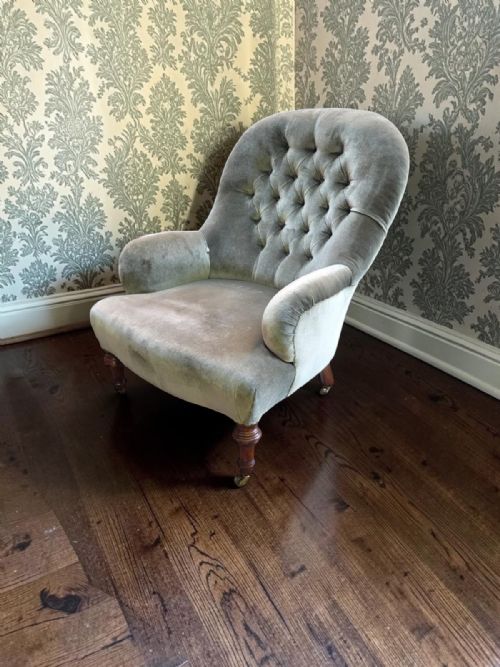
The version you are most likely to meet on this page is the Victorian walnut or mahogany framed model, frequently displaying a balloon, spoon, or buttoned back. Surviving examples also include ebonised frames, occasional armchairs, and French Napoleon III designs, alongside pieces trimmed with needlework, tapestry, woolwork, or velvet.
The archive shows that these low chairs often overlap with bedroom and conversation seating, sometimes appearing as part of larger salon suites or tub chair configurations. Makers and past owners adapted them for various domestic spaces, resulting in both simple wooden frames and more elaborate carved or scroll-backed forms.
Materials and construction
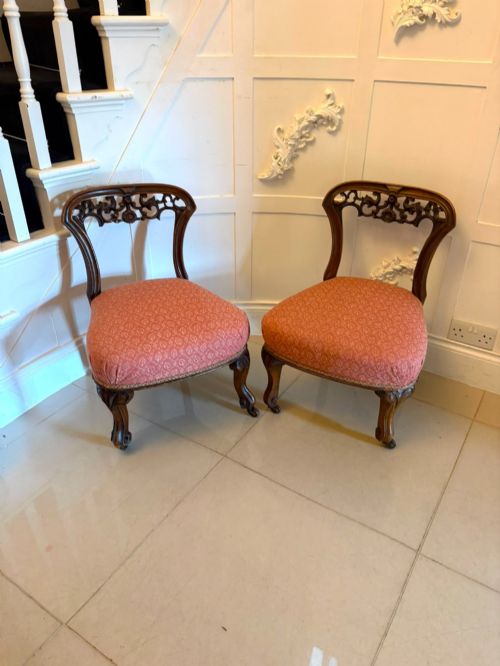
Makers constructed these frames using hardwoods such as walnut, mahogany, rosewood, and ebonised timber, complemented occasionally by iron framing and metal components. Structural woodwork ranges from plain turned supports to carved scroll backs and detailed frames.
Upholstery materials recorded in the evidence include velvet, fabric, woolwork, needlework, tapestry, and beadwork, frequently secured with buttoning techniques. Metal and brass castors often feature on the base of these low frames to allow easy movement across floor surfaces.
Retail Price Guide 2026
Typical UK retail prices for upholstered nursing chair, calculated from the Sellingantiques database of over a million retail prices indexed since 2003. This retail price guide relies exclusively on Sellingantiques data; no external sources or auction records are used, so the figures do not describe the wider market.
Listings feature walnut, mahogany, rosewood, and ebonised frames alongside fabric, velvet, and beadwork upholstery.
What separates the finest examples
The distinction between ordinary and superior pieces rests on the choice of timber and the sophistication of the frame carving. Richly grained walnut, rosewood, and finely figured mahogany elevate a piece far above standard utilitarian frames.
Original upholstery details, including period needlework, beadwork, tapestry, and intricate buttoning, separate authentic traditional examples from later adaptations. The integration of maker-influenced styling, such as Aesthetic Movement or French scroll-back designs, defines the upper tier of the range.
The Upholstered Nursing Chair Glossary
- Balloon back
- A rounded, oval-shaped chair back popular during the Victorian era. This curved wooden frame provides ergonomic support while creating a distinctively graceful silhouette.
- Button back
- An upholstery technique where deep buttons are pulled through the padding in a diamond pattern. This method secures the internal stuffing while adding rich texture.
- Ebonised
- Timber treated with a dark finish to imitate ebony. This treatment was frequently used on nineteenth-century frames to create a striking, formal appearance.
- Needlework
- Hand-stitched decorative fabric using yarn on a canvas mesh. Historic examples often feature floral or geometric motifs created by domestic needleworkers.
- Spoon back
- A concave, oval chair back resembling the bowl of a spoon. This nineteenth-century shape cradles the sitter's back comfortably.
Frequently Asked Questions
Where were upholstered nursing chairs used?
These low seats were traditionally placed in bedrooms, nurseries, and private sitting rooms for tasks requiring a seated position close to the floor.
Today, their compact proportions make them versatile accents for living rooms, hallways, and dressing areas.
How do I identify a Victorian example?
Victorian pieces usually display characteristic timber choices like walnut or mahogany combined with traditional frame shapes like balloon or spoon backs.
Evidence of age also appears in the joinery, construction methods, and the presence of period textiles such as woolwork and beadwork.
What is an ebonised frame?
An ebonised frame is made from wood that has been stained or painted black to resemble expensive ebony. This dark finish became particularly fashionable during the late nineteenth century.
It provides a sharp contrast against colourful velvet or needlework upholstery.
Can I use these chairs daily?
Historic frames are structurally sturdy, but their low seat height and vintage construction suit lighter daily use than modern lounge furniture.
Many surviving pieces have been re-upholstered to ensure they remain functional for contemporary sitting.