
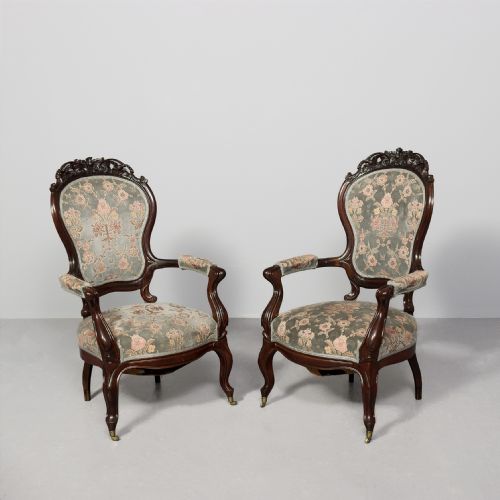


Balloon Back Armchair
A balloon back armchair is a graceful nineteenth-century seat defined by its curved oval top rail, offering both solid lumbar support and classic drawing room elegance.
Balloon Back Armchair
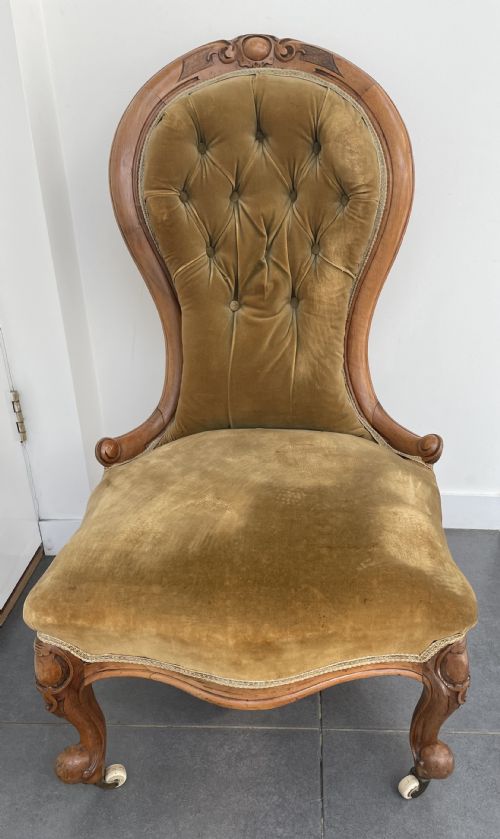
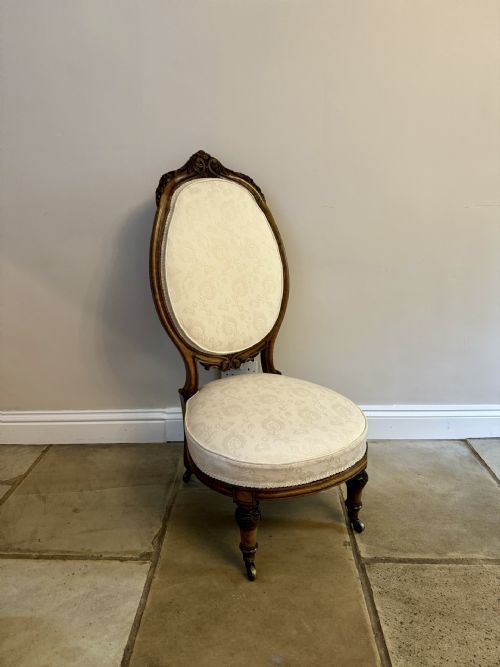
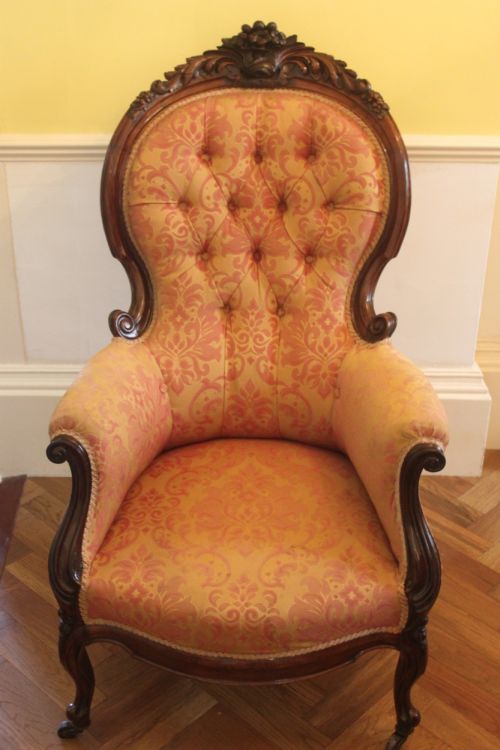
A balloon back armchair typically takes the form of a gentleman's armchair, a compact ladies chair, or a low nursing chair designed for nineteenth-century parlours and drawing rooms. These seats appear most frequently in Victorian walnut or mahogany, often carrying carved ornament along the curved wooden frame.
Makers of the period also produced larger fireside chairs and occasional seating, alongside matching salon suites that paired open armchairs with smaller side chairs. The defining feature remains the looped, continuous oval backrest that echoes the silhouette of a hot air balloon.
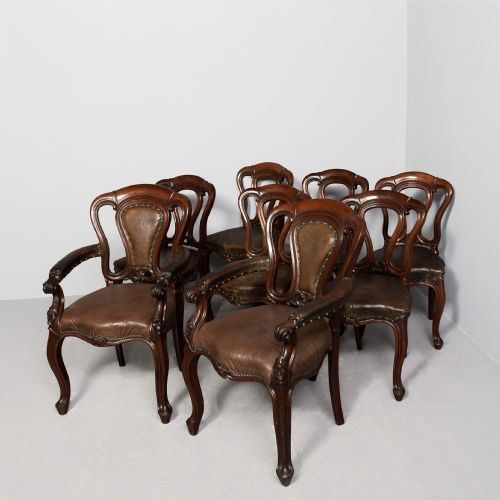
While many examples originate from the Victorian era between eighteen fifty and eighteen ninety, variations extend from French chateau styles to later nineteenth century revivals. Buyers find these chairs serving equally well as standalone accent pieces or paired around a traditional dining table.
How they were made
Cabinet makers built the distinctive curved frames primarily from solid walnut and mahogany, bending or carving the timber to form the continuous loop of the backrest. Brass castors often supported the legs, allowing easy movement across heavy carpets.
Upholstery techniques involved coil springs, horsehair stuffing, and heavy textiles such as velvet, leather, and patterned linen. Button tufting frequently secured the padding in place across the padded back panels.
Some nineteenth-century makers secretly hid handwritten signatures beneath the horsehair stuffing, waiting for future restorers to discover.
What varies in quality
The crispness and depth of the carved woodwork separate standard production from exceptional pieces, particularly where floral motifs meet the crest of the frame. Superior examples display robust joinery in the cabriole legs and arms without visible movement or wobble.
The choice of primary timber and the execution of the bentwood curves dictate the overall harmony of the silhouette. Finer chairs retain their original proportion and balance, whereas lesser items may feel rigid or overly heavy in the frame.
The Balloon Back Armchair Glossary
- Balloon back
- A chair back shaped in a continuous oval or loop resembling a hot air balloon, popular throughout the Victorian period. This profile defines the primary aesthetic of the search phrase.
- Cabriole leg
- A furniture leg that curves outward at the knee and tapers inward toward the foot, often ending in a scroll or plain pad. Makers carved these graceful supports directly into the hardwood frame.
- Button back
- An upholstery style where depressions are formed in the padding by stitching deep buttons at regular intervals across the fabric. This technique keeps internal stuffing firmly distributed.
- Nursing chair
- A low-seated armchair designed historically for nursery use or comfortable sitting near dressing tables. These pieces feature compact proportions and open or low-set arms.
Balloon Back Armchair: Frequently Asked Questions
What rooms suit a balloon back armchair?
These chairs fit comfortably into drawing rooms, bedrooms, and studies as reading seats or decorative accents. Their modest scale allows them to sit beside fireplaces without dominating smaller spaces.
Matching sets also integrate well into traditional dining rooms when used as host seating at the table ends.
How do I identify a Victorian example?
Examine the timber species, construction joints, and upholstery methods underneath the seat for signs of nineteenth-century handcraft. Victorian pieces typically utilise solid mahogany or walnut frames joined with traditional adhesives and hand-cut screws.
Makers of this era frequently incorporated ceramic or brass castors and dense horsehair stuffing beneath the top fabric layer.
Are these armchairs comfortable for daily use?
Most antique versions provide firm support due to their original coil spring and horsehair construction. The upright posture encouraged by the curved backrest suits reading and formal conversation.
Buyers planning for heavy daily lounging often select generously sized gentleman's chairs rather than smaller ladies salon seats.
Can I reupholster a balloon back chair?
Reupholstering is straightforward for a professional restorer who understands traditional sprung upholstery and tensioning techniques. Many surviving frames undergo re-covering in contemporary velvet, leather, or linen to match modern interiors.
Retaining the original internal webbing and stuffing preserves the historical integrity of the piece whenever possible.