


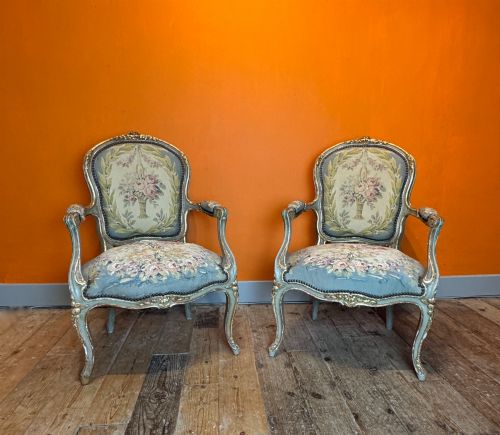
French Upholstered Chair
When you search for a french upholstered chair, you encounter seating built for comfort and display from walnut, beech, and giltwood frames.
French Upholstered Chair
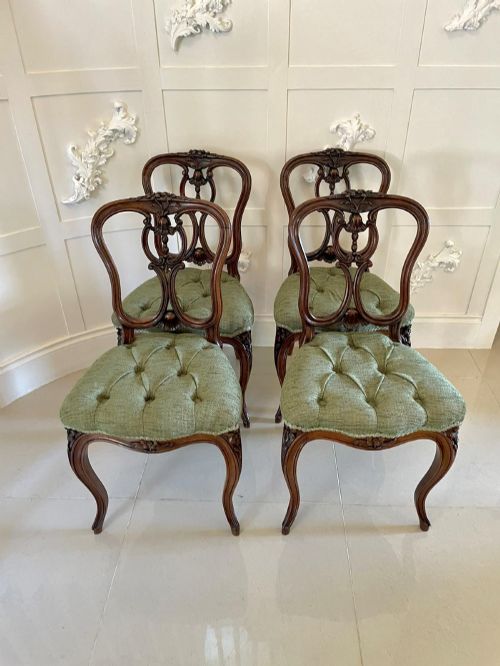
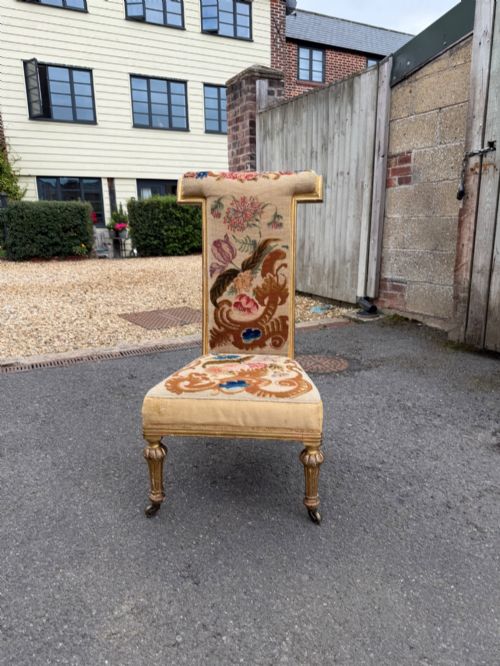
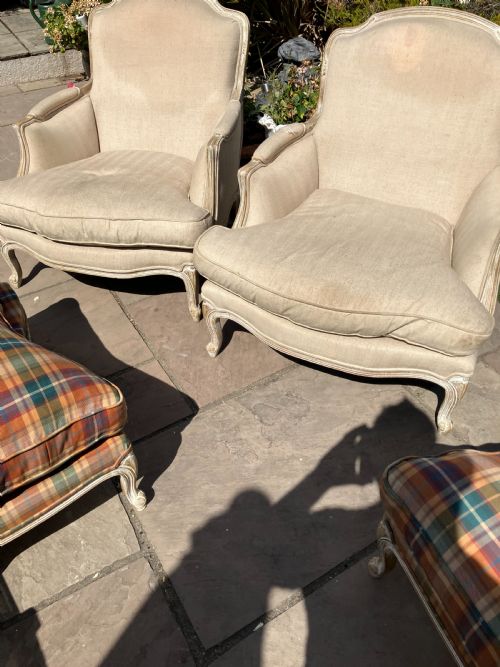
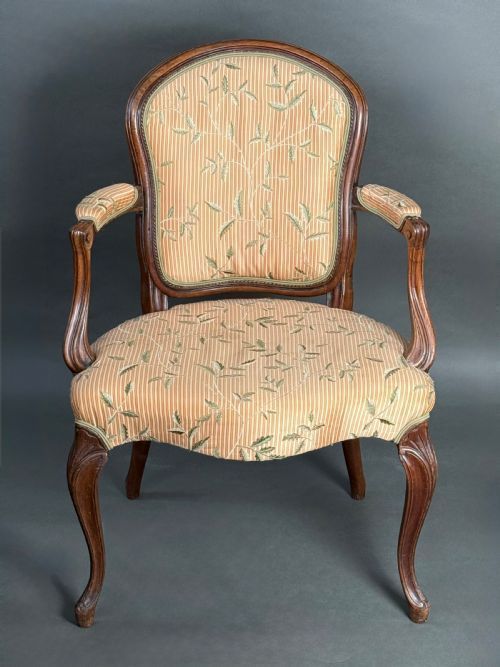
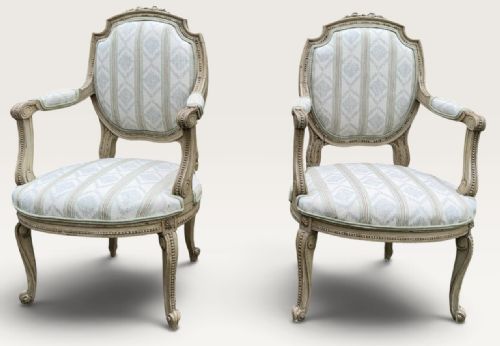
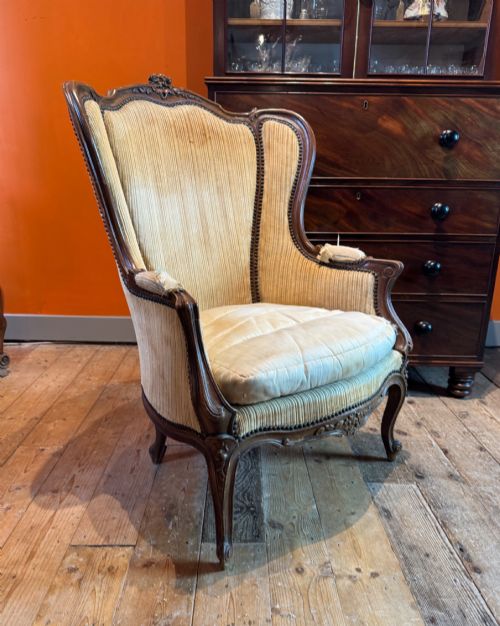
A french upholstered chair encompasses a wide variety of seating forms, ranging from salon armchairs and bergères to side chairs and chaise longues.
The pieces appearing most frequently originate across the 18th and 19th centuries, reflecting revival aesthetics such as Louis XV, Louis XVI, and Rococo Revival.
How they were made
Makers shaped structural components from dense hardwoods like walnut, oak, and beech, frequently applying paint, parcel gilt, or clear polish to the surfaces.
Upholstery techniques relied on webbing, stuffing, and springs, secured beneath top layers of fabric, calico, leather, or tapestry.
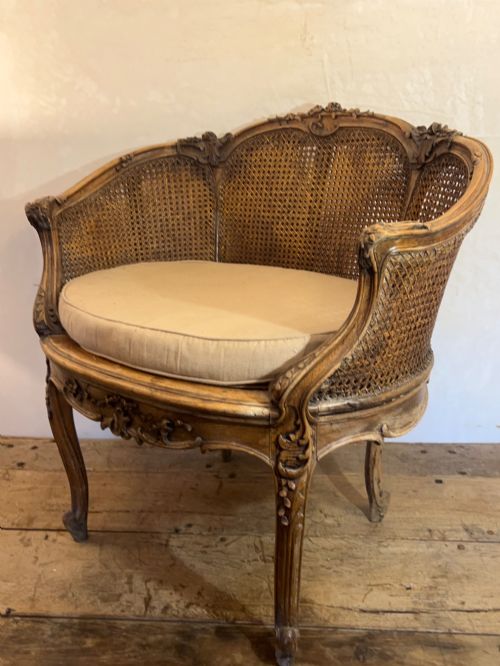
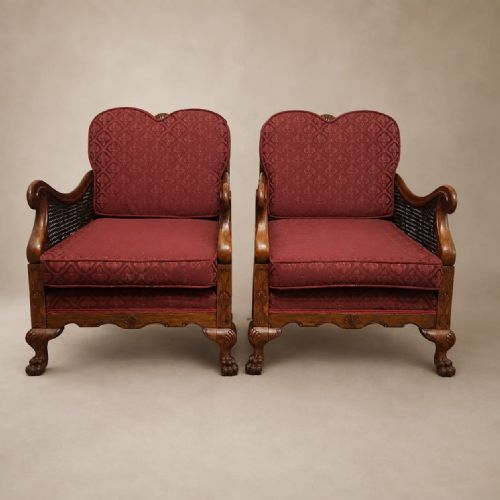
Carpenters carved ornate motifs directly into the wooden rails and cabriole legs, occasionally incorporating split cane panels into the backrests and sides.
French Upholstered Chair Retail Price Guide 2026
Typical asking prices for french upholstered chair among the pieces listed under this phrase on Sellingantiques today, from the lower quarter to the upper quarter. They describe what is for sale here now, not the wider market.
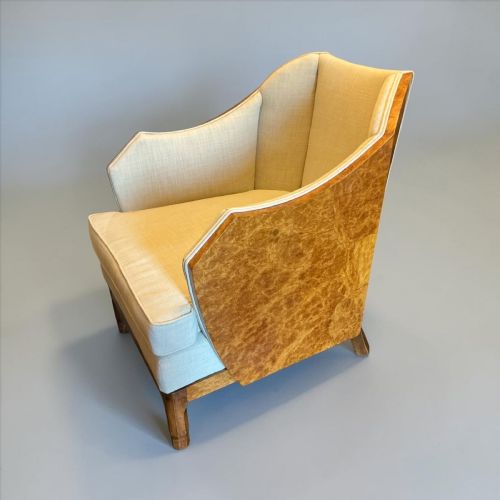
The inventory records pieces spanning the 17th century through the Art Deco period of the 1930s, utilising walnut, beech, oak, and giltwood.
What varies in quality
The distinction between ordinary and superior examples lies in the crispness of the hand-carved woodwork and the structural integrity of the joinery.
Higher quality seating displays harmonious proportions, original painted or gilt surfaces, and upholstery materials that complement the period of the frame.
The French Upholstered Chair Glossary
- Cabriole leg
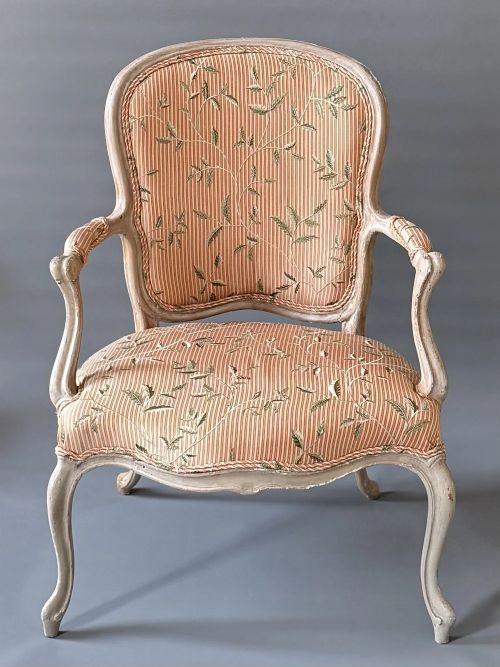
- A furniture leg that curves outward in a convex arc and then bends inward in a concave arc, terminating in a foot. This design is typical of 18th-century styles.
- Giltwood
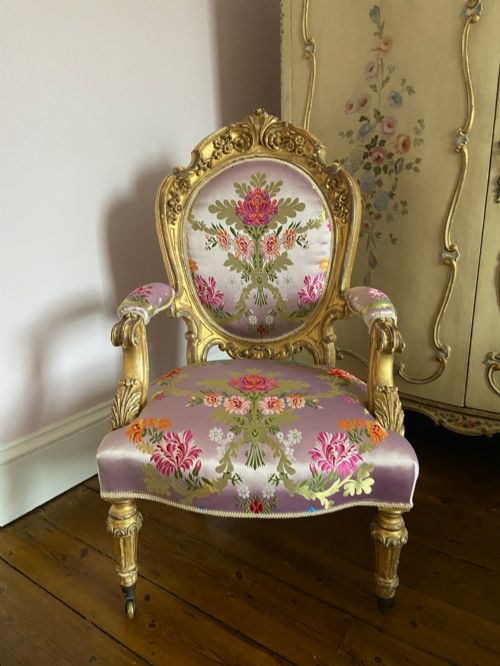
- Timber coated with a thin layer of gold leaf or powder. This finish appears frequently on formal salon seating.
- Fauteuil
- An open-arm armchair with an exposed wooden frame. The sides remain open beneath the padded elbow rests.
- Corbeille
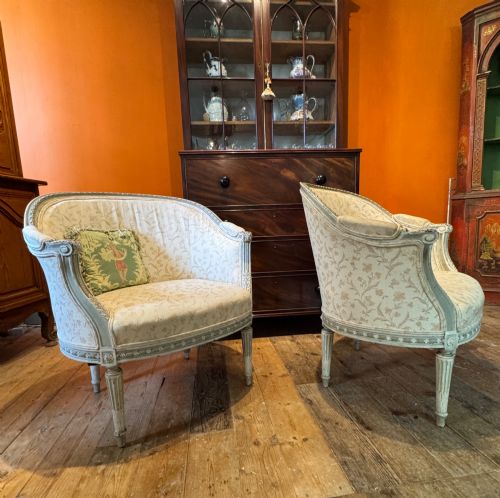
- A chair design featuring a rounded, basket-like backrest that curves continuously around the user. This form provides enclosed support.
French Upholstered Chair: Frequently Asked Questions
How do I identify a Louis XV style chair?
Chairs in this style display characteristic curved cabriole legs, asymmetrical floral carvings, and flowing lines along the wooden frame. The overall design prioritises curved elegance over straight geometry.
Such seating typically dates from the 18th century or later 19th-century revival periods, often utilising walnut or painted beech constructions.
Are these chairs suitable for daily use?
Many examples retain sturdy wooden frames and comfortable padding suited for regular placement in living spaces. Selecting pieces with sound internal construction ensures they withstand everyday seating requirements.
Periodic checks on the upholstery support and frame joints help maintain their structural stability over time.
How should I care for original painted finishes?
Preserving original paint requires dusting gently with a dry, soft cloth and avoiding harsh chemical cleaning agents. Keeping the furniture away from direct sunlight and excessive moisture protects the historic pigment.
Such careful maintenance safeguards the character developed across centuries of domestic history.