


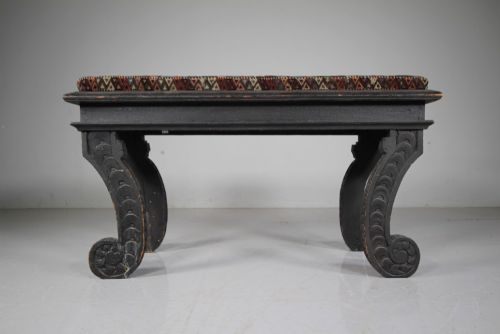
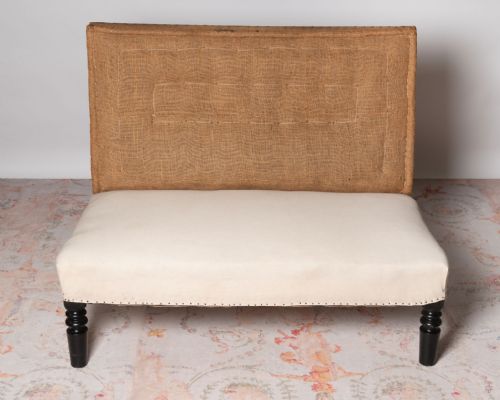
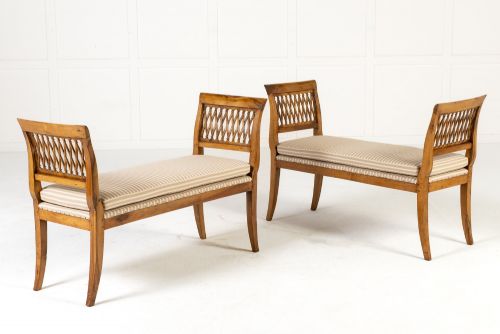

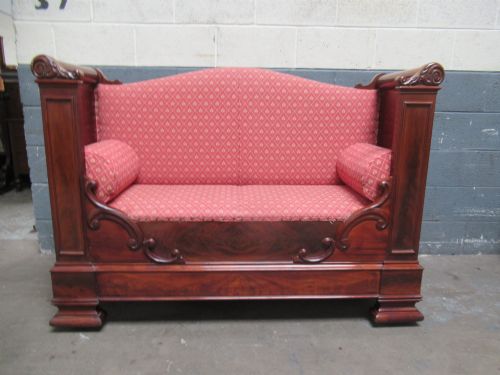


Upholstered Hall Bench
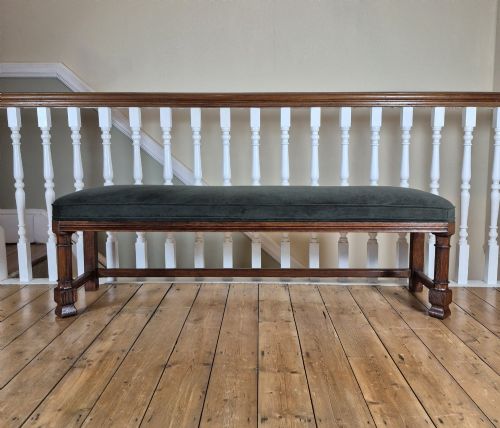
An upholstered hall bench offers a practical seat for an entryway, bringing traditional timber frames and textile upholstery together.
Upholstered Hall Bench
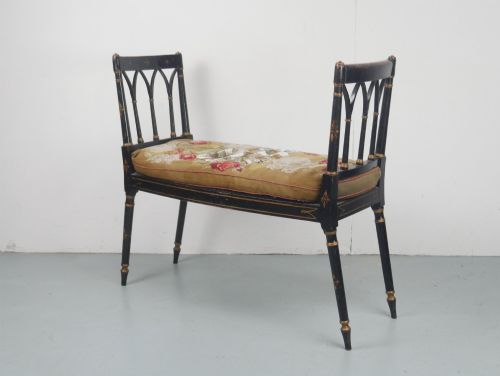
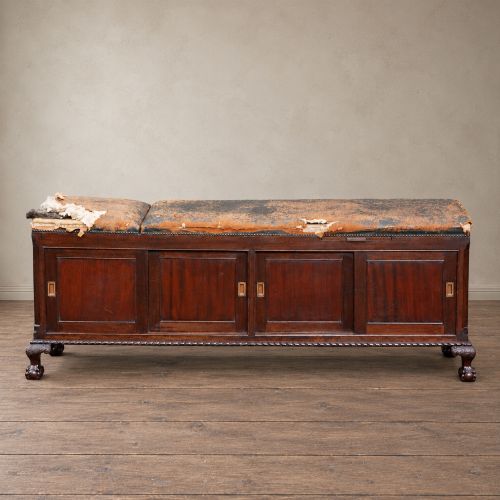
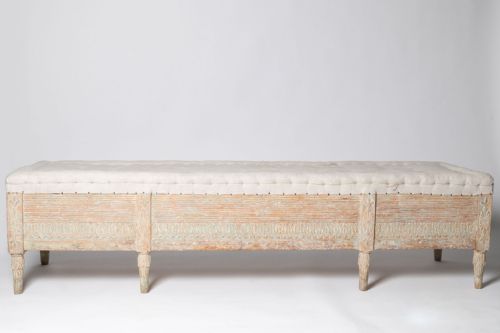
An upholstered hall bench is a seating form placed in corridors, entryways, and reception spaces, appearing across periods from the Regency era through to the Edwardian period and the early twentieth century. These pieces serve as functional furniture for putting on boots or waiting, combining a sturdy wooden structure with padded surfaces.
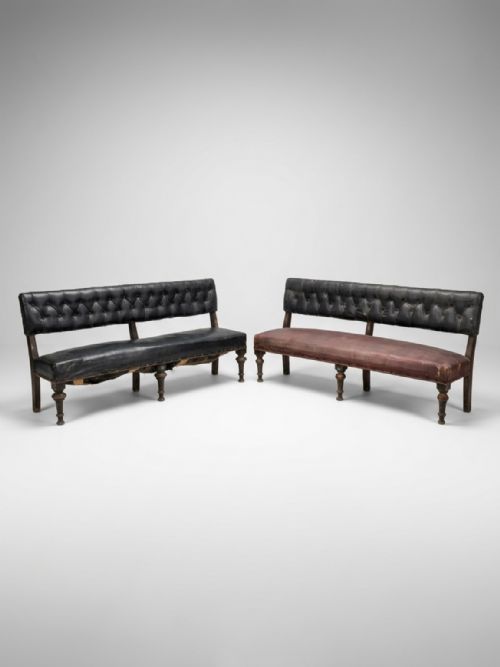
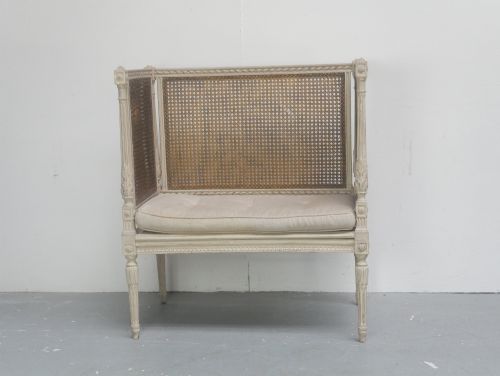
The versions most commonly met on this page span the Victorian and Edwardian eras, alongside pieces from the nineteenth century in mahogany, oak, and walnut. Forms range from straightforward benches and settles to window seats and banquettes, reflecting both English country house styles and continental French designs.
How they were made
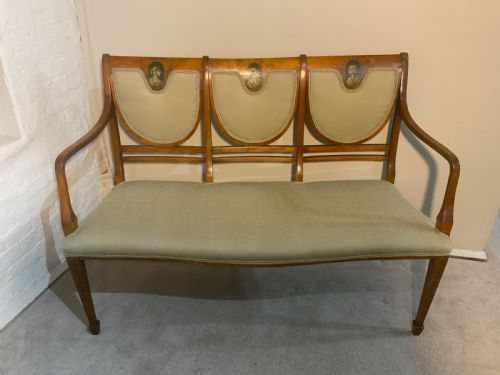
Makers built the structural frames of these pieces using hardwoods such as mahogany, oak, walnut, and satinwood, occasionally turning to painted pine or birch. Joinery techniques varied according to the style and period, encompassing carved details, turned legs, and inlaid bone or satinwood elements.
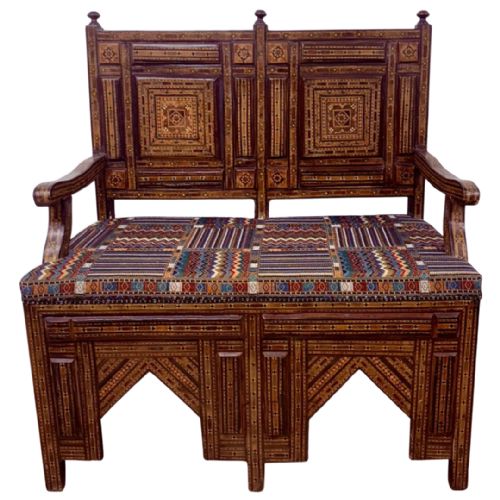
Upholstery involved textiles applied over the wooden foundations, utilising materials like leather, velvet, linen, and fabric trims. Some examples incorporate decorative elements such as pearl inlay or brass fixtures alongside the primary timber and textile components.
Upholstered Hall Bench Retail Price Guide 2026
Typical asking prices for upholstered hall bench among the pieces listed under this phrase on Sellingantiques today, from the lower quarter to the upper quarter. They describe what is for sale here now, not the wider market.
What varies in quality
The standard of a piece rests upon the crispness of the timber carving and the precision of any inlay work, such as satinwood or bone details set into the wood. Timbers selected for their grain pattern, like burr elm or figured mahogany, elevate the presence of the frame.
Execution of the form also dictates the tier, seen in the balance of proportions on cabriole or fluted legs and the structural integrity of integrated elements like boot stores or panelled backs. The choice and application of covering materials, from plain linen to textured velvet, complement the underlying cabinetwork.
The Upholstered Hall Bench Glossary
- Banquette
- An upholstered bench or long seat, often associated with French seating forms from the nineteenth and early twentieth centuries. These pieces typically feature padded upholstery on wooden frames.
- Settle
- A wooden bench with high backs and arms, designed to block draughts in hallways and domestic rooms. Many incorporate storage beneath the seat or decorative carving.
- Window Seat
- A form of narrow bench designed to fit within the recess of a window, frequently featuring upholstered top surfaces and supported on wooden legs.
- Inlay
- A technique where contrasting materials such as satinwood, bone, or other woods are set into the surface of a primary timber to create decorative patterns.
Upholstered Hall Bench: Frequently Asked Questions
Where should I place an upholstered hall bench?
These benches suit narrow entryways, corridors, and boot rooms where practical seating is required near an entrance. They also function well at the foot of a bed or beneath a window.
Positioning the piece against a wall allows the backrest or upholstery to anchor the space without obstructing movement through the hallway.
How do I identify the period of a hall bench?
Dating relies on observing the timber species, decorative motifs, and structural lines characteristic of specific eras like the Regency, Victorian, or Edwardian periods. For example, satinwood inlay and light proportions often point toward Edwardian work, while heavier carved oak suggests earlier Gothic Revival influences.
Comparing the turned leg profiles and framing techniques with dated examples helps narrow down the decade of manufacture.
Are these benches comfortable for daily use?
Most pieces provide firm seating supported by traditional webbing and padding beneath the fabric, leather, or velvet upholstery. They are designed for short periods of sitting, such as changing footwear.
Many surviving examples have been recovered in modern textiles like linen, making them suitable for everyday domestic routines.
What maintenance do the wooden frames require?
Hardwood frames benefit from occasional application of appropriate furniture wax to nourish the timber and maintain the finish. Avoiding direct sunlight prevents the wood and upholstery fabrics from fading over time.
Gentle dusting with a soft cloth preserves carved details and inlaid sections without disturbing the surface patination.