


Unglazed Porcelain Statue
An unglazed porcelain statue brings the matte finish and sculptural detail of nineteenth-century modelling straight to a mantelpiece or cabinet.

Unglazed Porcelain Statue
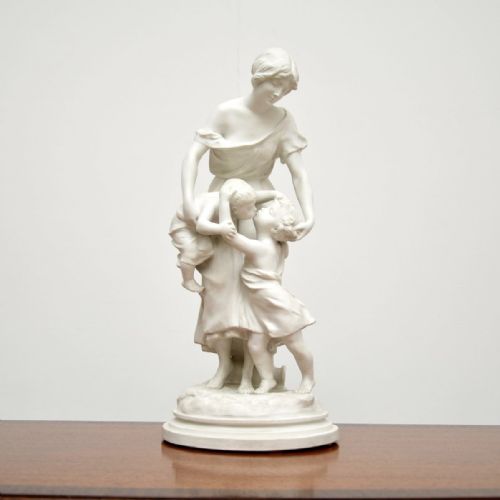
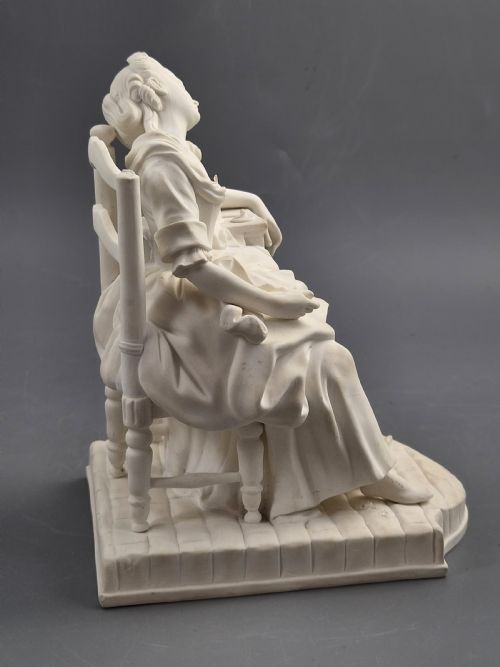
When you search for an unglazed porcelain statue, you encounter nineteenth-century figures and sculptural groups modelled in biscuit or Parian ware. These pieces range from classical women and mythological subjects to portrait busts and domestic animal groups produced during the Victorian era.
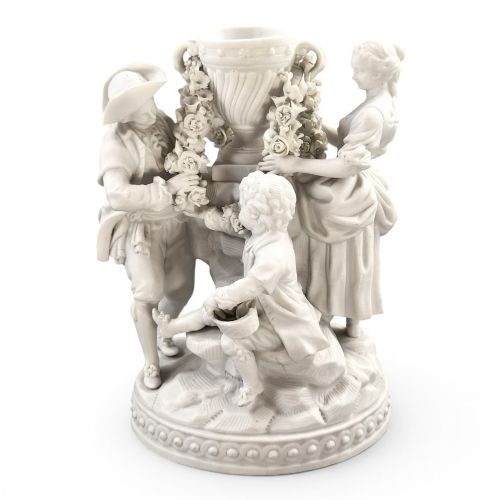
The objects most frequently met on this page include Victorian Parian figures of classical maidens, French biscuit porcelain sculptural groups adorned with floral garlands, and portrait busts of notable figures like Princess Alexandra. Makers such as Minton, Copeland, and Royal Worcester dominate the selection, alongside continental workshops from Paris.
Forms vary from single statuettes and portrait busts to elaborate multi-figure groups depicting resting soldiers, gardeners, or hunting dogs. These pieces reflect the nineteenth-century taste for high-detail ceramic sculpture that mimics carved marble without the reflective glaze of traditional porcelain.
How they were made
Makers utilised fine porcelain bodies fired without a glossy glaze, resulting in a porous, matte surface known variously as biscuit, bisque, or Parian ware. This formula allowed ceramicists to capture minute details in hair, drapery, and facial expression that a glaze might otherwise obscure.
Current listings feature nineteenth-century materials including Parian porcelain, biscuit ceramic, and added pigment.
What varies in quality
The quality of the porcelain body itself dictates the tactile appeal, with high-grade Parian ware offering a smooth, marble-like texture compared to coarser ceramic biscuit compositions.
Michel Victor Acier·Luca Madrassi·Minton·Copeland·Royal Worcester
The Unglazed Porcelain Statue Glossary
- Parian ware
- A fine-grained unglazed porcelain developed in the nineteenth century to imitate carved marble. It takes its name from Parian marble found on the Greek island of Paros.
- Biscuit porcelain
- Unglazed ceramic fired once before decoration, producing a matte, porous white surface. It is also frequently referred to as bisque.
- Neoclassical
- A style drawing inspiration from the art and culture of classical antiquity. It appears frequently in Victorian figures depicting classical women and mythological subjects.
- Figurine
- A small carved or moulded statuette representing a human or animal figure. These often form pairs or larger sculptural groups in nineteenth-century interiors.
Unglazed Porcelain Statue: Frequently Asked Questions
How do I clean unglazed porcelain?
The porous nature of biscuit and Parian porcelain means dust settles easily into fine crevices. Use a soft, dry brush to remove surface particles gently.
Avoid using water or liquid cleaners, as moisture can sink into the unglazed ceramic body and stain the matte surface permanently.
Are these figures solid or hollow?
Nineteenth-century ceramic figures are typically slip-cast as hollow forms to ensure even firing in the kiln. This technique kept the weight manageable while allowing for intricate external modelling.
Heavier bases sometimes contain added weighting materials, but the main bodies of the statues remain hollow shells.
How do I date a Parian figure?
Dating relies on factory marks stamped or impressed into the base, alongside stylistic clues such as Victorian costume details or Neoclassical motifs. Comparing the subject matter to known nineteenth-century exhibition pieces also helps narrow the period.
Factory registration diamonds stamped on ceramic bodies can often provide the exact year or month of production.
Where were these statues displayed?
Victorian households placed these white ceramic figures on mantelpieces, parlor tables, and within enclosed glass cabinets to showcase refined taste. Their marble-like appearance suited formal drawing rooms and libraries alike.
Pairs of figures were often arranged symmetrically on either side of a clock or decorative urn.