




Rococo Revival Sculpture
These rococo revival sculpture pieces bring theatrical 19th-century energy to a room through exuberant scrollwork and figurative drama.
Rococo Revival Sculpture
When you search for rococo revival sculpture, you encounter 19th-century decorative objects that borrow the swirling, asymmetric motifs of the earlier French movement. The selection on this page centres heavily on porcelain figurines, mantel clocks, and bronze groups produced across France and Germany.
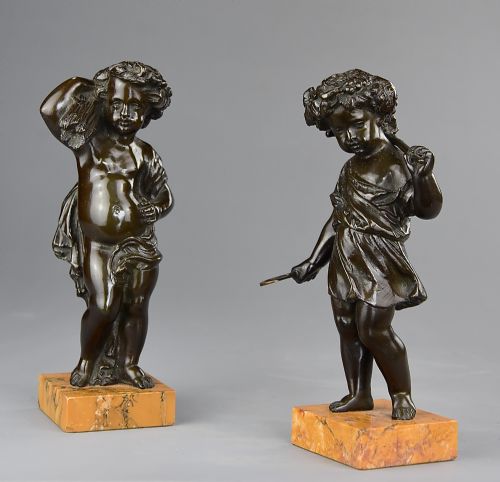
Most examples date from the Victorian era, particularly the middle and later decades of the nineteenth century, when European factories revived eighteenth-century tastes. You will regularly find pastoral subjects, allegorical figures like harvest putti, and elaborate clock cases finished in gilt bronze or ormolu.
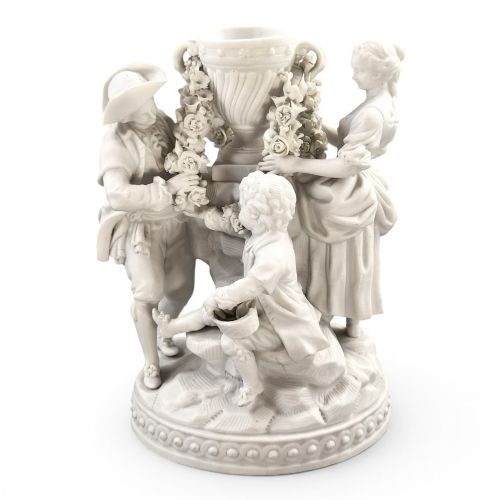
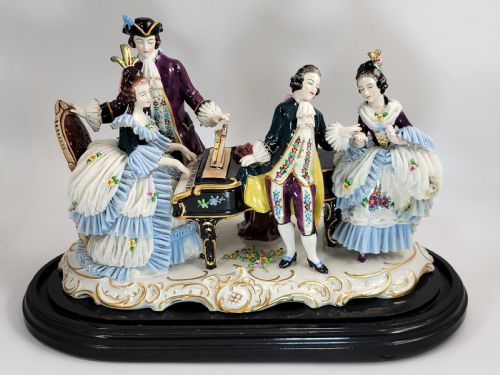
The forms range from delicate biscuit porcelain groups with floral garlands to substantial bronze sculptures and decorative plant stands. French and German makers dominate the evidence, producing everything from intricate lace porcelain figures to monumental mantel clock assemblies.
How they were made
Makers utilised bronze, porcelain, and ormolu, frequently combining cast metal elements with hand-painted ceramic surfaces. Bronze and gilt bronze components required expert casting and chasing, followed by the application of gold leaf or chemical gilding to achieve bright metallic highlights.
Porcelain figures and groups involved complex moulding processes, sometimes incorporating fine details such as ceramic lace dipped in slip before firing. Artisans then applied enamel colours and gold leaf accents by hand, securing the pigments through subsequent kiln firings.
Marble and alabaster frequently served as structural bases or top surfaces for plant stands, demanding precision stone-cutting and polishing to complement the ornate metalwork above. Every material was chosen to enhance the flamboyant curves and sculptural depth characteristic of the style.
Materials recorded across the inventory include bronze, ormolu, enamel, biscuit porcelain, marble, and gold leaf.
What varies in quality
The weight and stability of the underlying materials also dictate overall standard, with heavy cast bronze assemblies and solid marble components indicating superior production values. Maker attribution plays a significant role, as pieces bearing the marks of established Paris or German workshops demonstrate higher standards of artistic design and material purity.
Claude Michael Clodion·Leon Message·Jollet et Cie·Ernst Bohne Söhne·Volkstedt·Charpentier Paris
The Rococo Revival Sculpture Glossary
- Ormolu
- Gilt bronze created by applying a finely ground mercury-gold amalgam to a bronze object before heating to drive off the mercury. This technique produces a durable, rich golden surface typical of fine 19th-century decorative metalwork.
- Biscuit Porcelain
- Unglazed ceramic fired once to a matte, porous state that resembles smooth marble. It was widely utilised in the 19th century for figurative groups to highlight subtle modeling and anatomical detail.
- Putto
- A plump, naked male child figure, frequently winged, derived from classical art and heavily utilised in rococo revival decorative schemes. They appear frequently in bronze groups and porcelain centerpieces.
- Enamel
- A glassy substance fused to metal or ceramic surfaces through high-temperature firing to provide colour and protection. It allows for vibrant, lasting decoration on clock faces and figurative accessories.
- Gold Leaf
- Extremely thin sheets of gold beaten out and applied to surfaces using an adhesive size. It provides bright, reflective gilding on frames, clock mounts, and sculptural bases.
Rococo Revival Sculpture: Frequently Asked Questions
What is rococo revival sculpture?
These pieces are decorative 19th-century artworks and functional objects that emulate the fluid, asymmetrical curves of the 18th-century French rococo movement. They draw heavily on classical and pastoral themes, utilising materials like bronze, porcelain, and ormolu.
The style emerged strongly during the Victorian period, driven by European factories recreating earlier aristocratic aesthetics for bourgeois interiors. You will find them manifested as mantel clocks, figurative groups, and decorative stands.
How do I identify a Victorian piece?
Victorian examples often display the characteristic heavy casting and rich gilding associated with mid to late 19th-century manufacturing methods. Look for specific factory marks, registration numbers, or stylistic cues pointing to French and German production.
Many pieces combine multiple materials, such as bronze figures mounted on marble bases or porcelain groups accented with hand-applied enamel and gold leaf. Examining the base and underside often reveals maker stamps or impressed numbers.
Where were these sculptures made?
The primary production centres recorded in the evidence are France and Germany, with Paris functioning as a major hub for bronze work and luxury clockmaking. German porcelain factories like Volkstedt also contributed significant figurative groups.
French makers specialised in gilt bronze and ormolu assemblies, while German manufacturers excelled in delicate porcelain modeling, including lace porcelain figures and allegorical centerpieces.
How should I display a clock or figurine?
These pieces function best as focal points on mantelpieces, side tables, or dedicated plant and bust stands where their intricate silhouettes can be fully appreciated. Ensure they are placed on stable, level surfaces away from direct sunlight or heavy foot traffic.
Because materials like ormolu, bronze, and delicate porcelain require gentle handling, position them where they will not be bumped or subjected to sudden temperature fluctuations.