

Antique Porcelain Centerpiece
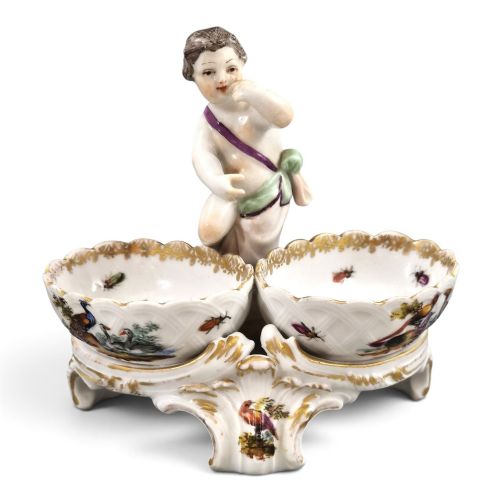
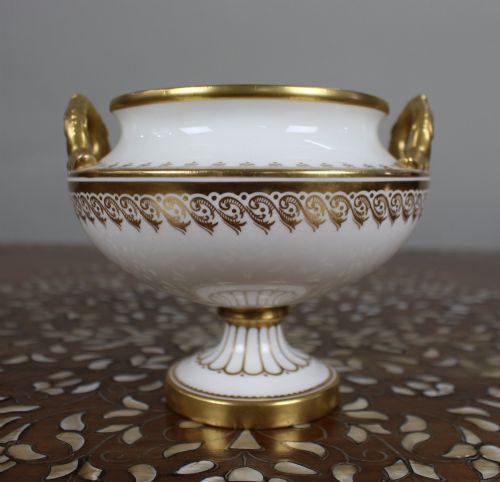
An antique porcelain centerpiece holds the centre of a dining table or sideboard, bringing together painted scenes, moulded form and gilt bronze mounts from the eighteenth, nineteenth and early twentieth centuries.
Antique Porcelain Centerpiece
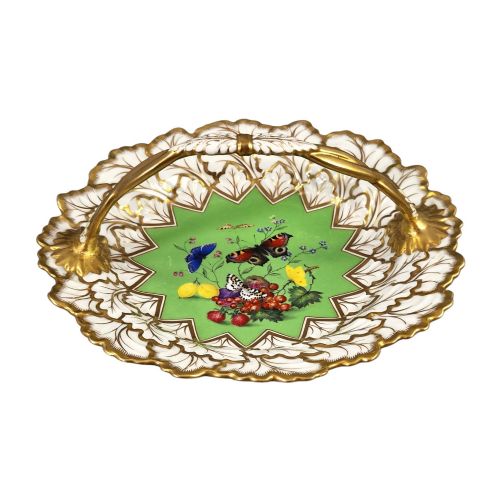
When you search for an antique porcelain centerpiece, you encounter items designed to command attention in domestic settings, from decorative bowls and tazzas to sweetmeat stands and basket forms. The selection spans English factories such as Worcester, Derby, Coalport and Rockingham alongside continental porcelain from Sèvres, Meissen, Limoges, Berlin and Vienna.
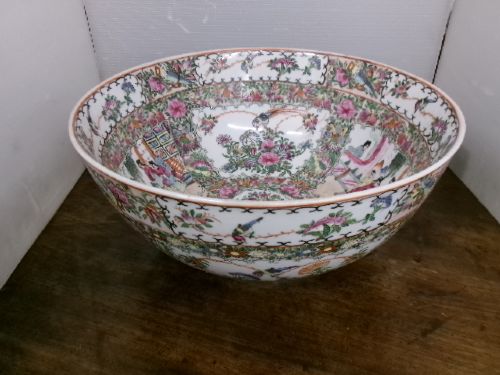
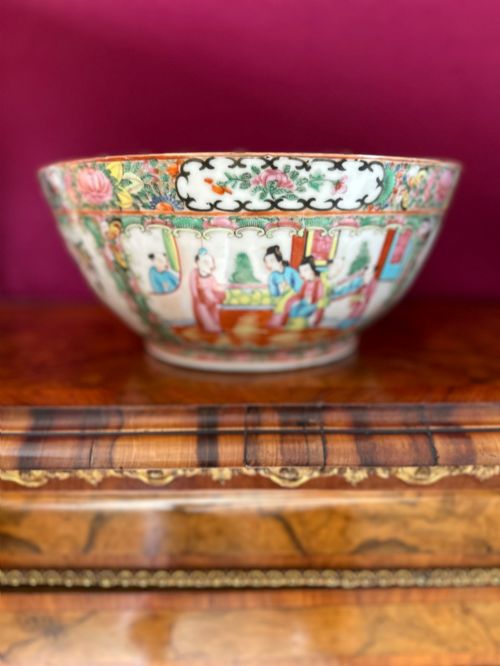
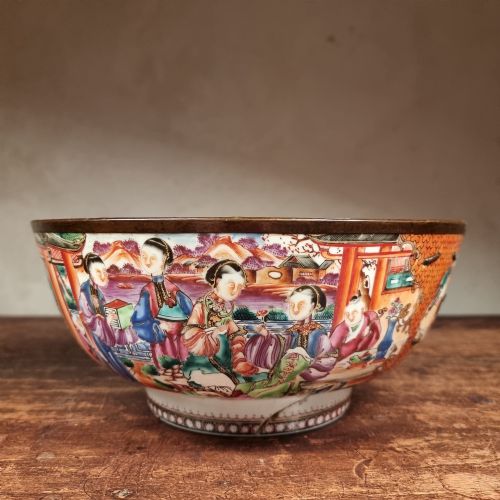
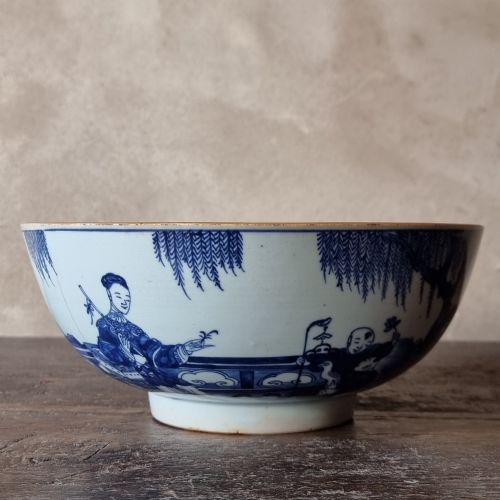
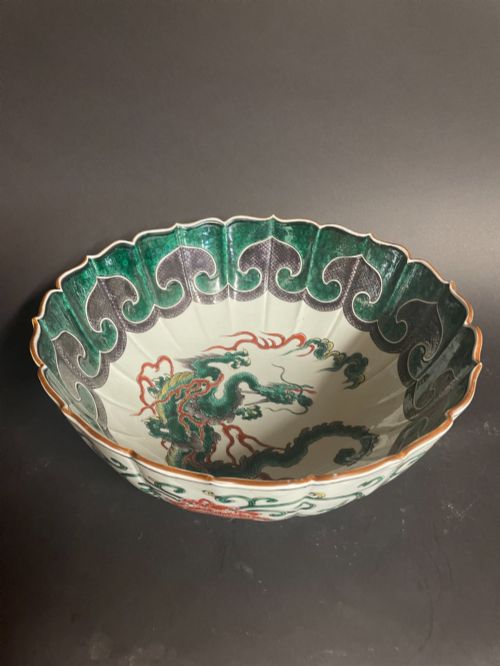
Asian export wares appear frequently, including Chinese Canton and Famille Rose punch bowls alongside Japanese Imari and Satsuma bowls from the nineteenth century. These vessels range from simple footed bowls to elaborate arrangements featuring ormolu mounts, champlevé enamel or sculptural figural supports.
The dominant forms belong to the Victorian era and the nineteenth century, though earlier Georgian examples from the eighteenth century surface alongside Edwardian and later pieces. Buyers seek these works for their utility on display and their reflection of period ceramic design.
Materials and Techniques
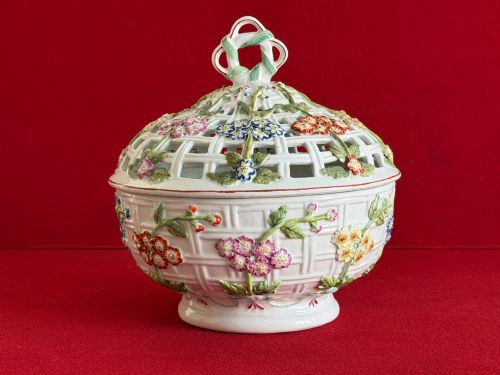
The foundation of these pieces rests on porcelain, ceramic and earthenware bodies shaped by hand or mould, often finished with detailed hand-painted scenes, floral encrustations or transfer printing. Glazes provide a smooth surface for enamel decoration in turquoise, blue ground, green and famille rose palettes.
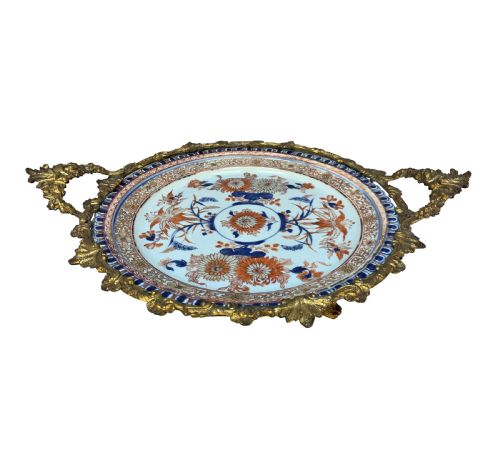
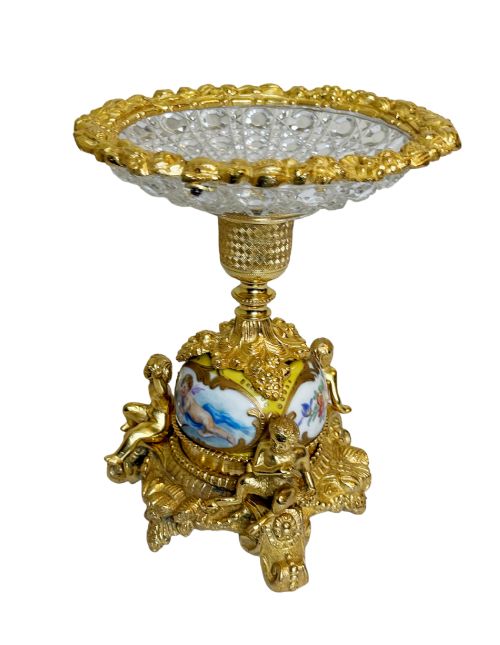
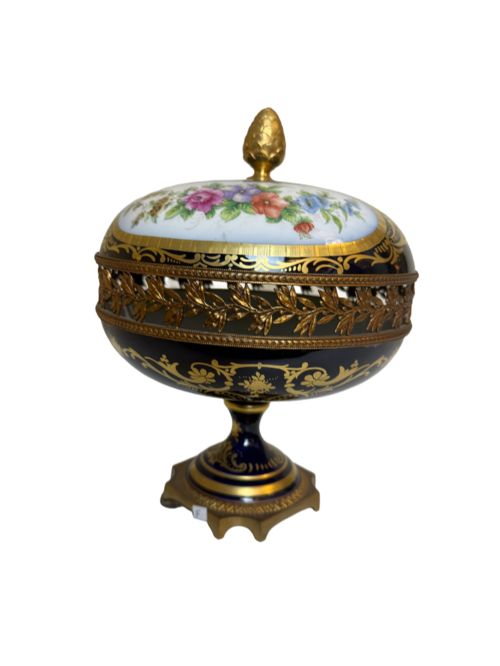
Gilding, gold leaf and gilding enhance borders and rims, while metalwork mounts in ormolu, gilt bronze and silver plate elevate ceramic bowls into structured table ornaments. Complex compositions incorporate biscuit porcelain sculptural groups, cut crystal and champlevé enamel to unite different decorative arts.
Materials documented across the inventory include porcelain, earthenware, ceramic, enamel, gold leaf, gilt bronze and cut crystal.
Distinctions in Execution
Quality rests upon the crispness of the porcelain moulding, the refinement of the hand-painted brushwork and the precision of the gilding. Superior works display controlled firing, balanced proportions and harmonious integration between the ceramic body and any bronze or ormolu mounts.
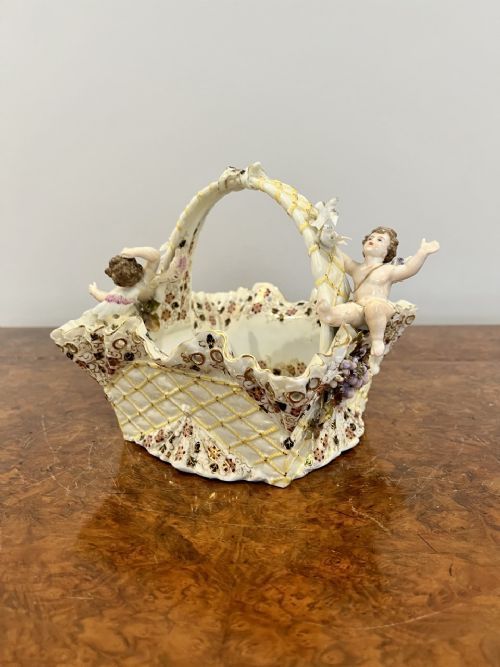
Factory execution distinguishes ambitious artistic output from routine commercial production, visible in the depth of enamel colours, the complexity of sculptural elements like cherubs or floral garlands, and the secure assembly of multi-part centerpieces.
Coalport·Derby·Flight Barr And Barr·Worcester·Sevres·Kpm Berlin·Limoges·Meissen·Royal Vienna·Mason S·Samson·Wedgwood·Walker And Hall·Doulton Burslem·Rockingham·Royal Dux Bohemia·H Schubert·Kozan·Ernst Wahliss
The Antique Porcelain Centerpiece Glossary
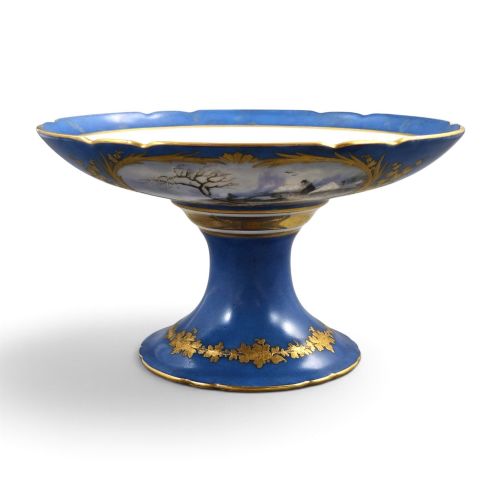
- Tazza
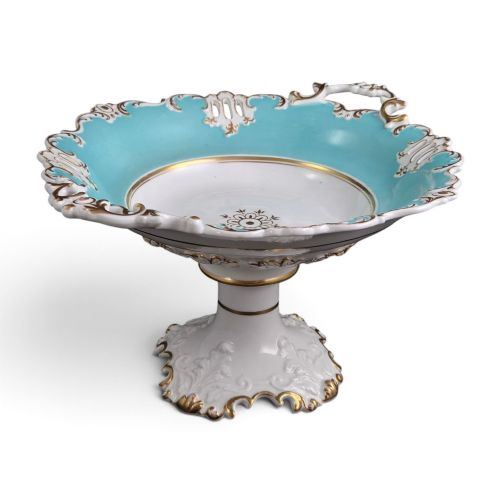
- An elevated shallow bowl or dish on a standard foot, used historically for serving small delicacies or as a decorative centrepiece. These vessels highlight fine ceramic painting and edge moulding.
- Ormolu
- Finely ground high-carat gold applied to a bronze base, commonly utilised for mounts on nineteenth-century French and English porcelain. It provides a warm metallic contrast to glazed ceramic surfaces.
- Imari
- A traditional Japanese style of porcelain decoration featuring underglaze blue and iron red with supplementary gold, widely exported and copied in Europe. The palette remains vibrant and distinct.
- Biscuit
- Unglazed ceramic porcelain fired once to a matte, porous state that resembles marble and reveals fine sculptural detail. Vieux Paris manufacturers frequently utilised this material for figural groups.
- Comport
- A large standing dish or bowl placed in the middle of a table for fruit or sweetmeats. These pieces often feature decorative footed bases and elaborate handles.
Antique Porcelain Centerpiece: Frequently Asked Questions
What is an antique porcelain centerpiece used for?
These vessels served historically as decorative centrepieces on dining tables and sideboards, often holding fruit, flowers or sweetmeats during formal meals. Today they function primarily as decorative focal points in interior displays.
Larger bowls and tazzas were engineered to draw the eye across a room, combining ceramic art with precious metal mounts or sculptural figures.
How do I identify a Victorian centerpiece?
Victorian examples often feature eclectic revival styles such as Rococo Revival, alongside heavy gilding, turquoise or blue grounds, and elaborate sculptural additions. They reflect industrial expansion and technical experimentation in European factories.
Look for moulded botanical details, hand-painted landscape views, and combinations of porcelain with gilt bronze or champlevé enamel characteristic of the late nineteenth century.
Are Chinese export pieces different from European ones?
Chinese export porcelain, such as Canton and Famille Rose punch bowls, was produced in Asia specifically for Western markets using distinct clay bodies and iron-brush painting techniques. These pieces often display vibrant polychrome enamels and narrative court scenes.
European factories subsequently imitated these aesthetic traditions, creating their own interpretations of Imari and Chinese patterns on local earthenware and porcelain bodies.
How should I care for a porcelain centerpiece?
Keep these objects out of direct sunlight to prevent fading on hand-painted enamel surfaces and gilding. Dust them gently with a soft dry brush rather than liquid cleaners.
Handle multi-part items with ormolu mounts or delicate handles by their base rather than their decorative extremities to avoid strain on historical joints.