
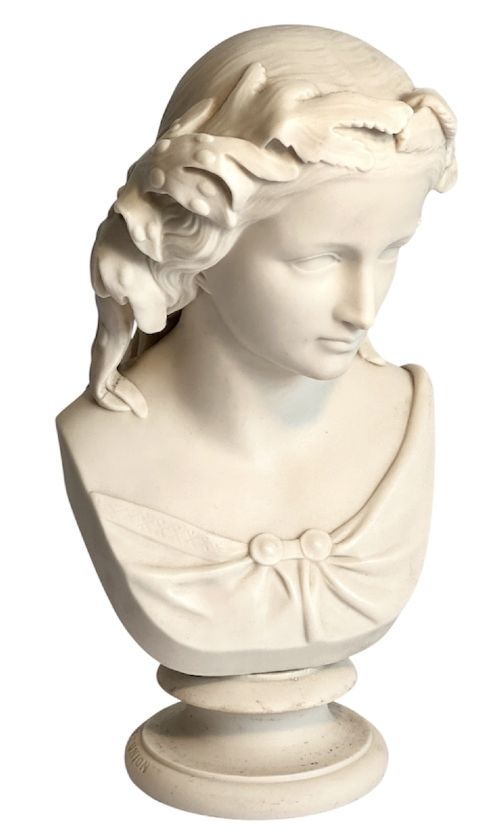


Copeland Parian Figure
These Copeland parian figures capture classical and literary subjects in fine nineteenth-century porcelain, offering the tactile weight of marble without the stone.

What Copeland parian figures are
Copeland parian figures represent nineteenth-century sculptural ceramics cast in unglazed biscuit porcelain designed to imitate carved marble. These works draw upon Victorian and Victorian neoclassical styles, translating mythological, literary, and pastoral subjects into domestic decorative objects.
The marketplace shows forms ranging from large statuary pieces to models of figures such as Clorinda, Sabrina, Rebekah, and Lurline, alongside depictions of children and animals. These sculptures date primarily from the nineteenth century and around the year nineteen hundred.
How they were made
Makers utilised parian porcelain, ceramic, and biscuit porcelain, pouring liquid slip into multi-part plaster moulds to capture intricate sculptural details. This unglazed ceramic material required careful firing to achieve a fine, matte surface texture resembling marble.
The casting process allowed workshops to replicate complex drapery, hair, and facial expressions faithfully from original models created by notable sculptors.
Listings for this phrase exclusively feature nineteenth-century and turn-of-the-century pieces executed in parian porcelain, ceramic, and biscuit porcelain.
What varies in quality
The artistic pedigree of the original modeller also elevates certain pieces, particularly those associated with named sculptors like John Durham or Louis Auguste Malempre.
John Durham·Louis Auguste Malempre·Copeland
The Copeland Parian Figure Glossary
- Parian porcelain
- A fine ceramic material developed in the nineteenth century to imitate white marble. It contains a high proportion of feldspar, which vitrifies during firing to give a characteristic smooth, matte texture.
- Biscuit porcelain
- Unglazed ceramic fired once before decoration, or left entirely in its natural state. This finish absorbs no light in the manner of a glaze, highlighting the sculptural form.
- Statuary figure
- A large or ambitious sculptural model intended for display as a centrepiece. These pieces often depict full-length human subjects from mythology or literature.
- Neoclassical
- An artistic style drawing inspiration from the art and culture of classical antiquity. It appears frequently in Victorian sculpture through subjects and drapery styles.
Frequently Asked Questions
What is parian ware?
Parian ware is a type of unglazed biscuit porcelain developed by British potteries during the nineteenth century. It was specifically formulated to replicate the smooth, creamy appearance of carved white marble.
The material gained immense popularity for portrait busts and literary figures because it brought classical sculpture into middle-class Victorian parlours at a fraction of the cost of stone.
How do I clean a parian figure?
Because parian porcelain is unglazed and possesses a slightly porous, matte texture, it easily absorbs dirt and oils from handling. Gentle dusting with a soft brush is usually sufficient for routine maintenance.
For stubborn marks, a mild soap solution applied sparingly with a soft cloth can work, but harsh chemical cleaners must be avoided to protect the delicate surface.
Who made these sculptures?
Copeland produced these figures, often collaborating with prominent contemporary sculptors who provided the original models for commercial casting. Artists such as John Durham and Louis Auguste Malempre supplied designs that were translated into porcelain.
Many pieces also depict popular literary and mythological characters like Sabrina, Rebekah, and Clorinda, reflecting Victorian cultural tastes.
Are these pieces marked?
Many Copeland parian pieces feature impressed factory marks, titles, or publication dates on the base or reverse. These markings help verify the manufacturer and sometimes indicate the specific year of release.
Not every piece bears a clear signature, as some smaller models relied on paper labels or distinct paste characteristics for identification.