
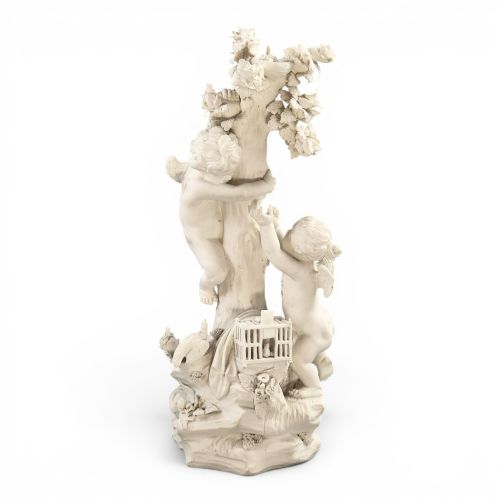

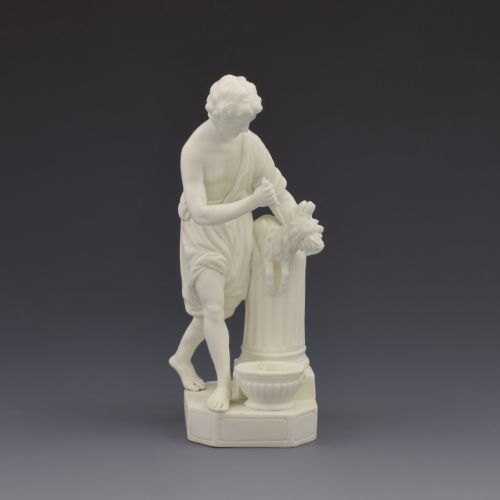


White Biscuit Porcelain Figure
A white biscuit porcelain figure offers an unglazed, matte finish that highlights sculptural form and neoclassical detail without the distraction of coloured enamel.
White Biscuit Porcelain Figure
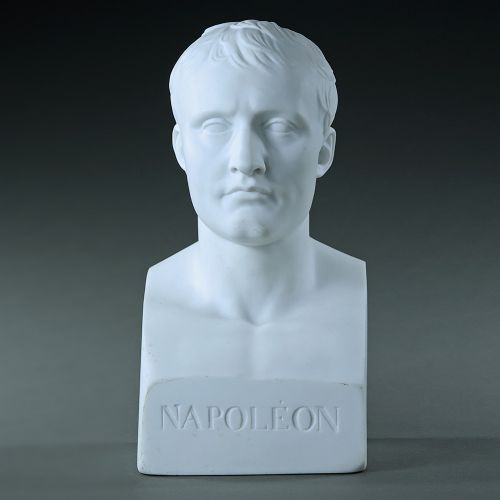
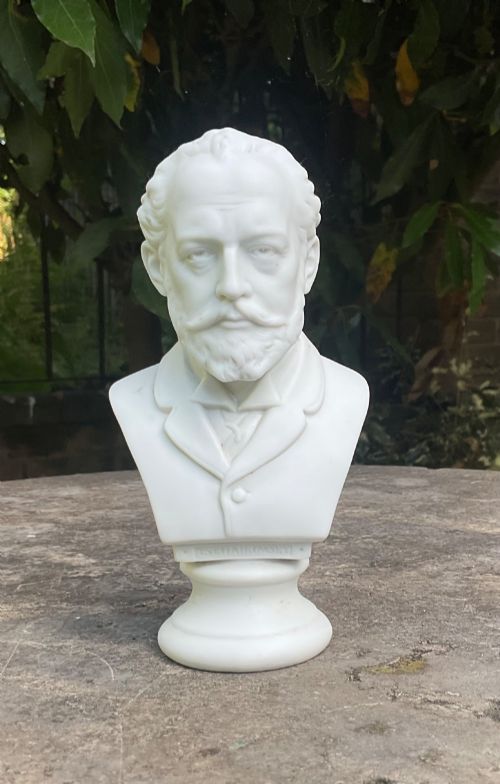
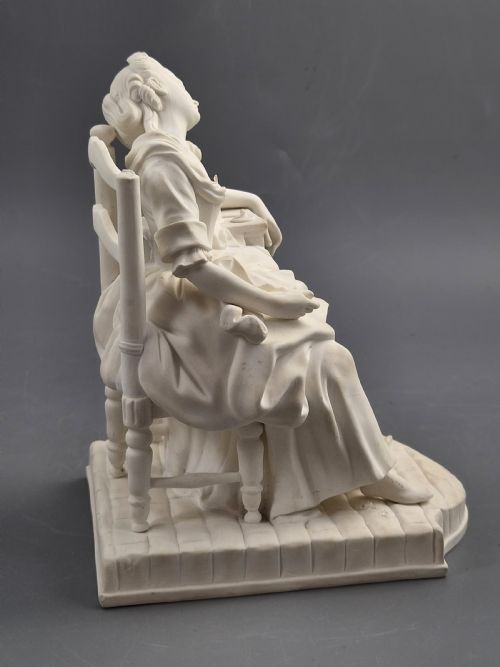
A white biscuit porcelain figure represents unglazed ceramic sculpture, often taking the form of classical deities, literary characters, and allegorical groups. Buyers seeking this phrase encounter works spanning from the eighteenth century into the late nineteenth century, including Georgian Derby productions and Victorian Parian ware.
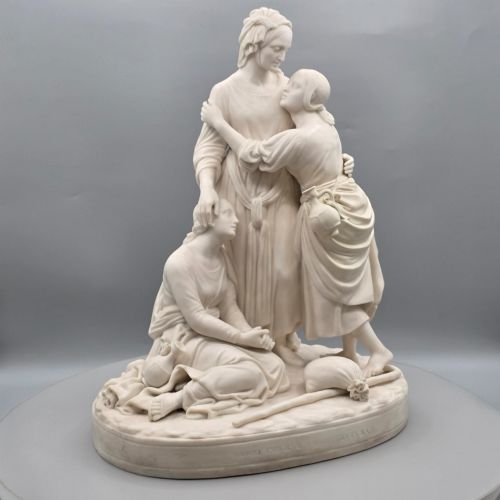
The objects on this page range from cabinet figurines and portrait busts to larger scale studies after classical models. English factories such as Minton, Copeland, and Derby dominate the forms, alongside continental pieces from French and German makers.
Victorian neoclassical interpretations and earlier Georgian compositions appear frequently in the listings. These figures bring academic sculpture into domestic spaces through refined, matte porcelain bodies.
How they were made
Soft-paste and hard-paste porcelain bodies were shaped by pressing clay into intricate multi-part moulds or through slip casting. Certain pieces incorporate subtle touches of enamel or gilt bronze mounts to accent the matte white ceramic shafts.
Hunting dogs, naked ladies, and literary heroines share the shelf in unglazed white.
What varies in quality
The finesse of the modeling separates standard factory output from exceptional sculptural reductions after famous artists. Crisp detail in hair, hands, and drapery indicates superior mould quality and careful post-firing finishing.
Scale and ambition define the upper tier of these works, such as large multi-figure groups or detailed busts resting on fitted socles. The density and purity of the Parian porcelain or biscuit body also influence the tactile weight and visual depth of the piece.
Minton·Derby·Copeland·Chantilly·Triebner Ens And Co·Royal Worcester·Sevres
The White Biscuit Porcelain Figure Glossary
- Biscuit porcelain
- Porcelain fired without a glaze, leaving a matte, porous surface resembling marble. It is also known as bisque.
- Parian ware
- A type of fine-grained, unglazed porcelain developed in the nineteenth century to imitate marble. It was widely utilised by English factories for statuary.
- Neoclassical
- A style drawing inspiration from the art and culture of classical antiquity. It emphasises restrained ornamentation, heroic themes, and classical drapery.
- Soft-paste porcelain
- An artificial porcelain composition fired at lower temperatures than hard-paste. It possesses a slightly softer visual warmth and was common in eighteenth-century factories.
- Statuary figure
- A sculptural ceramic piece modeled on full-scale marble monuments or antique sculptures. These often depict mythological or literary subjects.
White Biscuit Porcelain Figure: Frequently Asked Questions
What is biscuit porcelain?
Biscuit porcelain is unglazed ceramic that has been fired to achieve a matte, porous finish resembling marble.
This surface highlights the fine modeling of sculptural figures without the reflective shine of a traditional glaze.
How do I clean a white biscuit figure?
Because the surface is unglazed and porous, these figures can absorb dirt and oils easily.
Gentle dry dusting or careful sponging with a mild, non-foaming cleaning solution is generally recommended to preserve the matte texture.
What is Parian ware?
Parian ware is a specific type of unglazed Parian porcelain introduced in the nineteenth century.
It was formulated to capture the appearance of white statuary marble for neoclassical figures and busts.
Are these figures marked?
Many pieces feature factory marks, model numbers, or titles pressed into the base or back of the ceramic body.
Some works remain unmarked while still displaying the distinct paste and modeling characteristics of known potteries.
How do I tell Georgian from Victorian pieces?
Georgian figures often utilise soft-paste biscuit porcelain with softer modeling and eighteenth-century subject matter.
Victorian pieces frequently employ Parian porcelain, sharper press-molding techniques, and distinct nineteenth-century literary or classical themes.