
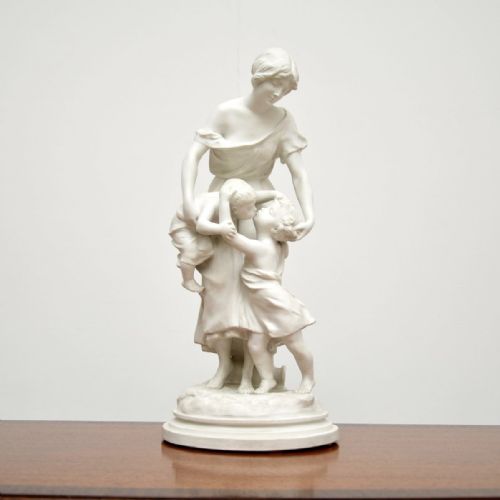


Matt Porcelain Figure
A matt porcelain figure captures the nuanced detail and unglazed finish characteristic of nineteenth and early twentieth-century ceramic art, offering buyers a tactile decorative object.
Matt Porcelain Figure
A matt porcelain figure represents sculptural ceramic work produced across the nineteenth century, the Edwardian era, and up to 1910, encompassing individual figurines and larger group sculptures.
Buyers encountering this search phrase will most frequently find examples originating from major factories like Royal Dux and Copeland, showcasing forms such as animals, children, and romantic subjects.
The objects span Victorian and Art Nouveau styles, shifting from classic statuary to flowing organic lines that define the later Edwardian pieces.
Materials and construction
These sculptures utilise porcelain and parian porcelain, a specialised ceramic body developed to imitate marble without requiring a glossy vitreous glaze.
Materials recorded across the inventory include standard porcelain, parian porcelain, biscuit porcelain, enamel, and paint.
Assessing quality
Quality rests upon the crispness of the modelling and the sensitivity with which the sculptor rendered form and expression in the unglazed clay.
The sophistication of the composition, particularly in multi-figure groups or large models, separates standard production pieces from ambitious workshop prototypes.
Royal Dux Bohemia·H Schubert·John Durham·Copeland
The Matt Porcelain Figure Glossary
- Biscuit Porcelain
- Unglazed ceramic fired once and left with a matte, porous surface texture. This finish allows sculptural details to remain sharp and unmasked by glossy coatings.
- Parian Porcelain
- A fine-grained statuary ceramic compound developed in the nineteenth century to replicate carved marble. It fires to a smooth, matte ivory appearance.
- Art Nouveau
- A decorative style prominent in the late nineteenth and early Edwardian periods, characterised by sinuous, organic lines and natural motifs. Figures from this era often feature flowing drapery and asymmetrical stances.
- Statuary
- A classification of sculptural ceramic figures modelled on classical or academic sculpture rather than utilitarian pottery. Copeland produced notable examples in this tradition.
Matt Porcelain Figure: Frequently Asked Questions
How do I clean a matt porcelain figure?
Dust the unglazed surface gently with a soft, dry brush to prevent dirt settling into the porous ceramic texture.
Avoid using water or chemical cleaners, as moisture can stain the unglazed biscuit body permanently.
What is the difference between porcelain and parian?
Standard porcelain is typically fired with a glossy glaze to seal the vitrified clay body completely.
Parian porcelain contains a higher proportion of feldspar, creating a dense, unglazed material that mimics the dry touch and subtle sheen of carved marble.
Are these figures marked by the factory?
Many Victorian and Edwardian examples carry impressed model numbers, factory stamps, or applied pink triangular pads in the case of certain Bohemian works.
These marks help identify the production period and the specific workshop responsible for the casting.
Where should I display these sculptures?
Place them on stable surfaces away from high-traffic areas where accidental knocks might damage delicate extremities like fingers or protruding drapery.
Ensure they sit out of direct, prolonged sunlight if painted highlights are present on the unglazed surface.