

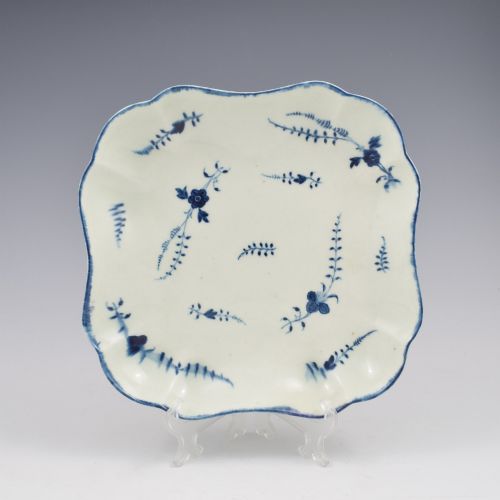
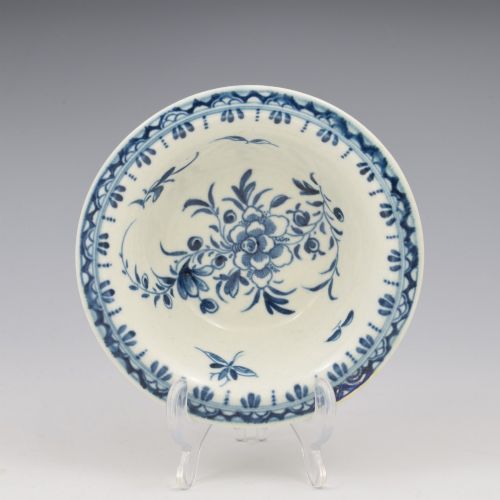
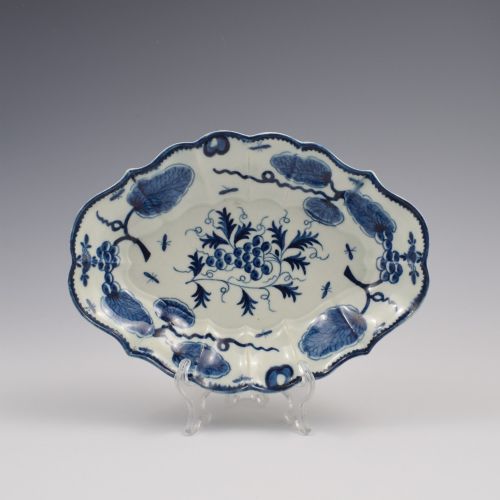
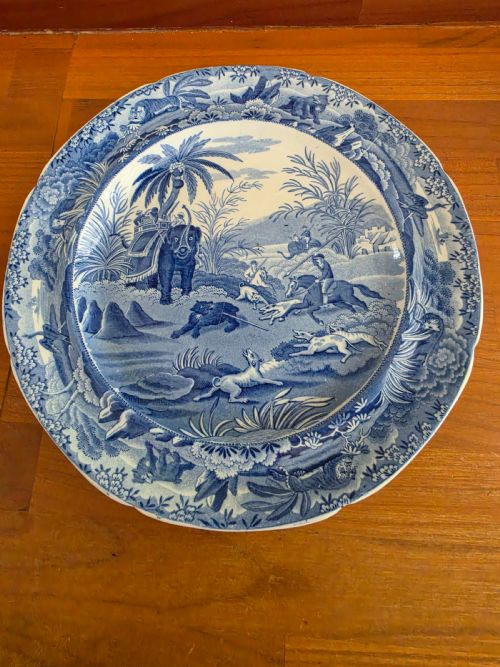
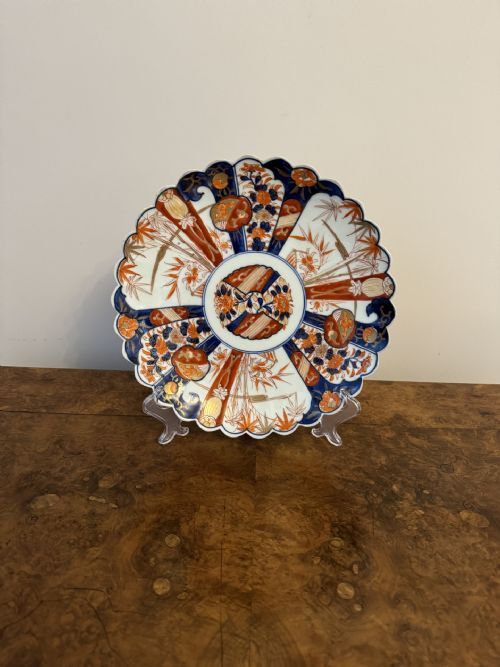
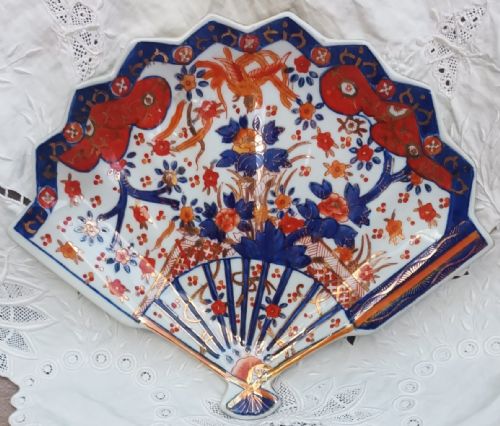
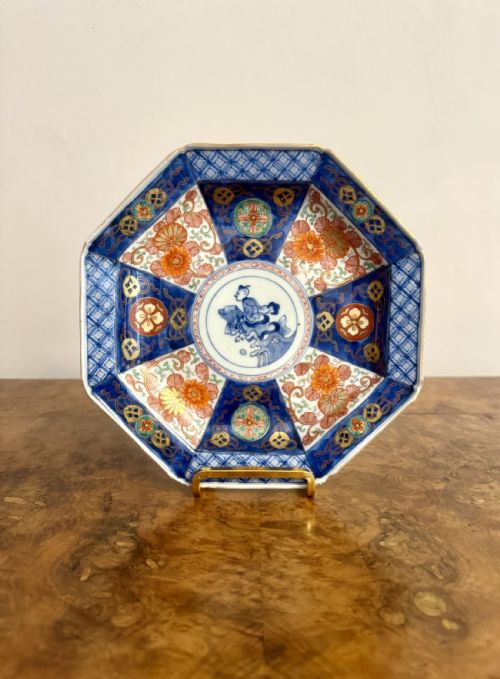
Underglaze Blue Porcelain Plate
An underglaze blue porcelain plate brings centuries of kiln craft to a table or wall, offering durable ceramic forms painted in rich cobalt tones.

Underglaze Blue Porcelain Plate
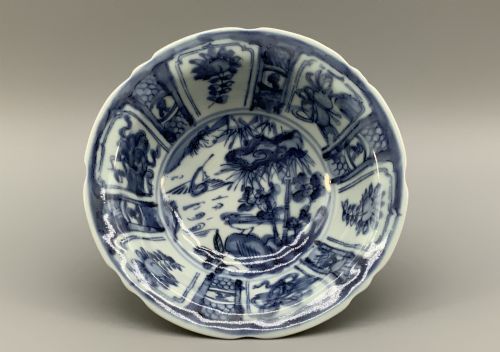
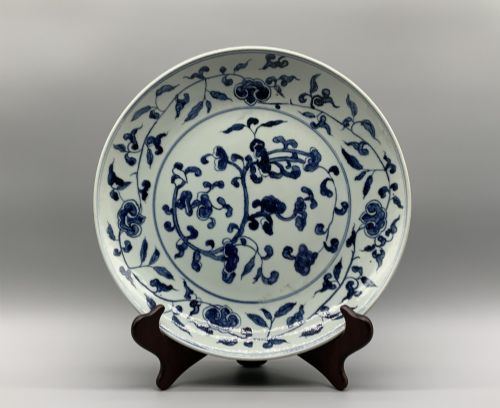
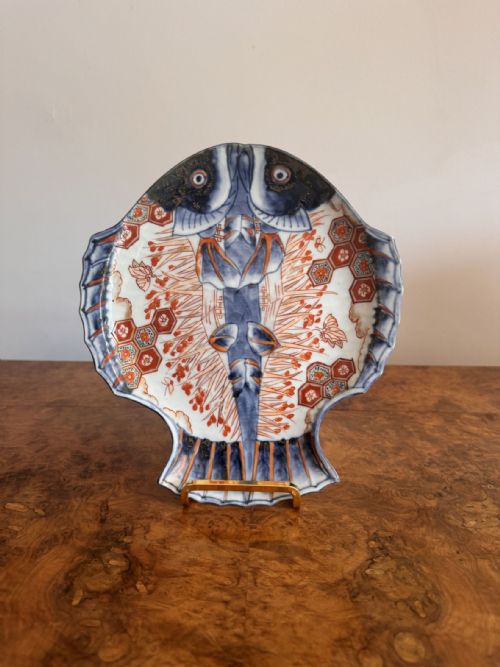
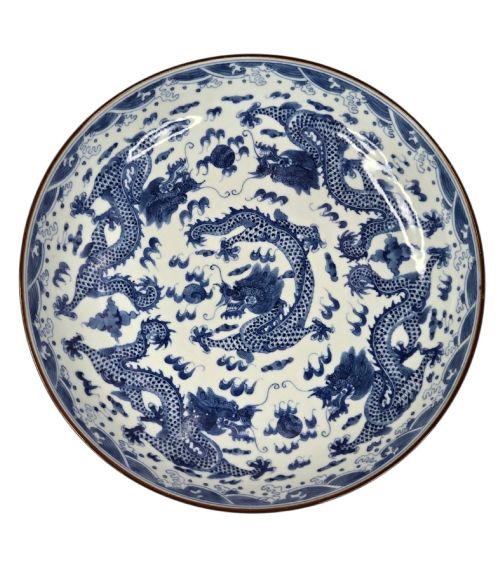
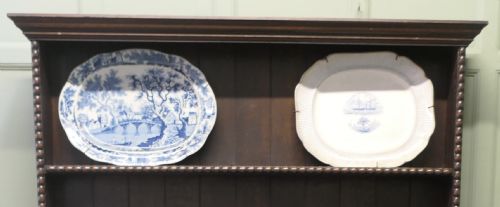
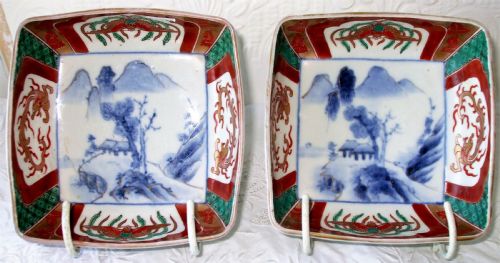
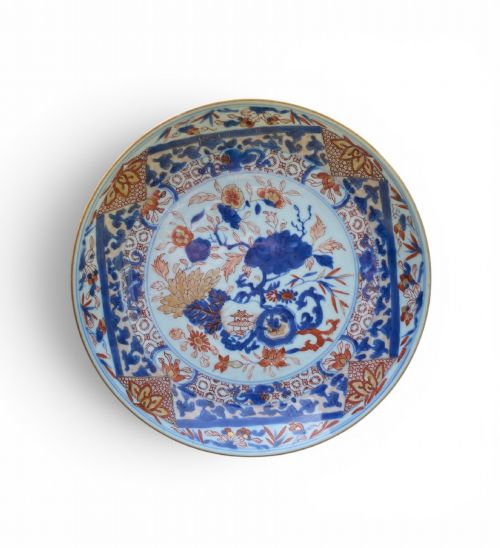
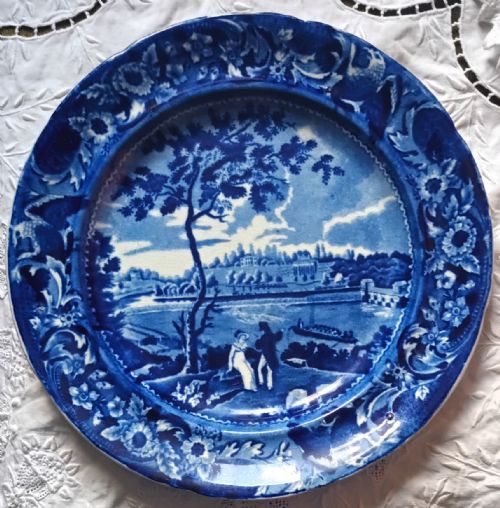
When you search for an underglaze blue porcelain plate, you encounter ceramic table vessels and chargers spanning eighteenth-century Chinese export wares, Georgian English factories, and Japanese Arita production. These items take circular, lobed, hexagonal, and fish-shaped forms intended for display or dining.
The selections on this page draw heavily from Japanese Imari and Meiji period pieces alongside Kangxi period Chinese chargers and English porcelain from Worcester and Spode. They range from small patty pans to large chargers measuring across wide diameters.
How they were made
Potters painted cobalt pigment directly onto the raw ceramic body before applying a transparent glaze and firing the piece at high temperatures. This technique fixed the blue decoration permanently beneath the glassy surface.
Makers utilised porcelain, soft-paste porcelain, and earthenware bodies, occasionally adding enamel highlights or gold leaf over the fired glaze for extra colour.
Materials across these entries combine porcelain and earthenware bodies with cobalt glaze, enamel, and gold leaf.
What varies in quality
The crispness of the cobalt brushwork and the purity of the white porcelain ground define the grade of the piece. Superior examples display controlled painting with deep, uniform blue tones and well-balanced compositions.
Unusual moulding, such as scalloped edges, fish shapes, or lobed sides, indicates higher ambition in the forming stage compared to standard round dishes.
Dr Wall·Stubbs·Spode
The Underglaze Blue Porcelain Plate Glossary
- Underglaze blue
- Pigment applied beneath the final transparent glaze layer before the high-temperature kiln firing. This method protects the blue decoration from wear during daily use.
- Imari
- A style of Japanese export porcelain featuring underglaze blue combined with iron red and gold. Originating from Arita, these wares gained massive popularity across Europe.
- Charger
- A large decorative plate or platter meant for ceremonial table service or wall hanging. These pieces measure significantly wider than standard dining plates.
- Soft-paste porcelain
- A ceramic composition made from white clay and glass frit rather than hard-paste minerals. It fires at lower temperatures and possesses a warm, creamy translucence.
Underglaze Blue Porcelain Plate: Frequently Asked Questions
How do I hang a heavy charger safely?
Heavy chargers require broad spring-loaded brass wall hangers that distribute the weight evenly across the rim. Ensure the mounting hook fixes firmly into wall masonry or a stud.
Avoid wire attachments that rely on single adhesive points on the unglazed foot ring. Check the tension of the springs periodically to maintain a secure grip.
Can I use these plates for food?
Historic porcelain pieces with underglaze blue decoration are generally safe for serving dry foods. Older soft-paste bodies and enamel-painted wares demand careful hand washing rather than machine cycles.
Items showing surface crazing or historic hairline cracks should serve display purposes only to prevent trapping moisture.
How do I distinguish Chinese export from Japanese Arita?
Chinese export porcelain from the Kangxi period often displays a bright, translucent white body with fluid, botanical cobalt painting. Japanese Arita and Imari wares frequently exhibit denser iron-red and gilt additions alongside heavier potting.
The foot rings on Japanese examples sometimes show characteristic kiln grit adhering to the unglazed clay.
What causes the blue colour to blur?
Cobalt pigment spreads slightly if the kiln temperature runs too high during the fusion of glaze and body. Finer pieces maintain sharp outlines where the cobalt stays crisp beneath the glass.
Early experimental factories occasionally struggled to control this chemical reaction, resulting in softer, more diffused patterns.