




Underglaze Blue Iron Red Charger
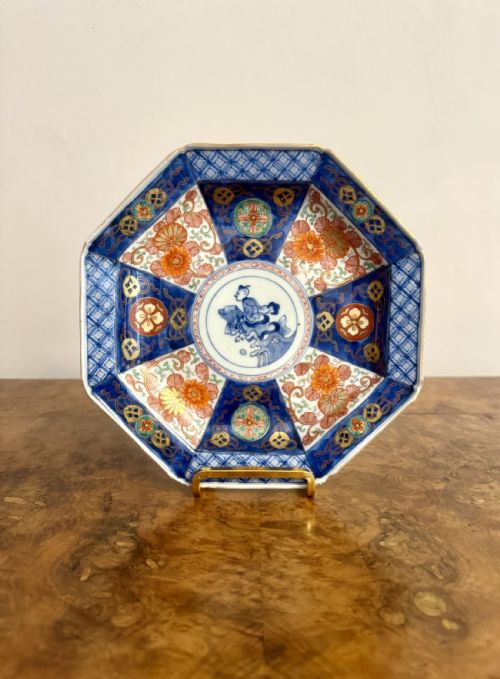
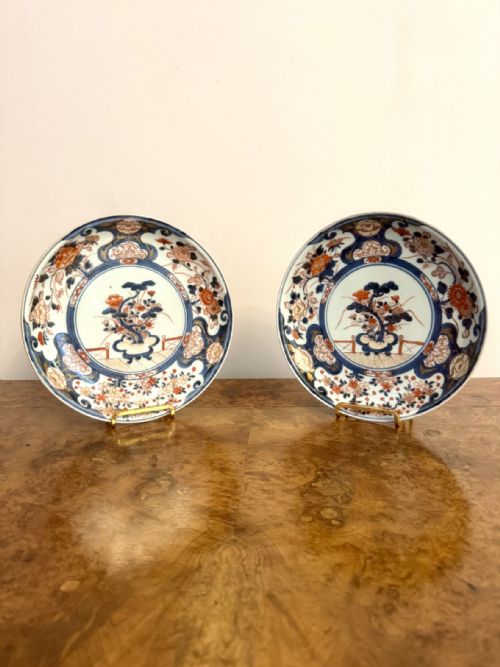
These underglaze blue iron red charger pieces are decorative Japanese plates offering bold cobalt painting and contrasting red enamel details for any room.
Underglaze Blue Iron Red Charger
When you search for an underglaze blue iron red charger, you are looking at large decorative Japanese plates and dishes created during the Edo and Meiji periods. These items combine deep cobalt underglaze painting with vibrant iron red enamel highlights, frequently accented by additional gilding.
The versions most commonly met on this page date from the nineteenth and early twentieth centuries, particularly around nineteen hundred and the Meiji era. They arrive in various forms, including scalloped edges, hexagonal shapes, and standard large plate formats.
Originating primarily from Japanese kilns producing Imari wares, these objects served as striking display pieces rather than everyday tableware. Their distinct palette and robust ceramic bodies make them immediately recognisable to collectors of East Asian export porcelain.
How they were made
Potters shaped these chargers using ceramic and porcelain bodies before applying cobalt blue pigment directly beneath the transparent glaze. This underglaze painting ensured the blue elements remained permanent and sharp after high-temperature kiln firing.
Following the initial glaze firing, artisans added iron red enamel and gold leaf or gilding over the glaze surface. A subsequent, lower-temperature firing fixed these colourful enamel and metallic details onto the plate.
The combination of cobalt blue, iron red, and gold leaf created a rich visual contrast that defined traditional Japanese Imari aesthetics. Skilled hands shaped irregular outlines such as scalloped and hexagonal borders before the decoration commenced.
Several plates feature unusual hexagonal and scalloped edges, proving that traditional potters enjoyed playing with geometry.
What varies in quality
The distinction between standard items and superior examples rests upon the precision of the underglaze blue painting and the crispness of the iron red enamel work. Finer plates display careful brushwork with steady lines and balanced compositions across the surface.
The application of gold leaf and gilding also sets apart different grades of chargers, as superior pieces retain rich metallic highlights without excessive rubbing. Furthermore, unusual structural forms, such as distinct hexagonal or scalloped edges, elevate the visual interest of the ceramic body.
The Underglaze Blue Iron Red Charger Glossary
- Imari
- A style of Japanese export porcelain originating from the town of Arita, traditionally characterised by a palette of underglaze blue, iron red, and gold. These wares were heavily exported to Europe from the seventeenth century onwards.
- Underglaze
- A decoration technique where pigments are applied to the raw or bisque ceramic body before the glaze is added. This protects the colour beneath a glassy layer during firing.
- Iron red
- A brick-red enamel colour derived from iron oxide, applied over the glaze in Japanese ceramics. It provides a warm contrast to the cooler cobalt blue tones.
- Meiji Period
- The era in Japanese history spanning from eighteen sixty-eight to nineteen twelve, marked by extensive international trade and artistic production. Many decorative plates survive from this time.
- Gilding
- The application of gold leaf or gold powder to the surface of porcelain for decorative effect. It catches the light and complements the red enamel highlights.
Underglaze Blue Iron Red Charger: Frequently Asked Questions
What is an underglaze blue iron red charger?
It is a large decorative ceramic plate from Japan, featuring cobalt blue painted under the glaze combined with iron red enamel details.
These pieces were produced primarily for export and display, showcasing traditional Japanese Imari artistry across various centuries.
How do I date an antique Japanese Imari plate?
Dating relies on stylistic clues, ceramic body characteristics, and historical periods such as the Edo or Meiji eras. Examining the specific shade of the cobalt blue and the wear on any gilding helps place the item in time.
Earlier pieces from the eighteenth century differ in weight and painting style compared to later nineteenth-century or nineteen-hundred productions.
Were these chargers used for dining?
These large plates functioned mainly as decorative display items rather than functional tableware for meals.
Their striking colours and precious gold leaf accents made them suitable for ornamenting rooms and cabinets.
How should I care for an antique porcelain charger?
Keep the piece away from direct sunlight and dust it gently with a dry, soft cloth to protect the overglaze enamel and gold leaf.
Avoid using water, chemical cleaners, or abrasive materials that could damage the historic ceramic surface.