





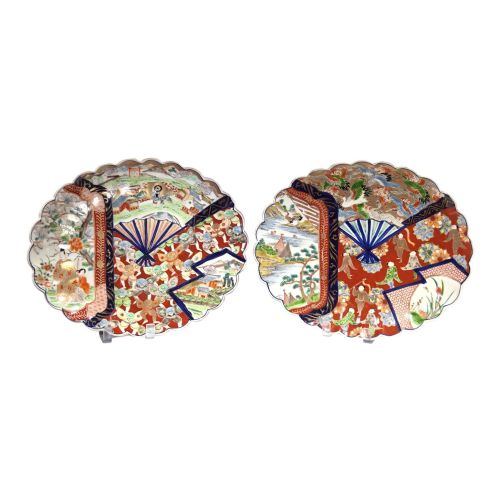


Cobalt Blue Imari Platter
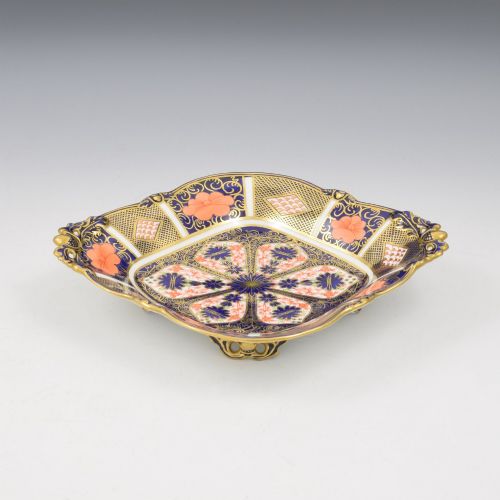
These cobalt blue imari platter examples unite deep underglaze cobalt with iron-red enamel and gold leaf, offering bold colour and intricate patterns for display or service.

Cobalt Blue Imari Platter
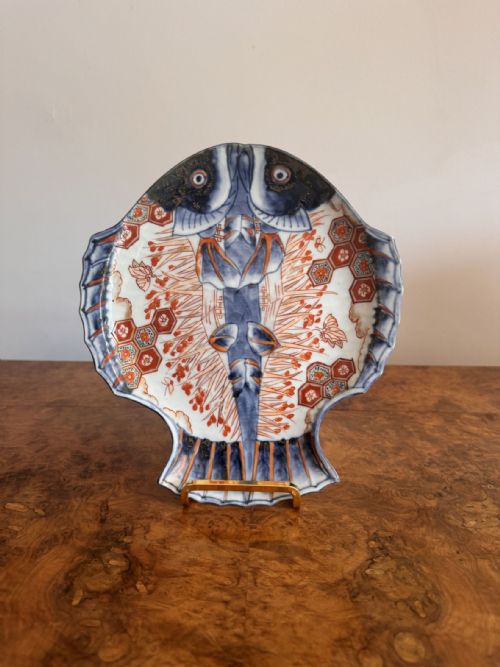
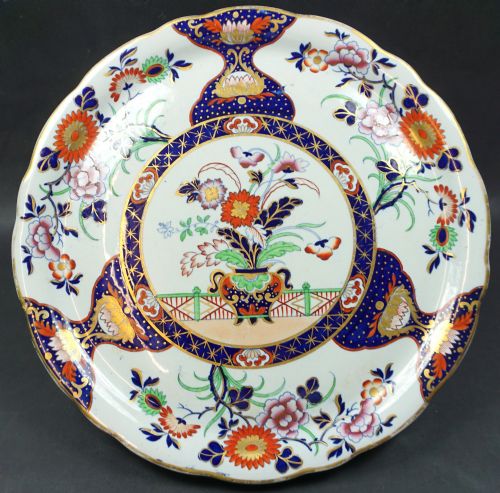
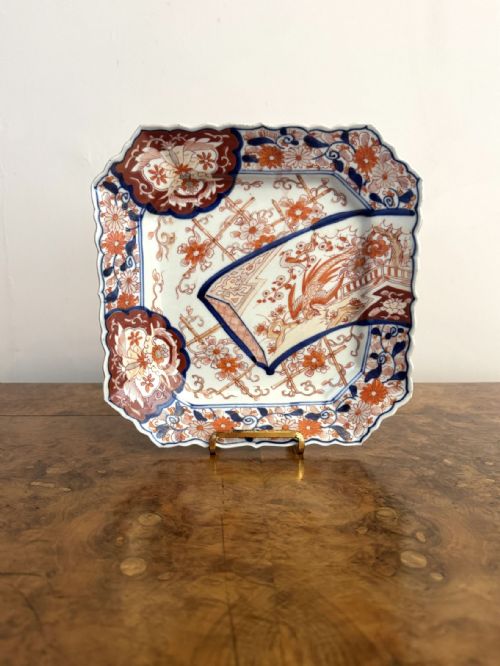
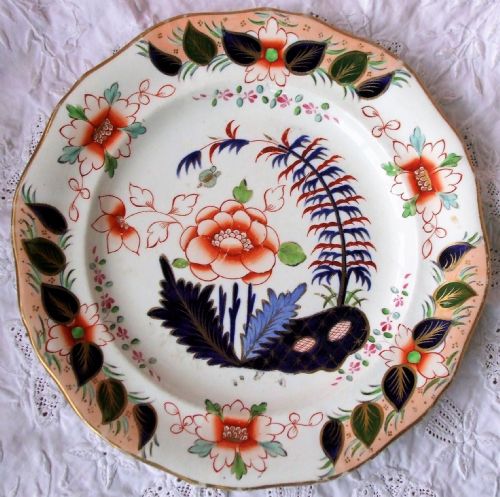
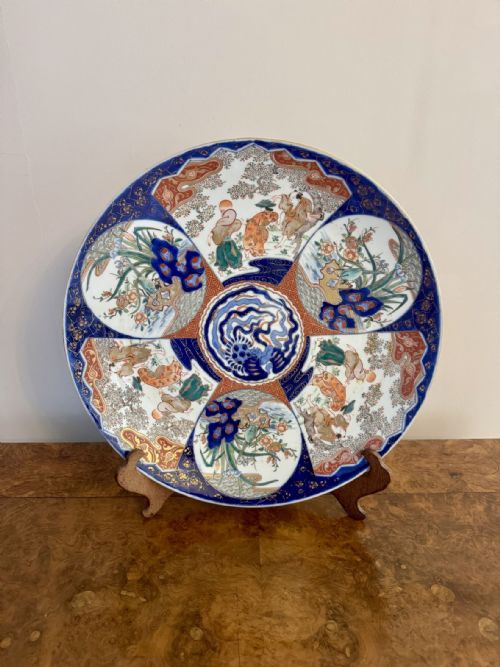
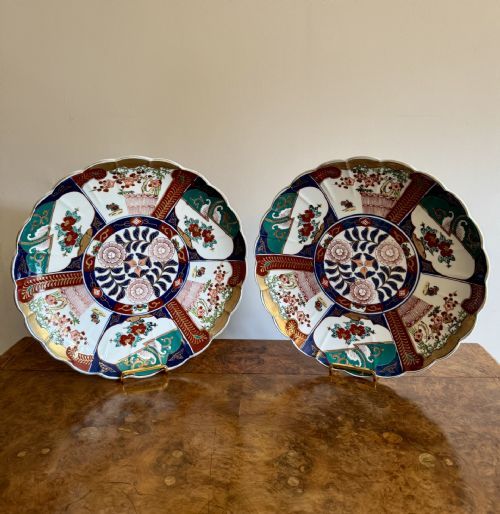
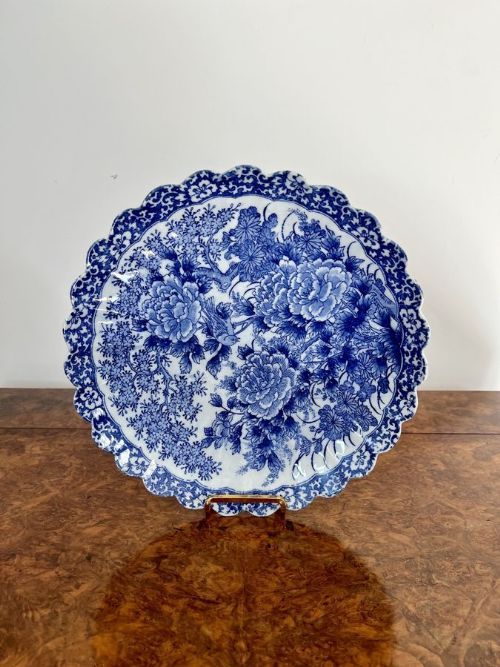
A cobalt blue imari platter brings together diverse forms, ranging from large circular chargers and serving platters to square, fan-shaped, fish-formed, and scalloped plates. These items cross multiple periods, appearing across the nineteenth century alongside pieces from the Edo and Meiji periods.
The selection on this page leans heavily toward Japanese export porcelain alongside English iterations influenced by East Asian design. Buyers encounter large chargers made for wall display or sideboard presentation alongside smaller serving dishes intended for dining tables.
How They Were Made
Makers utilised ceramic, porcelain, ironstone, and stoneware as bodies, applying cobalt underglaze beneath the glaze to establish the dark blue foundation of the design. Enamel painting and gilding or gold leaf were subsequently added on top of the glaze before a secondary firing fixed the colourful surface details.
Potters shaped these wares by hand or in moulds, producing irregular edges such as scalloped rims, fish profiles, and geometric squares that demanded careful kiln management to prevent warping during high-temperature firing.
Cobalt Blue Imari Platter Retail Price Guide 2026
Typical asking prices for cobalt blue imari platter among the pieces listed under this phrase on Sellingantiques today, from the lower quarter to the upper quarter. They describe what is for sale here now, not the wider market.
Among the platters, a fish-formed plate swims against the tide of round chargers.
What Varies in Quality
Execution of the painted decoration dictates the upper tier of the range, separating hastily painted wares from pieces featuring precise brushwork and meticulous detail in the depiction of figures, foliage, and geometric borders. The richness and preservation of the gilding and enamel colours further distinguish superior examples.
Form complexity also influences distinction, as uncommon shapes like fish-formed dishes, fan-shaped plates, and pierced trays require greater skill from the potter than standard circular chargers.

Royal Crown Derby·Hicks and Meigh·John Davenport of Longport·John Ridgway
The Cobalt Blue Imari Platter Glossary
- Imari
- A style of ceramic decoration originating in Japan, characterised by a palette of cobalt blue, iron-red, and gold. European factories frequently copied these distinct patterns.
- Charger
- A large decorative plate or platter used historically for ceremonial service or displayed upright on sideboards and walls. These items generally measure substantially wider than standard dining plates.
- Cobalt Underglaze
- A blue pigment applied to ceramic bodies before glazing and firing, capable of withstanding extreme kiln temperatures without fading. This technique creates a durable foundation beneath the clear glaze.
- Ironstone
- A type of durable heavy earthenware patented in England as a robust alternative to porcelain. It accepted transfer printing and hand colouring readily.
- Meiji Period
- A phase in Japanese history spanning from 1868 to 1912, associated with increased export of decorative arts to Western markets. Wares from this era often display intricate pictorial scenes.
Cobalt Blue Imari Platter: Frequently Asked Questions
How were chargers used historically?
Large chargers served primarily as display centerpieces on sideboards or were hung on walls to demonstrate household wealth and taste.
In some formal dining settings, they functioned as base plates upon which smaller course dishes were placed during a meal.
Can I use these platters for food?
Most antique pieces function best as decorative display items due to their age and delicate surface gilding.
Serving dry foods on sturdier ironstone examples is possible, but hand washing without harsh detergents remains essential to preserve the enamel.
How do I identify Japanese versus English pieces?
Japanese examples typically utilise fine porcelain bodies with hand-painted cobalt and enamel motifs reflecting traditional East Asian iconography.
English pieces often employ ironstone or stoneware substrates, sometimes incorporating printed transfer outlines beneath the hand-applied colour.
What defines the imari palette?
The traditional palette relies on a triad of deep underglaze cobalt blue, vibrant iron-red enamel, and contrasting gold leaf.
Additional colours such as green, yellow, and aubergine occasionally appear to accent floral and geometric compositions.