
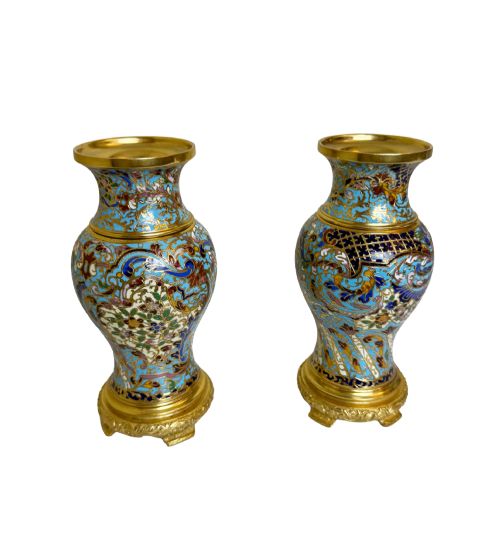
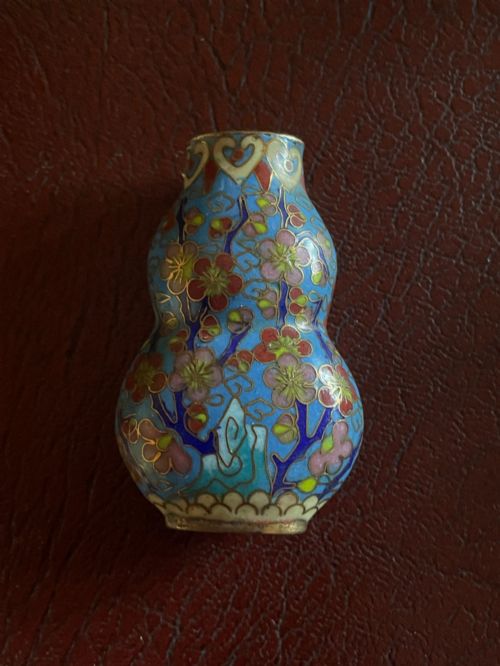


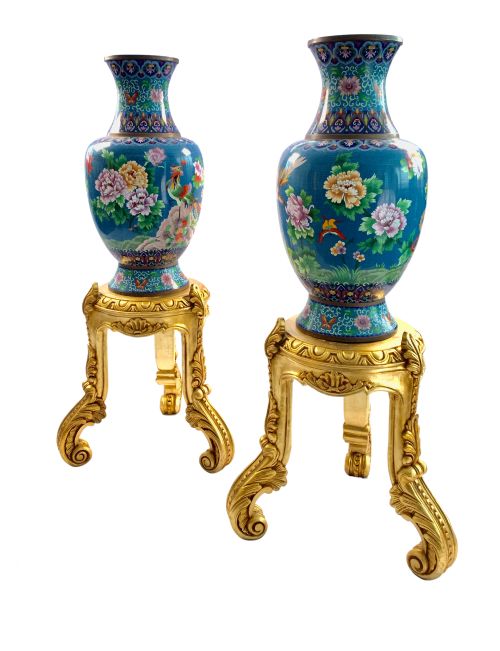
Turquoise Cloisonne Vase
These turquoise cloisonne vase pieces bring vibrant enamel work and solid metal foundations together for any room.
Turquoise Cloisonne Vase
A turquoise cloisonne vase brings together intricate enamel wirework and substantial metal forms, ranging from miniature vessels to large decorative display pieces. When you search for this phrase, you encounter items shaped as traditional vases, decorative jars, and matching pairs adapted as table lamps.
The available selection spans several distinct cultural traditions and eras, including Chinese export pieces alongside Japanese Meiji period works. You will frequently find nineteenth-century items, including nineteenth-century French and Chinoiserie styles, as well as early twentieth-century examples from the Edwardian period and nineteen-forties.
How they were made
Makers formed these vessels using brass, copper, bronze, and gilt bronze as the primary structural foundations for the body and mounts. Artisans applied cloisonne enamel and champleve enamel directly onto these metal surfaces to create intricate surface patterns.
Many examples incorporate specialised metalworking techniques such as ormolu mounting and gilt metal detailing alongside the primary enamel decoration. Some pieces also feature secondary materials like fabric and ceramic elements integrated into the overall design.
Several heavy nineteenth-century vessels spent decades moonlighting as reading lamps before returning to pure decorative duties.
What varies in quality
The refinement of the wirework and the depth of the enamel colour set the finest examples apart from standard production. Superior pieces display precise cell formation and harmonious colour transitions across the entire body.
Substantial mounts in gilt bronze, ormolu, or heavy bronze indicate a higher tier of workmanship and material cost. The integration of functional adaptations, such as lamps, also influences the overall character of the piece.
The Turquoise Cloisonne Vase Glossary
- Cloisonne enamel
- A decorative metalwork technique where thin metal wires are soldered to a base to form compartments, which are then filled with enamel paste and fired. This method creates detailed patterns bounded by fine metal lines.
- Champleve enamel
- A technique where troughs or cells are carved or etched directly into a thick metal surface and filled with enamel before firing. It produces bold designs with substantial metal borders.
- Ormolu
- Finely ground high-carat gold applied to a bronze or brass base object using a mercury amalgamation process. This technique provides a durable, rich golden finish to decorative mounts.
- Meiji Period
- A Japanese historical era lasting from eighteen sixty-eight to nineteen twelve, noted for exceptional decorative arts exported internationally. Pieces from this time often exhibit remarkable technical precision.
- Chinoiserie
- A European artistic style reflecting Chinese aesthetic influences, prominent in decorative arts and furnishings. It reinterprets Asian motifs through a Western design lens.
Turquoise Cloisonne Vase: Frequently Asked Questions
How do I clean a turquoise cloisonne vase?
Dust the surface gently with a soft, dry cloth to prevent the accumulation of dirt within the enamel cells. Avoid using harsh chemical cleaners or abrasive materials that could scratch the delicate metal wires and enamel.
Keep these vessels away from direct moisture and extreme temperature fluctuations to protect the integrity of the base metal and enamel bond. Professional conservation advice should be sought for valuable or fragile antique examples.
Were these vases made as lamps originally?
Many nineteenth-century examples were converted into table lamps later in their lifespan to suit changing interior decoration preferences. This adaptation often involved mounting the vessel onto a weighted base and adding electrical fittings.
Original cabinet vases remain in their unaltered form, while lamps offer a practical way to display these decorative objects in modern living spaces. Both formats appear frequently within the available selection.
How can I tell Chinese and Japanese pieces apart?
Chinese examples often feature heavier bronze bases and traditional motifs inspired by earlier dynasties, utilising rich turquoise grounds and formal floral patterns. The cloisonne work tends to be robust and deeply coloured.
Japanese Meiji period items frequently showcase exceptionally fine wirework and naturalistic imagery such as birds and flora. The overall finish often exhibits a meticulous attention to minute detail and technical restraint.
Can I display fresh flowers in these vases?
Antique enamel vessels are generally intended for decorative display rather than holding water and fresh botanicals. Moisture can seep into hairline cracks in the old enamel or corrode the internal metal structure over time.
If you wish to use them for foliage, place a discreet, removable glass or plastic liner inside to protect the antique body. Dry stems or artificial arrangements pose no risk and provide a traditional look.