

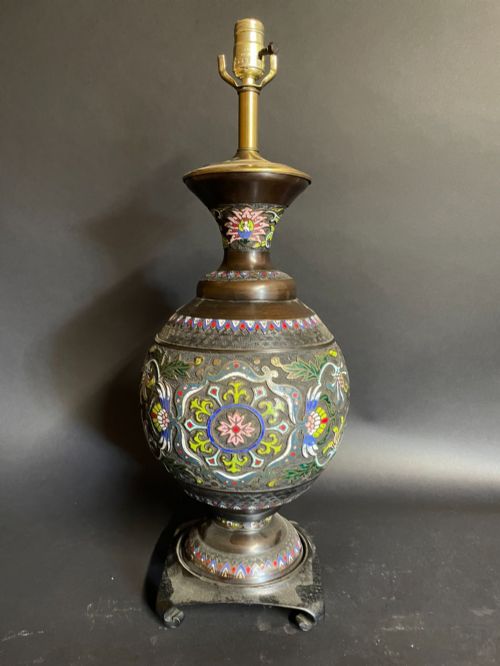


Floral Enamel Table Lamp
A floral enamel table lamp brings colour and decorative presence into a room, combining painted or cloisonné surfaces with period metalwork.
Floral Enamel Table Lamp
A floral enamel table lamp sits at the intersection of decorative metalwork and functional lighting, drawing on diverse stylistic traditions. When searching for a floral enamel table lamp, buyers encounter pieces ranging from nineteenth-century Chinese cloisonné to European Art Nouveau and Art Deco designs.
The forms span converted vases and oil lamps to dedicated electric lighting, often utilising brass, bronze, copper, or wrought iron mounts. Many examples show distinct cultural influences, including Chinese Qing Dynasty and Republic period work alongside English and continental European manufacturing.
Materials and construction
The manufacture of these lamps relies on the combination of metal bodies with vitreous enamel decoration, whether through traditional cloisonné wirework or painted surfaces. Bronze, brass, and copper form the structural framework, sometimes augmented by frosted or crystal glass elements.
Many items begin life as vases or oil lamps before later conversion into table lamps, retaining their original patination and fitted metal mounts. Enamelling techniques vary from intricate cellular wire compartments to smooth glazed panels depicting floral motifs.
Listings feature materials including brass, bronze, copper, cloisonné enamel, frosted glass, and faience across nineteenth and early twentieth-century periods.
Assessing quality
Quality rests in the crispness of the enamel work and the integrity of the metal mounts, where finer pieces display precise wire placement and rich patination. The harmony between the original vessel or base and subsequent conversion work dictates the overall aesthetic success of the lamp.
Artistic execution in the floral motifs, alongside the weight and finish of the bronze or brass components, separates standard production from superior examples. The presence of undamaged enamel and coherent period styling elevates certain pieces above simpler utility lamps.
The Floral Enamel Table Lamp Glossary
- Cloisonne Enamel
- A technique where thin metal wires are soldered to a metal base to create compartments, which are then filled with enamel paste and fired. This method produces intricate, multi-coloured floral designs.
- Art Nouveau
- A stylistic movement from the late nineteenth and early twentieth centuries characterised by organic, flowing lines and floral motifs. Pieces from this period often utilise frosted glass and naturalistic bronze forms.
- Faience
- Tin-glazed earthenware used in decorative objects and lamp bases. It provides a smooth ceramic surface suitable for detailed painted decoration.
- Oil Lamp
- A lighting device that burns liquid fuel via a wick, commonly converted into a table lamp during later electrification. These pieces often feature glass reservoirs and metal burners.
Floral Enamel Table Lamp: Frequently Asked Questions
What periods do these lamps come from?
The pieces span the nineteenth and early twentieth centuries, encompassing Victorian, Art Nouveau, and Art Deco aesthetics alongside Chinese export wares.
Manufacturing dates range from around eighteen-eighty through to the nineteen-twenties, reflecting both European and Asian workshop traditions.
How are converted lamps adapted?
Many lamps begin as Chinese vases or Victorian oil lamps that receive electrical fittings at a later date to suit modern domestic use.
Conversion methods typically preserve the original body and mounts while integrating modern wiring safely.
What materials are commonly used?
Construction primarily involves metal frames in brass, bronze, copper, or wrought iron paired with enamel work or glass panels.
Surfaces feature cloisonné enamel, frosted glass, or crystal glass elements decorated with floral motifs.
How do I identify Chinese export pieces?
Chinese export and Qing Dynasty pieces often utilise cloisonné enamel on bronze or brass bases, frequently taking the form of traditional vase shapes.
These items display characteristic floral wirework patterns created for Western markets during the nineteenth and early twentieth centuries.