



Brass Cloisonne Table Light
A brass cloisonne table light brings vibrant enamel patterns and heavy metalwork into a room, offering both character and functional illumination.
Brass Cloisonne Table Light
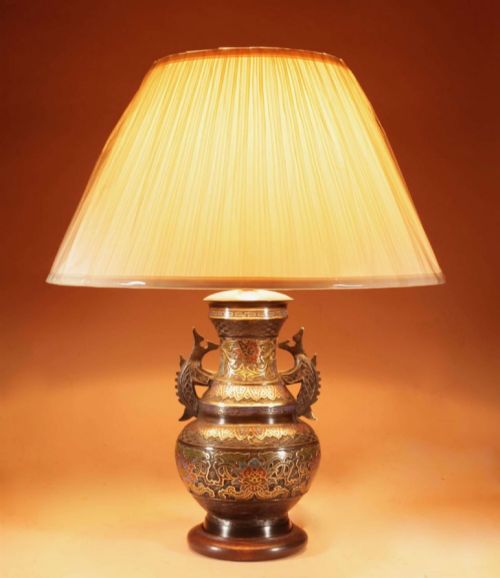
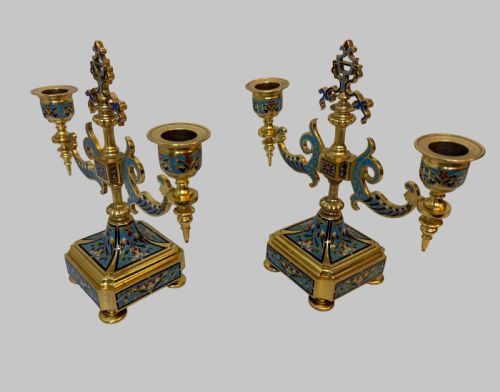
When you search for a brass cloisonne table light, you are looking at items that frequently begin life as earlier vases or candlesticks before being converted into lamps. These pieces originate from the nineteenth century, the Victorian era, and the early twentieth century.
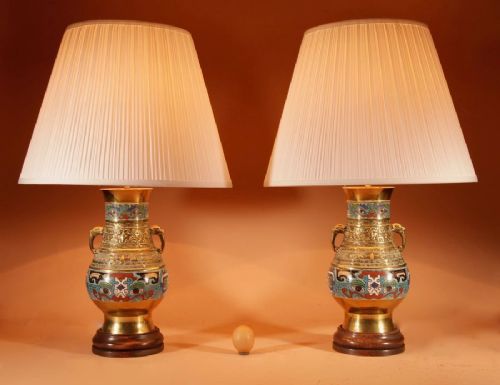
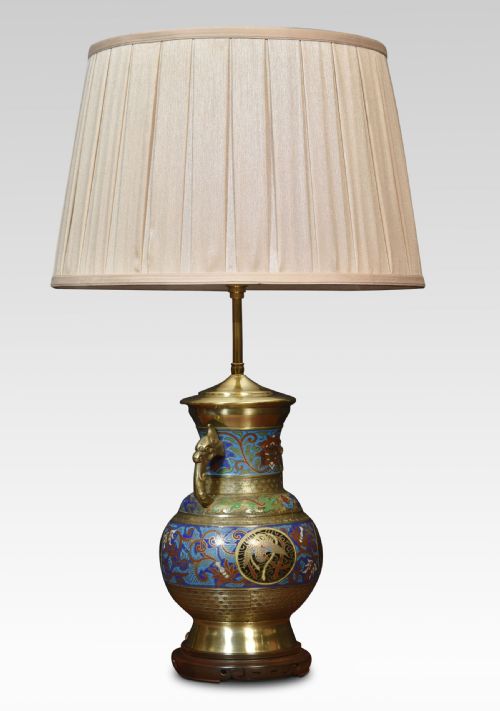
The objects displayed on this page draw upon Japanese Meiji and Chinese export styles, alongside Chinoiserie and nineteenth century French aesthetics. Many examples appear in pairs, utilising bronze, gilt bronze, and copper alongside enamel.
The forms span table lamps, candelabra, and twin handled lamp bases, occasionally incorporating fabric and wood components. They reflect a long history of international trade and decorative adaptation.
How they were made
The construction relies on metalwork foundations of brass, bronze, or copper, shaped into vessels or bases. Artisans then soldered thin metal wires to the surface to create cellular compartments for the design.
These cells were filled with enamel paste before firing and polishing to a smooth finish. Gilt bronze and wood elements were frequently integrated into the final form to support electrical fittings during later conversions.
Listings feature items from the nineteenth century, Victorian era, and the nineteen-tens and twenties, using brass, bronze, and copper.
What varies in quality
Quality rests in the precision of the wirework and the depth of the enamel within the cells. Finer pieces demonstrate strict regularity in the patterns and smooth, well-finished metal surfaces.
The weight of the base and the integrity of the original vessel also dictate the standard of the item. Later conversions vary according to how sympathetically the electrical fittings integrate with the antique body.
The Brass Cloisonne Table Light Glossary
- Cloisonne
- Enamelwork in which thin metal wires form raised barriers to contain coloured pastes before firing. This technique creates detailed patterns across metal surfaces.
- Champleve
- Enamelwork where troughs or cells are hollowed directly into the metal surface rather than formed by soldered wires. This method produces robust decorative panels on bronze and brass.
- Meiji Period
- The era in Japanese history spanning from eighteen sixty-eight to nineteen twelve, known for remarkable metalwork and export ceramics. Pieces from this time often feature intricate fauna and flora.
- Gilt Bronze
- Bronze metal coated with a thin layer of gold to impart a rich sheen. It frequently appears on nineteenth century French and Asian decorative objects.
- Chinoiserie
- European artistic style reflecting Chinese motifs and techniques. It appeared across various decorative arts throughout the eighteenth and nineteenth centuries.
Brass Cloisonne Table Light: Frequently Asked Questions
Are these lamps converted from vases?
Many examples on this page started as traditional vases or candlesticks before receiving electrical wiring. This practice was common during the conversion of antique objects for domestic interior use.
Buyers often find that the vessel retains its original character, with wiring added through the base or top without altering the primary decorative body.
How do I date a brass cloisonne light?
Dating relies on stylistic clues, metal patination, and the characteristics of the enamel work. Pieces span the Victorian period, the nineteenth century, and the early twentieth century.
Examining the manufacturing techniques of the bronze or brass components helps distinguish earlier nineteenth century items from later twentieth century reproductions.
Should I look for pairs?
Pairs appear frequently among these listings, offering symmetrical options for mantelpieces or sideboards. Finding matching antique vessels converted together is common in this category.
Single lamps also feature prominently for smaller spaces or accent lighting where symmetry is not required.
How do I clean the enamel?
Maintenance requires a soft, dry cloth to remove dust from the wire and enamel surfaces. Avoid harsh chemical cleaners that might damage the polished metal or the vitreous paste.
Gentle care preserves the original finish of the brass, bronze, and cloisonne details over time.