

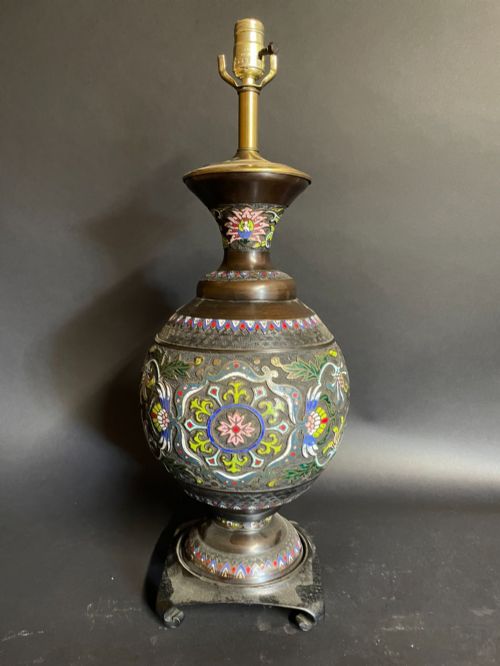


Cloisonne Enamel Lamps
Cloisonne enamel lamps are decorative vessels adapted for modern lighting, offering rich colour and intricate wirework from Chinese and Japanese workshops.
Cloisonne Enamel Lamps
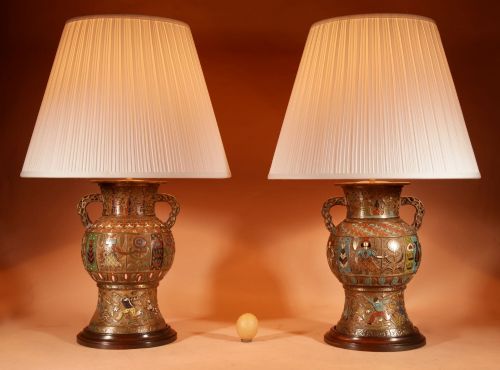
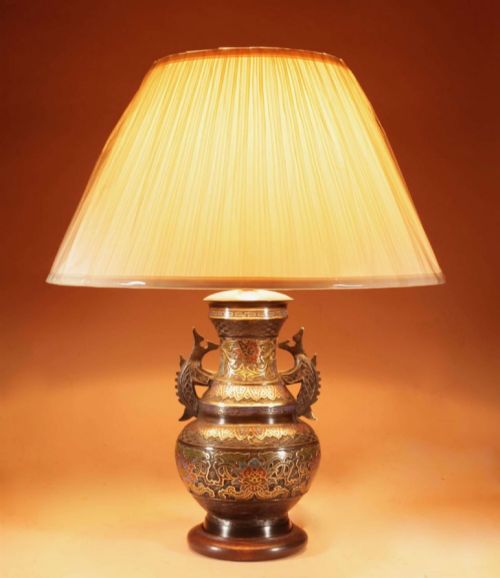
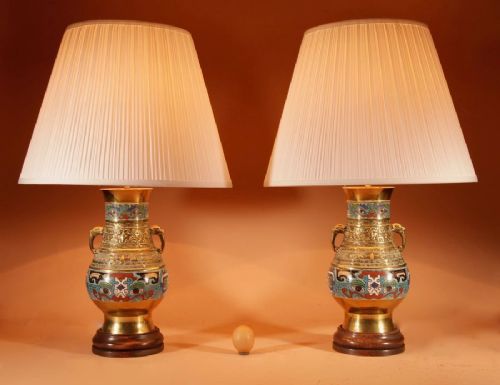
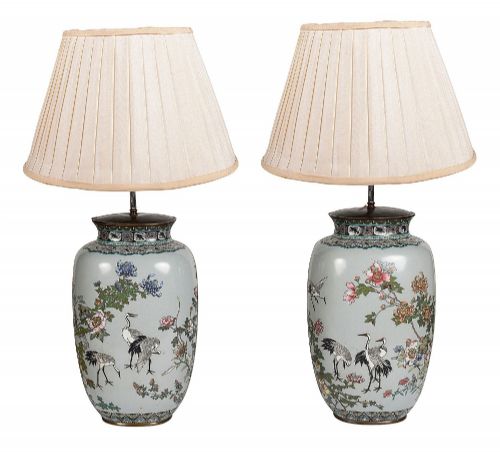
When you search for cloisonne enamel lamps, you find antique vases from Chinese and Japanese traditions that have been converted into table lamps. These pieces originate predominantly from the nineteenth century, including the Victorian period and the Meiji period, alongside early twentieth-century examples.
You will encounter pieces styled in Chinoiserie and Oriental aesthetics, merging Eastern metalwork with functional home lighting. They function primarily as table lights, drawing the eye with patterned metal cells filled with coloured enamel.
Materials and technique
Makers constructed these bodies using metal foundations of brass, bronze, copper, and gilt bronze, often mounting them with ormolu. Artisans soldered thin metal wires onto the surface to form compartments, known as cloisons, which defined the intricate decorative motifs.
These metal cells were subsequently filled with coloured enamel pastes before undergoing high-temperature firing. The cooled surfaces were ground and polished down until the metal wire outlines sat flush with the hardened enamel fields.
Many of these adapted vessels incorporate added fabric components for the lampshades, while the underlying bases retain their original metallic composition and weighted timber supports.
Several heavy bronze bases quietly conceal their past lives as vases, holding up lightbulbs instead of flowers.
What separates the grades
The standard of a piece rests upon the precision of the wirework and the density of the enamel fill. Finer examples display immaculate cell alignment with uniform enamel depth, free from pitting or surface clouding.
The integration of the original vase into a lamp base dictates the overall cohesion of the object. Superior mountings respect the integrity of the antique vessel, using quality brass and bronze hardware that complements the primary metalwork without causing damage.
The Cloisonne Enamel Lamps Glossary
- Cloisonne
- Enamel decoration technique where thin metal wires are soldered to a metal base to create compartments for coloured paste. This defines the patterned surface of the lamp bodies.
- Champleve
- Enamel technique where troughs or cells are hollowed directly into the thick metal surface rather than using soldered wires. It creates robust patterns found on several Japanese bronze lamps.
- Ormolu
- Gilded bronze mounts applied to decorative objects and furniture. These gilded fittings frequently secure the upper and lower sections of converted vases.
- Meiji Period
- Japanese historical era spanning from 1868 to 1912, known for exceptional metalwork and enamel production. Pieces from this era often feature highly detailed flora and fauna motifs.
- Qing Dynasty
- The final imperial dynasty of China, lasting from 1644 to 1912. Many vases adapted into lamps originate from this period.
Cloisonne Enamel Lamps: Frequently Asked Questions
Are these original lamps?
These pieces began life as decorative vases rather than lighting fixtures. Artisans later converted them into table lamps to suit modern interiors.
This adaptation preserves the antique vessel while allowing it to function as a working light source with modern wiring.
How do I date these lamps?
Dating relies on the stylistic markers of the underlying vase, such as Meiji period Japanese motifs or nineteenth-century Chinese export characteristics. The materials, including bronze, brass, and copper, also provide chronological clues.
Sellers often attribute them to broad periods like the Victorian era or the early twentieth century based on manufacturing traits.
Do they come as pairs?
Many listings feature matching pairs of vases converted into lamps, which suit symmetrical placement on side tables or mantelpieces. Single lamp bases also appear in the selection.
Pairs usually share identical dimensions, colour palettes, and wirework patterns from the same workshop.
What is Chinese export ware?
Chinese export refers to objects manufactured in China specifically for Western markets during the nineteenth and early twentieth centuries. These pieces often blend traditional Eastern techniques with Western aesthetic preferences.
They frequently display decorative schemes intended to appeal to European and American collectors of the period.