



Vintage Cloisonne Lamps
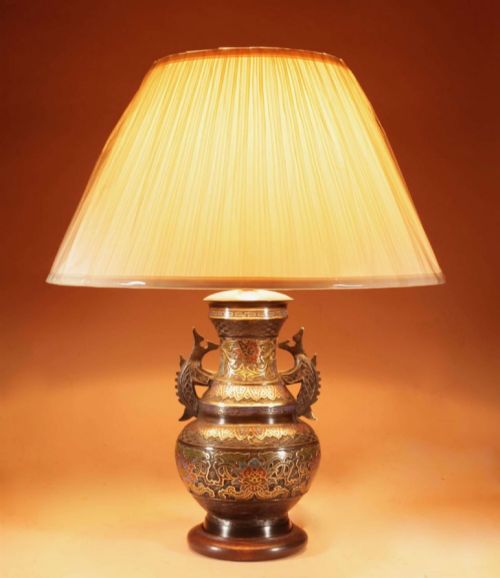
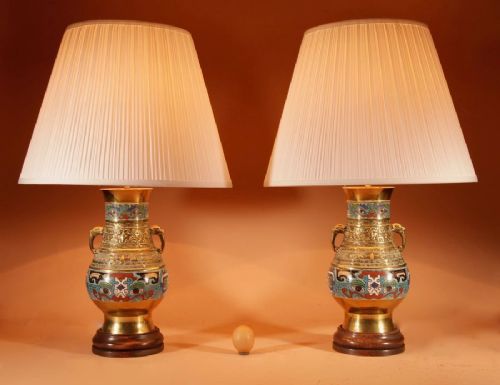
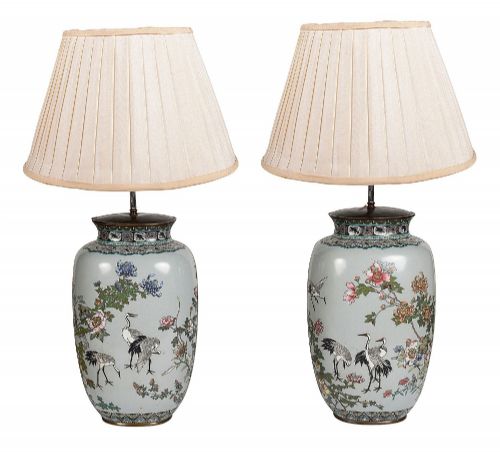
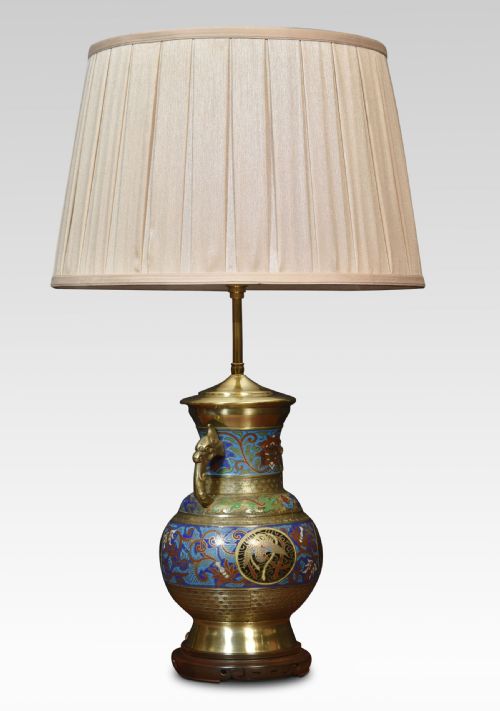
These vintage cloisonne lamps bring glowing enamel and intricate wirework into a room, offering both bold colour and tactile historical craft.
Vintage Cloisonne Lamps
When you search for vintage cloisonne lamps, you encounter table lamps fashioned from vases and vessel bases created in China and Japan. These pieces span the nineteenth century, the Victorian era, and the early decades of the twentieth century.
Formats vary from twin-handled lamp bases to slender enamel vases mounted with ormolu or brass fittings. They sit comfortably on side tables, bringing a distinct oriental style to domestic interiors.
How they were made
Makers formed these lamps by soldering thin metal wires, known as cloisons, onto copper, bronze, brass, or gilt bronze foundations. These wires created raised compartments on the vessel surface that mapped out the decorative motifs.
Artisans then filled each individual cell with enamel paste before firing the piece in a kiln to fuse the vitreous colours. Subsequent grinding and polishing revealed the metallic wire outlines alongside the smooth coloured enamel fields.
Some nineteenth-century makers concealed their intricate wirework beneath such smooth enamel polishes that fingers glide across the surface without catching a single edge.
What varies in quality
Quality rests in the precision of the wirework and the depth of the enamel fields. Finer pieces display crisp, uniform cell partitions and rich, evenly fired enamel colours without pitting or cloudiness.
The mounting and metalwork also dictate the grade of the piece, with heavier bronze or ormolu mounts indicating superior craftsmanship compared to simpler brass or wooden fittings.
The Vintage Cloisonne Lamps Glossary
- Cloisonne enamel
- A decorative metalwork technique where enamel paste is fired inside compartments formed by soldered wires. This method creates detailed patterns defined by thin metallic lines.
- Champleve
- An enamelling method where troughs or cells are carved directly into the metal surface rather than using soldered wires. It results in bold, recessed designs filled with coloured vitreous paste.
- Ormolu
- Gilded bronze mounts applied to decorative objects and lamp bases. This decorative metal finish adds weight and ornate detailing to the composition.
- Chinese Export
- Goods manufactured in China specifically for Western markets during the nineteenth and early twentieth centuries. These items combined traditional domestic craftsmanship with European functional requirements.
Vintage Cloisonne Lamps: Frequently Asked Questions
Are these lamps converted from old vases?
Many vintage cloisonne lamps began life as decorative vases before receiving electrical fittings and bases during later decades. This adaptation preserved fine oriental enamel work by giving it a functional role in modern rooms.
Buyers often encounter pieces mounted with ormolu, brass, or wood to accommodate modern wiring while keeping the original vessel intact.
How do I style a cloisonne lamp?
These lamps work best on heavy wooden side tables or chests where their intricate enamel patterns can catch the light. Their rich colours pair effectively with neutral walls and traditional interiors.
Because the bodies feature complex floral or geometric motifs, simple fabric shades often provide the best visual balance.
How do I tell Chinese from Japanese pieces?
Chinese cloisonne often utilises heavy bronze or copper foundations with deep, saturated enamel colours and traditional motifs. Japanese Meiji period pieces frequently display exceptional technical precision in thinner wirework and distinct naturalistic subjects.
Examining the metal base and the style of the wire outlines usually clarifies the origin of the lamp.
What periods do these lamps date from?
The selection spans the nineteenth century, including Victorian examples, alongside pieces from the nineteen tens and nineteen twenties. This encompasses late Qing Dynasty production in China and Meiji period output in Japan.
Earlier nineteenth-century pieces often feature heavier bronze casting and deeper tones.