

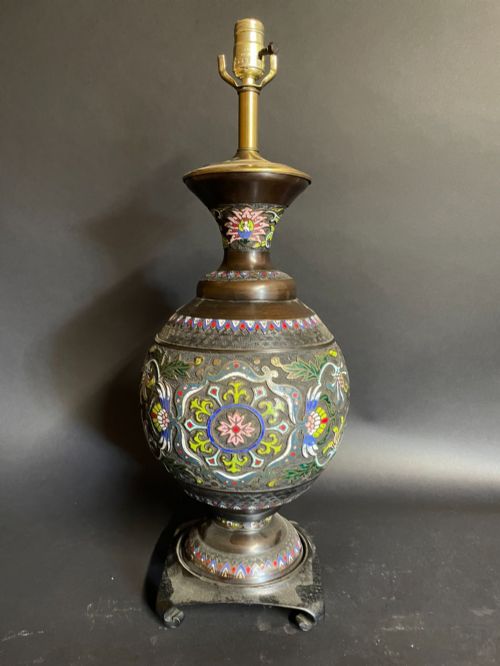


Cloisonne Table Lamps
Cloisonne table lamps bring vibrant colour and intricate metalwork into a room, offering a distinct focal point through fused enamel and wired designs.
Cloisonne Table Lamps
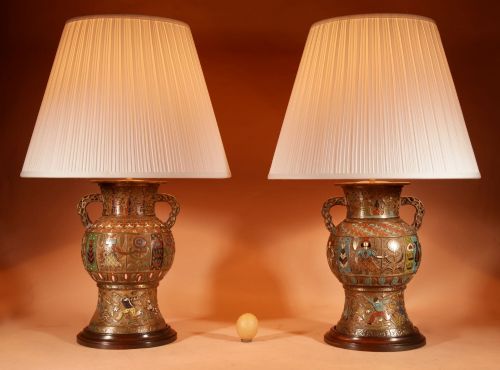
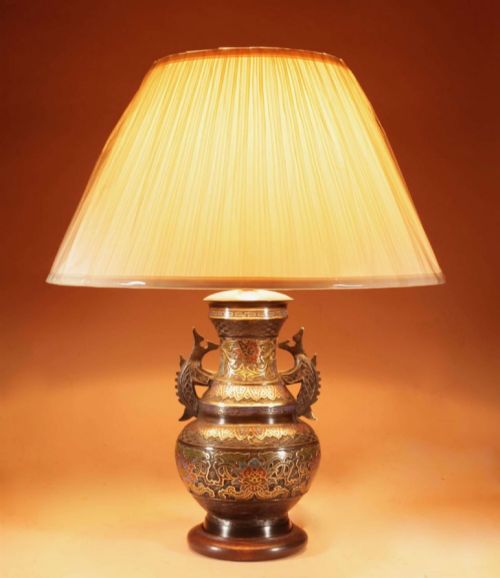
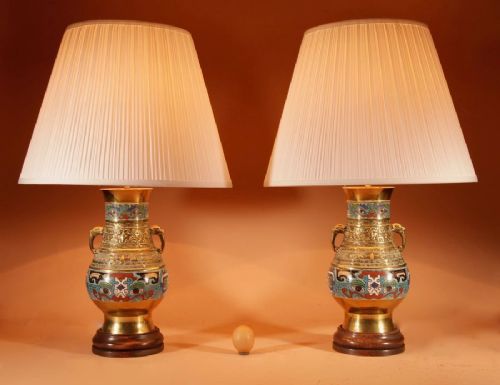
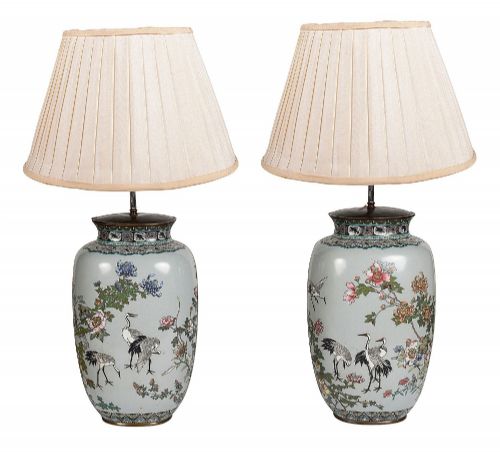
When you search for cloisonne table lamps, you are looking at decorative lighting formed from converted vases or dedicated lamp bases featuring patterned metal cells filled with coloured enamel. The pieces on this page span the nineteenth century and the early twentieth century, taking the form of single lamps and matched pairs.
Originating predominantly from China and Japan, these lamps reflect distinct regional aesthetics such as the Meiji period, Chinese Export, and Qing Dynasty styles. Buyers meet pieces made from altered antique vessels alongside bases designed specifically for lighting, paired with fabric shades.
The visual vocabulary ranges from traditional floral motifs to Chinoiserie and Egyptian interest themes. Most examples utilise bronze, brass, or copper as the primary body, mounted with electrical fittings for modern use.
How they were made
The manufacture of these lamps relies on soldering thin flat metal wires, known as cloisons, onto a metal base of bronze, brass, or copper to form intricate compartments. Artisans then fill these partitioned areas with vitreous enamel paste before firing the piece at high temperatures to vitrify the glass.
Once fired, the surface is ground down and polished until the metal wires and coloured enamel fields sit in a smooth, unified plane. Many nineteenth-century and early twentieth-century examples incorporate ormolu mounts or gilt bronze elements to frame the enamelled body.
Wiring and electrical conversion happen long after the original vessel is made, often turning antique vases into functional table lights. Fabric shades complete the construction, mounted securely to the top fittings.
Several items combine Japanese metalwork with nineteenth-century European lighting conversions, creating unexpected cross-cultural desk companions.
What varies in quality
The fineness of the wirework determines much of the visual clarity, where thinner and more uniform cloisons demand greater skill from the artisan. Irregular enamel shrinkage or pitting during the firing process separates standard production from exceptional examples.
The choice of base metal and the weight of the bronze or brass structure influence the stability and tactile feel of the lamp. Ormolu mounts and gilt detailing add a layer of refinement that elevates the presence of the piece in a room.
The integrity of the conversion from a vase to a lamp base affects the overall composition. Sympathetic mounting preserves the balance of the original vessel without compromising the enamel body.
The Cloisonne Table Lamps Glossary
- Cloisonne
- An enamelwork technique where metal wire creates raised barriers to hold coloured pastes before firing. This method produces detailed geometric and pictorial patterns across the surface.
- Champleve
- A technique where troughs or cells are carved directly into a thick metal plate and filled with enamel. It differs from wire-based cloisonne by having a heavier, more recessed metal framework.
- Meiji Period
- The era in Japanese history spanning from 1868 to 1912, known for significant export of decorative arts. Pieces from this time often exhibit exceptional metalwork and enamel precision.
- Ormolu
- Gilt bronze applied as a decorative mount or foot to elevate an object. This French term describes the rich golden finish used on many nineteenth-century luxury goods.
- Chinoiserie
- A European stylistic tradition reflecting Chinese artistic influences. It appears in the decorative motifs chosen for various nineteenth-century vases and lamps.
Cloisonne Table Lamps: Frequently Asked Questions
Are these original antique vases?
Many lamps on this page began life as nineteenth-century or early twentieth-century Chinese and Japanese vases before being converted into lighting.
This conversion process typically involves adding a weighted base and electrical fittings while retaining the original enamelled body.
How do I clean a cloisonne lamp?
Dust the surface gently with a soft, dry cloth to protect the delicate enamel and metal wires.
Avoid using harsh chemical polishes or water on the enamel and brass components to preserve the finish.
What styles are common in these lamps?
The selection includes Japanese Meiji period works, Chinese Export pieces, and Qing Dynasty designs.
Motifs often draw on traditional floral patterns, Chinoiserie aesthetics, and occasional Egyptian interest themes.
Do they come in pairs?
A significant number of listings feature matched pairs of lamps, particularly from the nineteenth century.
Single lamp bases also appear, offering options for smaller spaces or accent lighting.
What metals are used underneath the enamel?
The underlying structures are typically formed from bronze, brass, or copper.
Some examples also incorporate gilt bronze or ormolu mounts for added stability and decoration.