



Traditional Chinese Metalwork
Traditional chinese metalwork brings ancient craftsmanship into your home through enduring bronze, brass, and enamel forms.
Traditional Chinese Metalwork
Traditional chinese metalwork encompasses domestic vessels, decorative figures, and ritual objects spanning the nineteenth and twentieth centuries. These pieces reflect historical design traditions ranging from archaic ritual forms to intricate Qing dynasty styles.
Vases, statues, and teapots dominate the available selection, often incorporating vibrant cloisonné enamel or cast bronze construction. Buyers most frequently encounter decorative vases and sculptural figures featuring traditional motifs from Beijing and wider East Asian workshops.
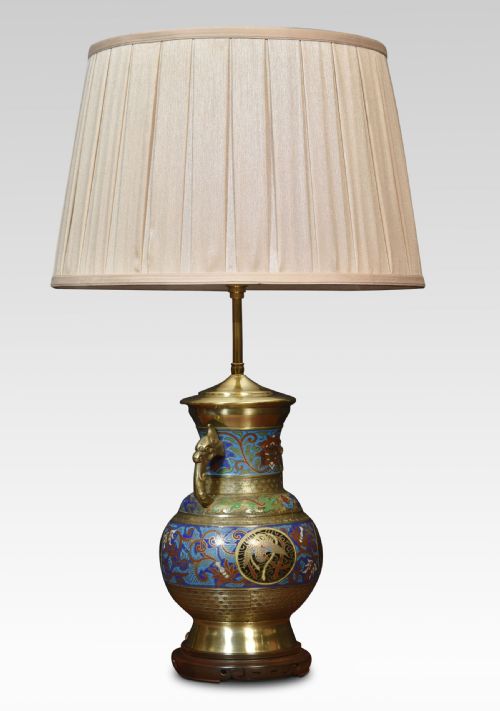
The objects serve primarily as decorative accents or functional vessels, utilising wood bases and detailed metalwork to create distinct visual focal points. Each piece demonstrates the enduring technical skill passed down through generations of artisans.
How traditional chinese metalwork was made
Artisans utilised cast bronze and copper alloy techniques to form the structural bodies of ritual vessels, figures, and musical triangles. Molten metal poured into moulds created the heavy foundational shapes required for both domestic and ceremonial objects.
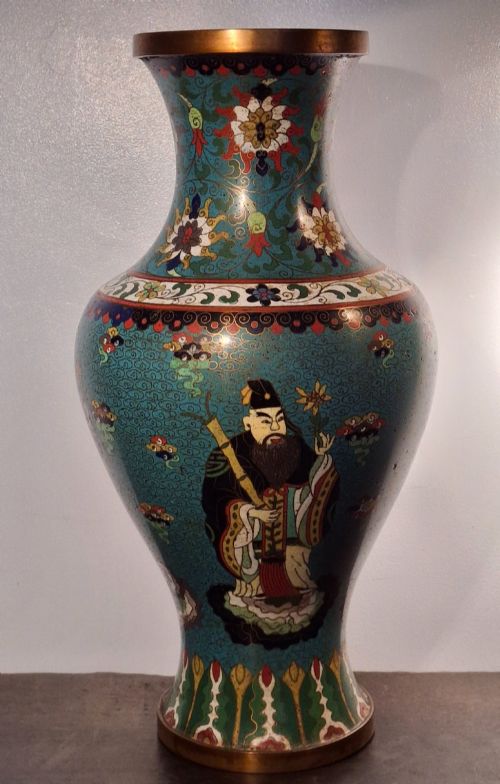
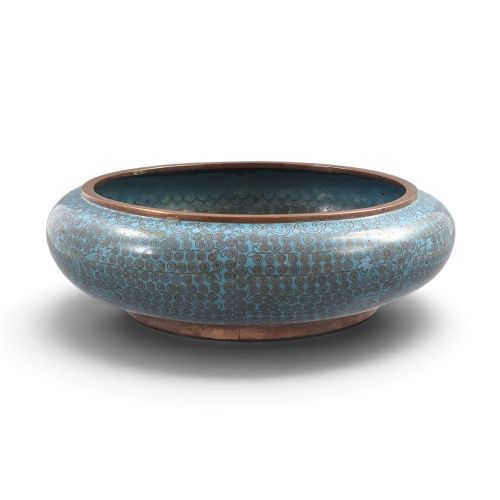
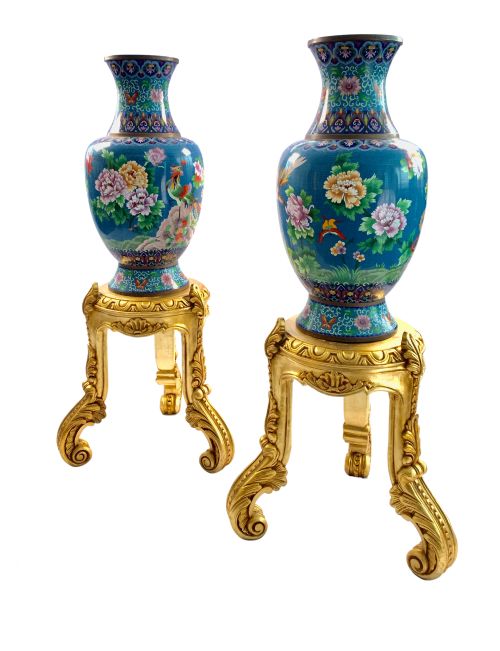
Cloisonné enamel pieces required intricate wirework soldered onto a metal base to form compartments, which were then filled with coloured enamel paste and fired. This labour-intensive process produced the vibrant surfaces seen on scholar's brush washers, vases, and teapots.
A pair of decorative quails demonstrates the unexpected animal forms artisans chose to render in vibrant cloisonné enamel.
What varies in quality
The precision of the wirework and the depth of the enamel application distinguish finer examples of cloisonné from standard production. Superior pieces display smooth, evenly fired surfaces with tightly controlled colour boundaries within the metal cells.
The Traditional Chinese Metalwork Glossary
- Cloisonne enamel
- A metalwork technique where thin wire is soldered to a base to create cells filled with enamel paste. This method produces richly coloured decorative surfaces on vases and vessels.
- Bronze ritual tripod
- An ancient vessel form recreated in later periods for ceremonial use, featuring three supporting legs. These pieces draw upon archaic Chinese design traditions.
- Scholar's brush washer
- A small vessel designed for cleaning calligraphy brushes in traditional studies. They appear in materials like cloisonné enamel and bronze.
- Copper alloy
- A mixture of copper combined with other metals such as tin or zinc to create durable bronze and brass objects. It provides the structural strength for cast sculptures and vessels.
Traditional Chinese Metalwork: Frequently Asked Questions
What is traditional chinese metalwork?
Traditional chinese metalwork comprises decorative and ritual objects made from bronze, brass, copper, and cloisonné enamel during the nineteenth and twentieth centuries.
These pieces include vases, figures, teapots, and ritual vessels that reflect historical Chinese artistic styles and manufacturing techniques.
How were cloisonne vessels used?
Cloisonné vessels served as decorative ornaments, scholar's desk items, and functional containers within traditional households.
Items such as brush washers, teapots, and vases combined utility with intricate artistry to display wealth and refined taste.
How do I date these metal objects?
Dating relies on stylistic markers, manufacturing methods, and material composition associated with specific periods like the nineteenth century or the Republic era.
Examining the type of bronze casting, enamel colours, and decorative motifs helps place an object within its historical timeframe.
How should I clean bronze and enamel?
Bronze and enamel pieces require gentle dusting with a soft, dry cloth to preserve their surface patinas and delicate wirework.
Avoiding harsh chemical cleaners and excessive moisture protects the historical integrity and coloured enamel surfaces from damage.