
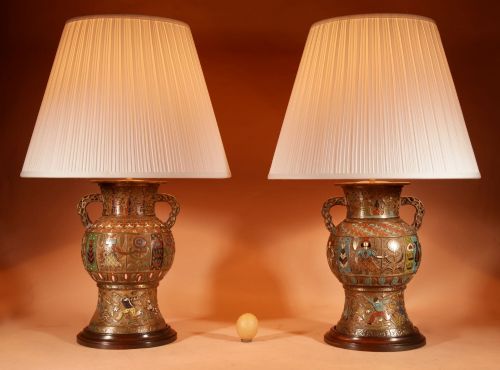


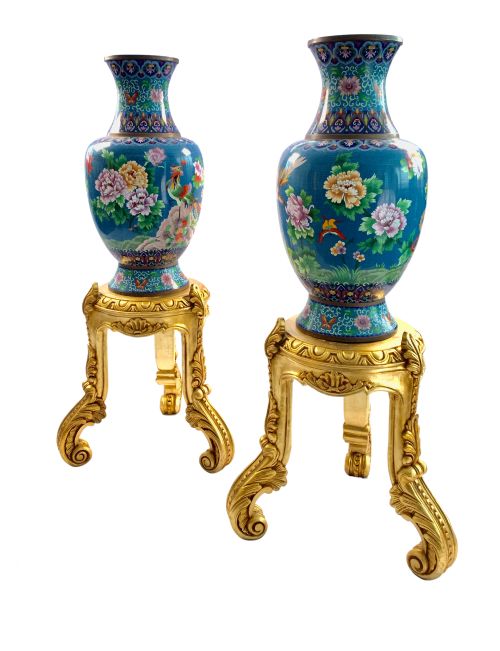
Large Cloisonne Urn
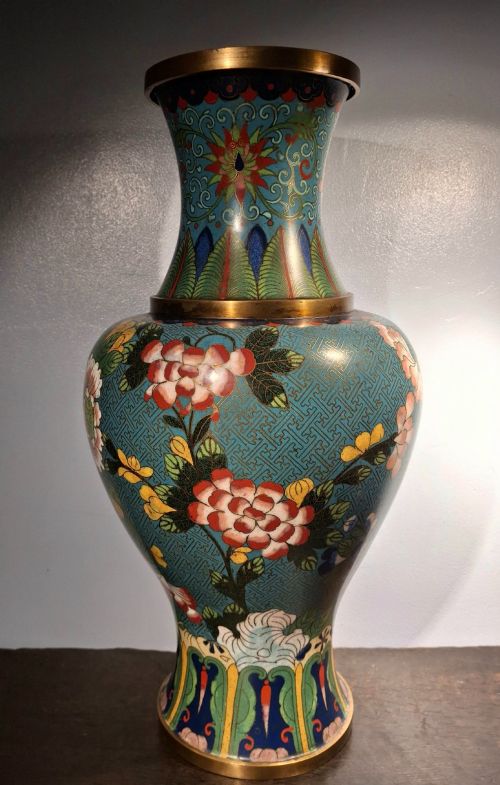
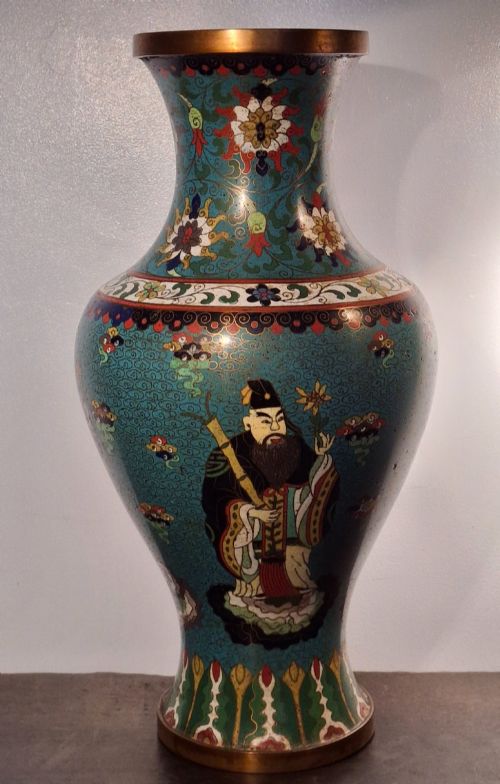
A large cloisonne urn brings weight, colour and intricate metalwork into a room.
Large Cloisonne Urn
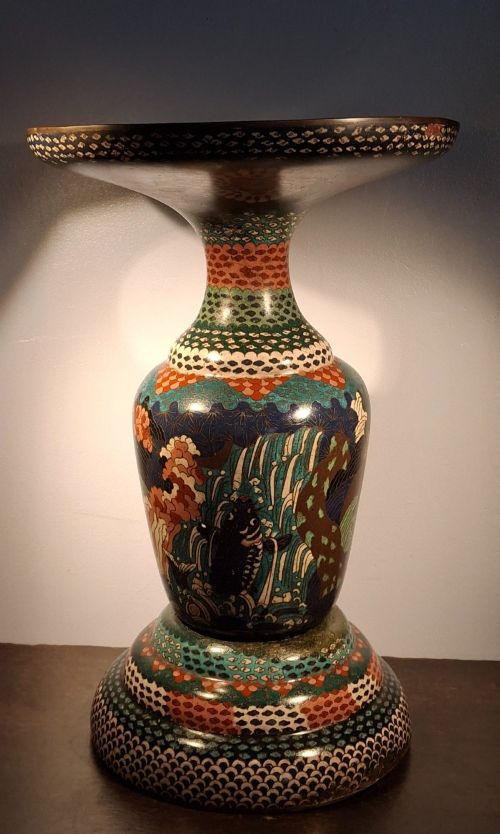
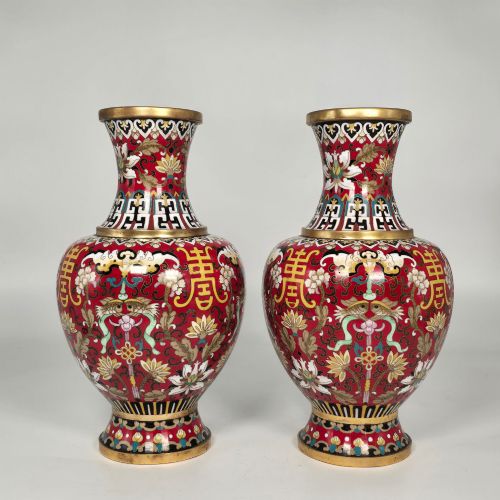
A large cloisonne urn represents substantial decorative vessels produced across periods spanning the nineteenth and twentieth centuries. These pieces encompass massive palace vases, temple water dispensers, jardinieres and lidded vessels originating from Chinese and Japanese workshops.
The objects appearing here showcase traditional motifs such as leaping koi, dragons, phoenixes, scholars and floral arrangements. Buyers encounter both single impressive statement pieces and matched pairs that command attention in an interior space.
Originating from traditions including the Qing Dynasty, Meiji period and Edo period, these large cloisonne urn items bridge decorative art and functional vessel forms. They serve primarily as focal display objects due to their scale and elaborate surface decoration.
How they were made
The construction of a large cloisonne urn relies on a metal body formed from copper, brass or bronze. Artisans solder thin metal wire, known as cloisons, onto this foundation to create intricate cellular compartments that outline the design.
Workers fill these wire compartments with coloured enamel paste before firing the piece in a kiln. Repeated firings and polishings build up the enamel surface until it sits level with the metal wire framework, resulting in a smooth, gleaming finish.
What varies in quality
The calibre of a large cloisonne urn rests upon the precision of its wirework and the depth of the enamel filling. Finer examples display immaculate cell boundaries and complex pictorial narratives without surface irregularity.
Substantial weight from the bronze, copper or brass armature contributes to a sturdier piece. The complexity of the imagery, such as multi-layered aquatic scenes or mythical creatures, separates standard production wares from superior artistic achievements.
The Large Cloisonne Urn Glossary
- Cloisonne Enamel
- A metalwork technique where fine wires form compartments filled with coloured glass paste and fired. This method creates the characteristic cellular patterned surface seen on the vessels.
- Champleve
- An enamelling technique where troughs or cells are carved directly into the bronze or metal surface to hold the enamel. It differs from soldered wire cloisonne by incorporating the base metal more heavily into the linear design.
- Jardiniere
- A large ornamental pot or container designed to hold plants or flowers. These vessels often match the decorative scheme of related urns and palace vases.
- Edo Period
- A historical division of Japanese history lasting from sixteen hundred and three to eighteen hundred and sixty-eight. Pieces from this era demonstrate early foundational styles for later decorative exports.
Large Cloisonne Urn: Frequently Asked Questions
Where should I place a large cloisonne urn?
These substantial vessels require a stable surface such as a heavy console table, a dedicated stand or a floor position away from high-traffic areas.
Allow the piece enough space so the coloured enamel work and metallic details remain visible from multiple angles in the room.
How do I clean a cloisonne urn?
Dust the surface gently using a soft, dry cloth to prevent accumulation within the wire crevices.
Avoid abrasive cleaners or chemical polishes that might damage the delicate metal wires and vitreous enamel body.
What is the difference between Chinese and Japanese cloisonne?
Chinese pieces often utilise heavy bronze or brass bodies with robust floral and pictorial motifs associated with imperial dynasties.
Japanese examples from periods such as Meiji frequently employ finer wirework and distinct naturalistic themes including koi and phoenixes.
Can these urns hold water?
While forms like temple water dispensers and jardinieres were originally built to hold liquids, antique vessels should be treated with caution.
Thermal shock or prolonged moisture contact can affect the old metal armature and internal seals, so using them for dry display is safer.