


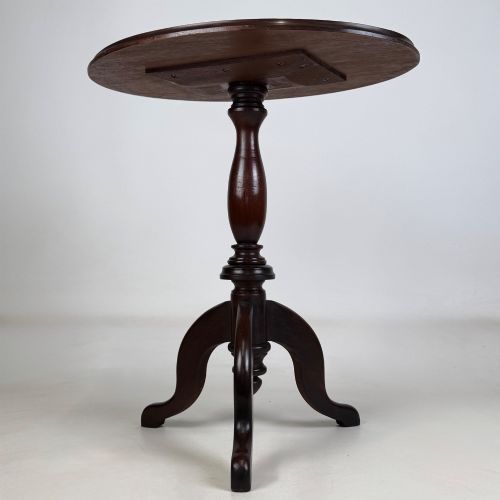
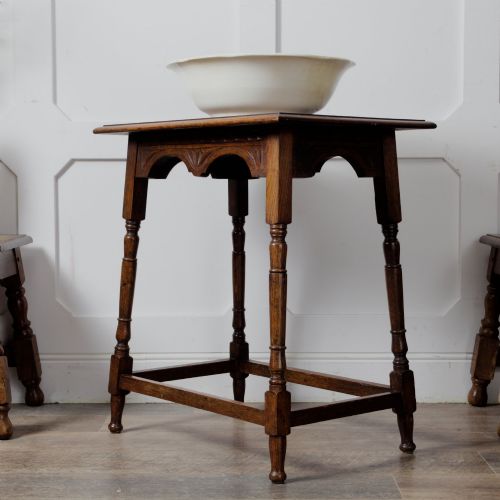
Turned Wood Occasional Table
A turned wood occasional table brings compact utility and traditional craft to a room, offering a portable surface shaped by the lathe.
Turned Wood Occasional Table
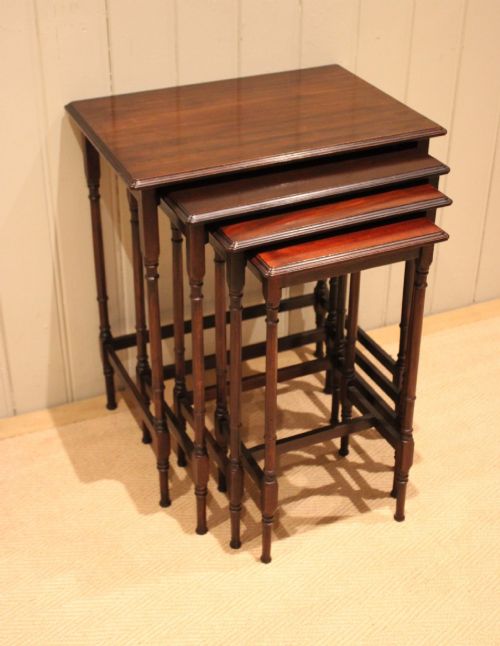
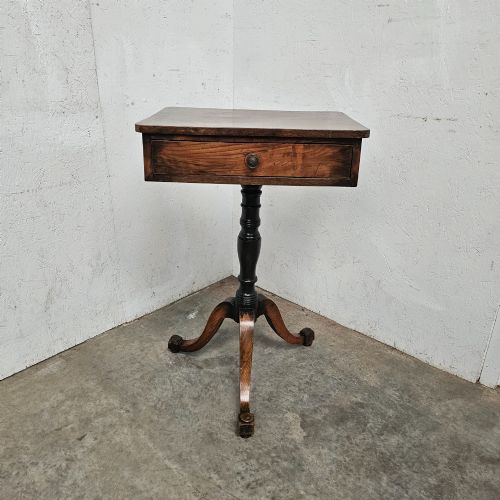
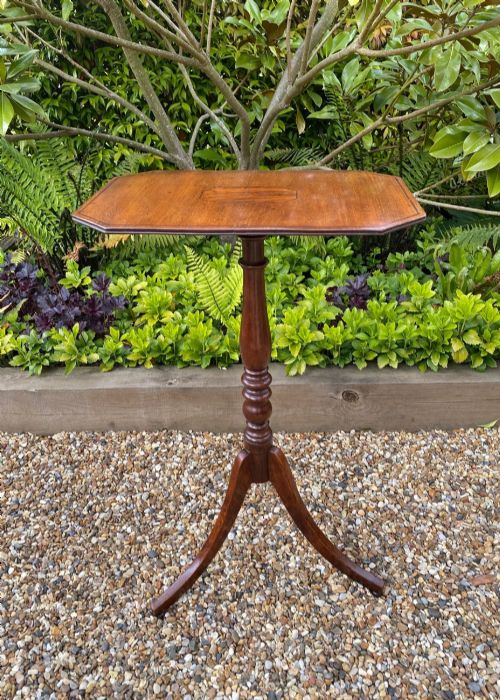
A turned wood occasional table serves as a versatile small surface, appearing across inventory in forms such as wine tables, side tables, nests of tables, and tripod tables. These pieces emerge from periods spanning the seventeenth century through to the Edwardian era and the 1920s.
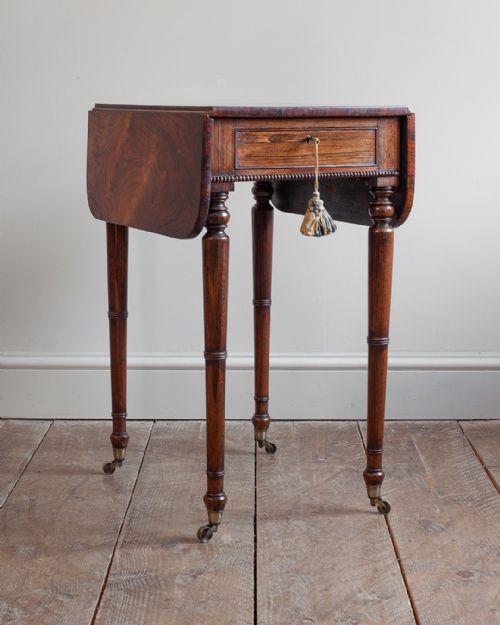
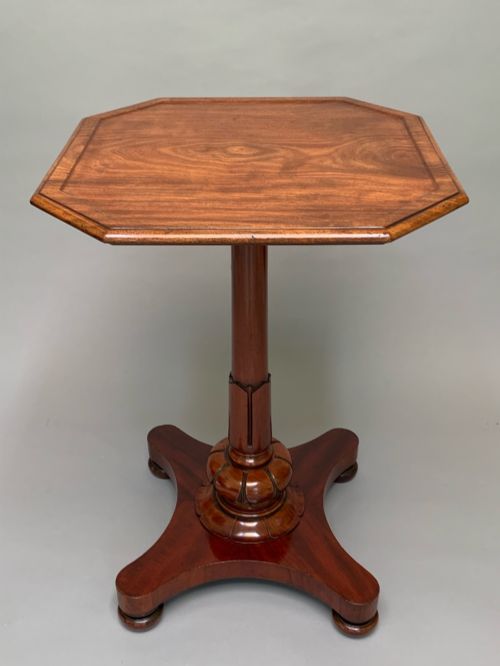
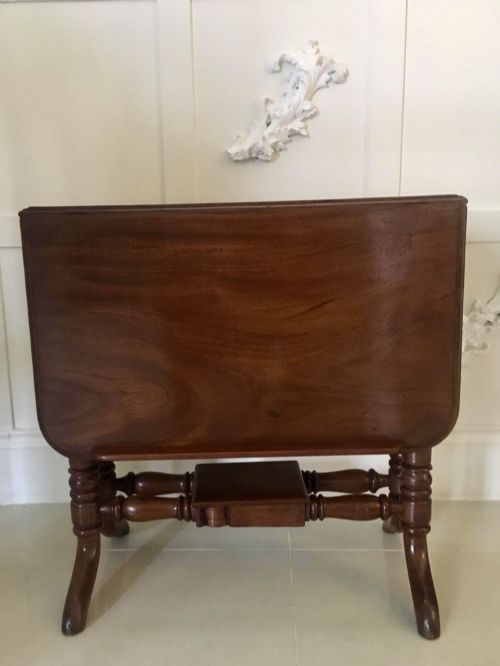
The selection ranges from Georgian spider leg lamp tables and cricket tables to Victorian tilt-top tables and Edwardian drop-leaf side tables with bamboo-turned legs. Buyers searching this phrase most frequently encounter compact mahogany, oak, or walnut examples designed for flexible placement beside seating.
Materials and construction methods
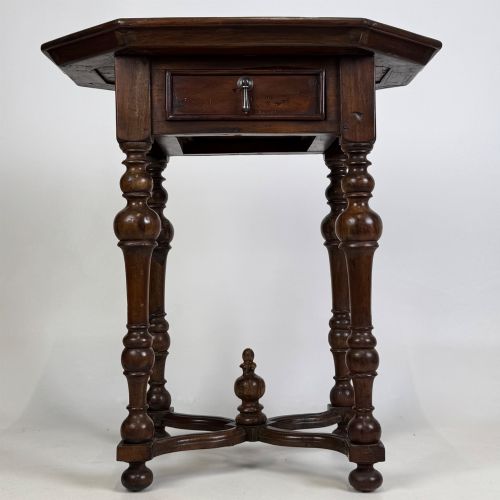
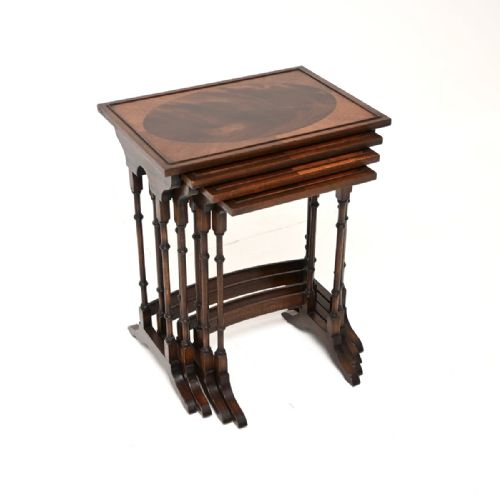
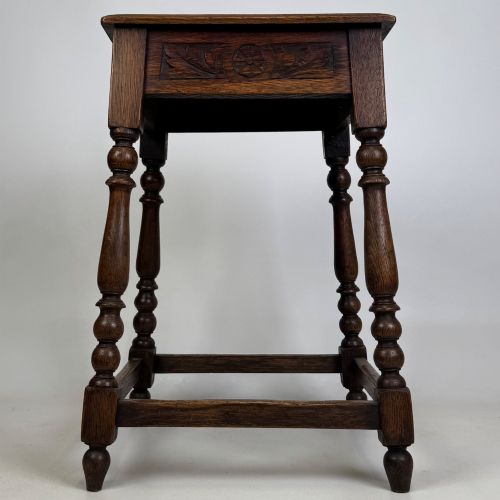
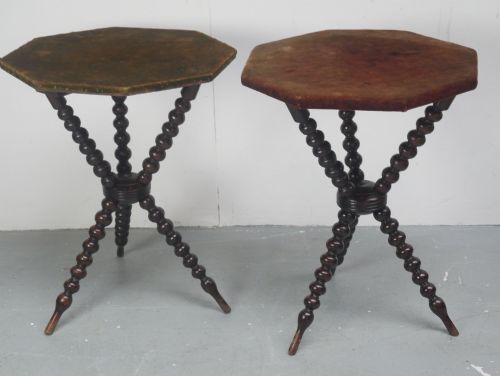
Cabinet makers built these tables using hardwoods such as mahogany, oak, walnut, rosewood, elm, and yew wood, sometimes applying veneer or incorporating brass elements. Structural components frequently relied on solid timber turned on a lathe to create bobbin-turned, ring-turned, or bamboo-turned supports and legs.
Joinery methods varied according to the period and form, utilising tripod bases, pedestals, and drop-leaf mechanisms. Tables like Sutherland tables and nests of tables demonstrated precise carpentry to achieve folding or nesting capabilities within modest proportions.
Simulated bamboo turnings and antique velvet let Victorians bring exotic jungle aesthetics directly into their modest parlours.
Distinctions in quality and execution
Quality reveals itself in the crispness of the lathe work and the selection of timber, where burr walnut or figured mahogany shows superior material choice. The integration of turnings with stable tripod or pedestal bases dictates the structural integrity of the piece.
Refinement in proportion and subtle decorative details, such as inlay work or well-carved edges, separate standard utilitarian tables from finer examples produced in the Georgian or Edwardian periods.
The Turned Wood Occasional Table Glossary
- Turned wood
- Wood shaped on a lathe to create symmetrical cylindrical or spindle-like profiles. This technique forms the structural legs and supports of the tables.
- Tilt-top table
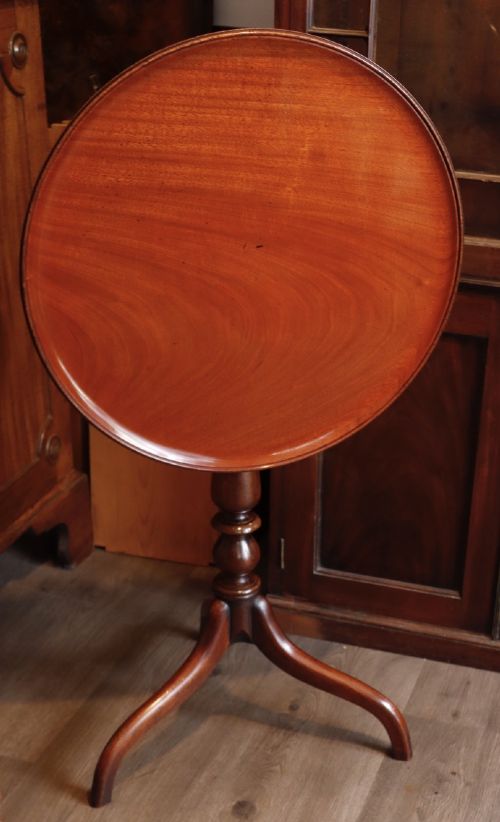
- A table with a hinged top that pivots to a vertical position when not in use. This design allowed tables to be stored flat against a wall.
- Tripod table
- A small freestanding table supported by a pillar above three legs. The three-legged design ensured stability on uneven historical floors.
- Spider leg table
- A small table featuring exceptionally slender turned legs. These delicate supports provide stability while maintaining a visually light frame.
Turned Wood Occasional Table: Frequently Asked Questions
What is an occasional table?
An occasional table is a small, movable piece designed to serve a specific function when needed. These tables include wine tables, lamp tables, and side tables.
Historically, they were moved around a room to hold drinks, books, or candles. Their portability remains central to how people live with them today.
How do I use a tripod table?
A tripod table functions well beside a chair or sofa as a compact surface for lamps or small decorative items. Many examples feature tilt mechanisms for easy storage.
Their small footprint allows them to fit into corners and tight spaces where larger furniture cannot go.
What is a nest of tables?
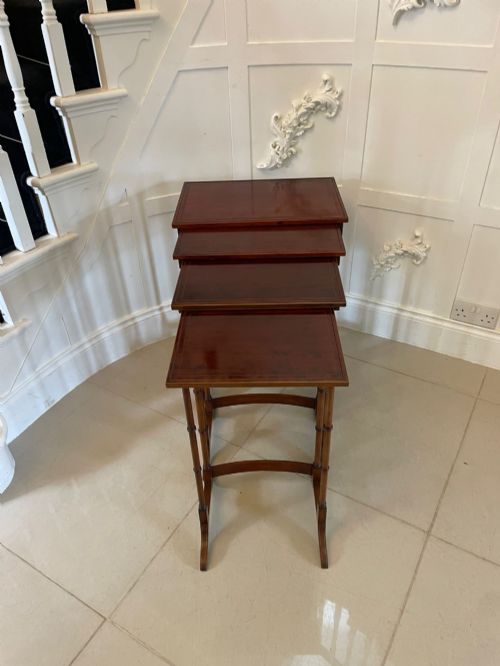
A nest of tables consists of a set of graduated tables designed to slide one beneath another. This grouping saves floor space while providing multiple surfaces.
They appear frequently in Edwardian and later periods, offering practical utility for hosting.
How can I tell the period of a table?
Dating relies on observing timber choices, turning styles, and construction techniques. For example, seventeenth-century pieces often feature heavy oak and bobbin turnings.
Later Victorian and Edwardian examples utilise mahogany or walnut with lighter proportions and machine-assisted turning.