



Antique Velvet Occasional Table
An antique velvet occasional table brings rich textile top surfaces and compact form together, offering a striking display surface for any room.
Antique Velvet Occasional Table
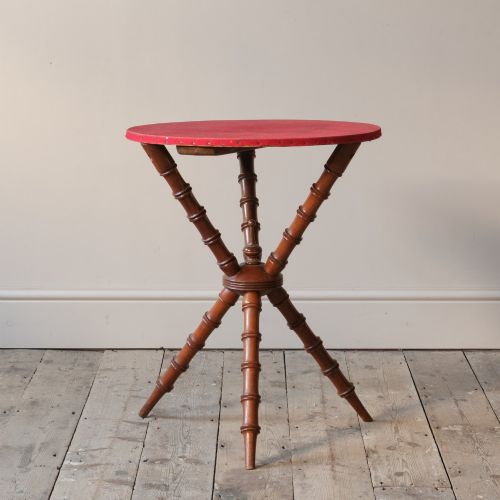
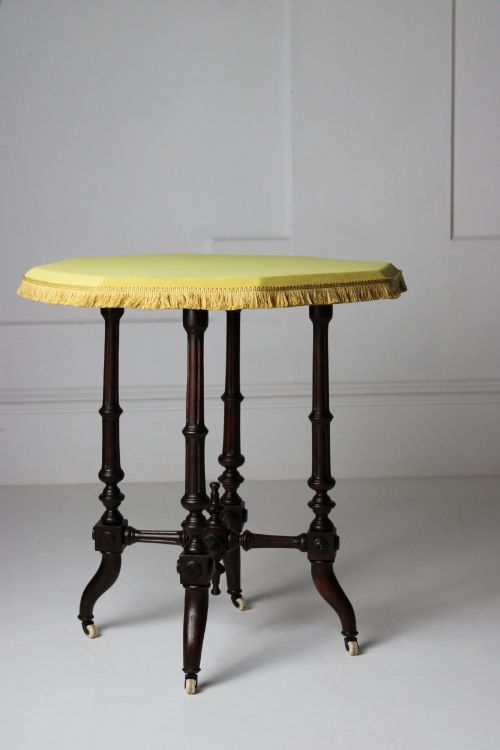
An antique velvet occasional table is a compact stand designed for display and convenience, appearing frequently in Victorian forms. These smaller tables serve as movable display surfaces rather than heavy dining furniture, often taking the shape of gipsy tables, kidney tables, or small side tables. The selection ranges across the nineteenth century, capturing periods from eighteen sixty to eighteen ninety with distinct aesthetic influences.
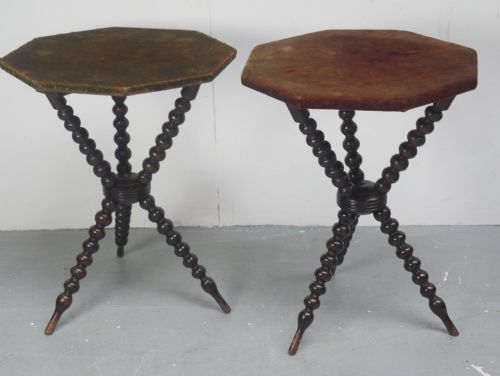
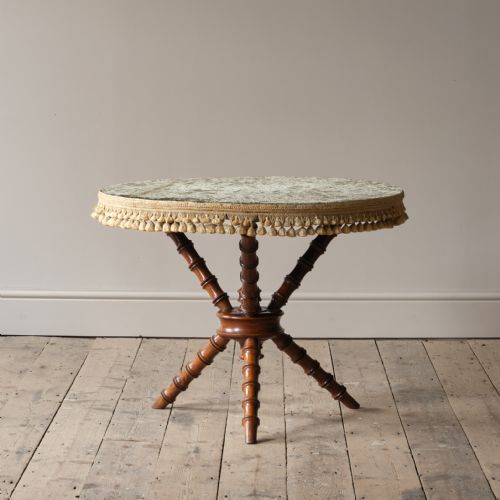
Makers of the period utilised various formats, including simulated bamboo and bobbin-turned supports, alongside French Louis XVI style influences and Scottish craftsmanship. Forms vary from simple three-legged gipsy structures to ebonised kidney tables and glazed bijouterie cabinets, each integrating textile surfaces. Buyers encounter pieces associated with specific regional makers, such as John Taylor of Edinburgh, alongside broader Victorian examples.
How they were made
Construction relies upon traditional timber frames fashioned from walnut, mahogany, hardwood, and turned wood, sometimes ebonised or given a simulated bamboo finish. These structural bases provide lightweight support for the inset or draped textile surfaces above. Cabinet makers applied gilding to select turned components, enhancing the decorative character of the framework.
The defining textile element involves velvet tops, frequently ornamented with passementerie and tassels along the edges. Fabric selection ranges from red velvet to rich tones that complement the underlying wood. Workshops combined traditional joinery with textile upholstery techniques to create these portable display pieces.
Antique Velvet Occasional Table Retail Price Guide 2026
Typical asking prices for velvet occasional table among the pieces listed under this phrase on Sellingantiques today, from the lower quarter to the upper quarter. They describe what is for sale here now, not the wider market.
Listings feature nineteenth-century pieces from eighteen sixty to eighteen ninety, incorporating velvet, brass, mahogany, walnut, and turned wood.
What varies in quality
The standard of timber framing sets one piece apart from another, distinguishing simple turned supports from finely carved or ebonised structures. Execution of detail, such as simulated bamboo or gilt work, dictates the visual refinement of the frame. The sophistication of the overall silhouette, whether a kidney shape or a traditional gipsy stand, influences the piece's presence.
Condition and originality of the textile top govern the character of the table. Intact velvet surfaces complete with original passementerie and tassels represent a higher degree of preservation than altered coverings. The harmony between the fabric and the underlying wood determines the overall success of the design.
John Taylor Edinburgh
The Antique Velvet Occasional Table Glossary
- Gipsy Table
- A small, portable three-legged table with a draped fabric top. This form gained popularity during the Victorian era for casual entertaining and display.
- Passementerie
- Ornamental trim comprising braids, cords, threads, or tassels. This technique edges the velvet tops of many occasional tables.
- Bijouterie Cabinet
- A glass-topped display table or cabinet designed for small valuables and curiosities. These pieces often incorporate rich woodwork and textile linings.
- Ebonised
- Wood treated to imitate ebony through staining or painting dark. Makers applied this finish extensively during the Aesthetic Movement.
- Bobbin-turned
- Timber shaped on a lathe to resemble a string of bobbins or spools. This decorative turning style appears frequently on nineteenth-century table legs.
Antique Velvet Occasional Table: Frequently Asked Questions
How were gipsy tables used?
Gipsy tables served as lightweight, movable stands for displaying ornaments, books, or tea services in Victorian drawing rooms. Their portable nature allowed owners to reposition them easily around a room.
The draped fabric top and fringed edges added warmth and colour to domestic interiors.
How do I identify Aesthetic Movement tables?
Aesthetic Movement tables often feature ebonised wood finishes, simple yet refined silhouettes, and rich velvet tops with tassels. They reflect a design philosophy focused on artistic visual appeal.
Makers working in this style moved away from heavy Victorian ornamentation towards cleaner, more considered forms.
How do I care for antique velvet?
Protect antique velvet surfaces from direct sunlight to prevent fading of the pile and colour. Gentle brushing helps maintain the nap without damaging the historical fabric.
Avoid placing damp items directly onto the textile top to preserve the original material.